.webp&w=64&q=75)
Introduction
For Development Officers and Campaign Managers, the landscape of digital giving has shifted dramatically over the last few years. By 2026, the expectation for a seamless, "Amazon-like" donor experience is no longer a luxury—it is a baseline requirement. Donors today expect one-click payments via digital wallets, instant tax receipts, and transparent communication about where their money goes. However, for the professionals managing these campaigns, the backend reality is often far more complex.
Streamline your software evaluation process
Fee fatigue is real. Platform fees, transaction processing costs, and hidden implementation charges can erode net revenue significantly. Furthermore, a new challenge has emerged in 2026: "subscription fatigue." With every tool requiring a monthly SaaS fee, overhead costs are bloating, forcing nonprofits to justify every line item to their boards. Additionally, the technical debt of legacy systems that refuse to talk to your CRM creates administrative nightmares that pull you away from donor stewardship.
Finding the best fundraising software for development officers that balances power with affordability is the primary challenge for nonprofits this year. You need a reliable platform to run online fundraising campaigns without high fees or technical headaches.
In this comprehensive review, we evaluate the top fundraising software options for 2026: Raisely, Zeffy, Aplos, GoFundMe Pro, and Givebutter. We focus specifically on ease of use, transaction fees, and integration capabilities to help you choose the tool that aligns with your revenue goals.
Key Takeaways
Top Overall Value: Zeffy stands out in 2026 as the premier zero-fee platform, ensuring 100% of donations go directly to your cause.
Best for Engagement: Givebutter and Raisely lead the market for social fundraising, peer-to-peer campaigns, and highly customized donor experiences.
Enterprise & Accounting: GoFundMe Pro handles massive, enterprise-level campaigns with ease, while Aplos remains the go-to for built-in fund accounting and CRM.
2026 Industry Trends: Success this year relies heavily on AI-driven donor personalization, unified commerce integrations, and strict data privacy compliance.
Selection Criteria: Prioritize platforms that balance ease of use for both admins and donors with robust API access for seamless third-party CRM synchronization.
Top Nonprofit Fundraising Software Picks (2026)
Seeking modern alternatives to rigid legacy systems? These platforms offer better agility and lower fees:
Raisely — best for customizable online fundraising campaigns
Zeffy — best for zero‑fee donation processing and transparency
Aplos — best for integrated accounting and fund tracking
GoFundMe Pro — best for large‑scale crowdfunding and corporate giving programs
Givebutter — best for all‑in‑one fundraising, events, and donor engagement
Software covered in this article
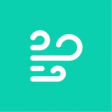
To help you understand fundraising software in the right context, this article refers to a carefully curated set of key players:




Navigating the 2026 Fundraising Landscape: What Development Officers Need
The digital fundraising environment in 2026 is defined by friction reduction, ecosystem integration, and the intelligent use of data. It is not enough to simply have a "Donate" button on a website. The most successful campaigns are utilizing mobile-first architectures that support Apple Pay, Google Pay, and even cryptocurrency without requiring the donor to pinch-and-zoom on a smartphone screen.
1. The Rise of Unified Commerce
Development Officers are abandoning disjointed tools for the best all-in-one software for nonprofits 2025 2026. Today's unified commerce trend demands the best all-in-one nonprofit software for marketing and fundraising 2025 2026 to manage peer-to-peer campaigns, events, and recurring giving in one dashboard. As seen in any all-in-one fundraising software for nonprofits comparison, consolidation drastically reduces ownership costs. To simplify financial reconciliation, teams are specifically adopting the best all-in-one nonprofit fundraising software with built-in payment gateway and donor receipts 2025 2026.
2. AI-Driven Donor Personalization and Predictive Analytics
By late 2026, Artificial Intelligence is a mandatory fundraising utility. When seeking the best ai fundraising tools for nonprofits 2025 2026, prioritize predictive analytics that identify high-propensity donors.
Any best ai fundraising tools for nonprofits 2025 2026 comparison reveals that the best ai-powered fundraising platforms for nonprofits 2025 2026 analyze donor behavior to suggest perfect ask amounts. Furthermore, the best ai tools for nonprofit fundraising 2025 2026 automatically segment lists by "likelihood to churn" and include AI-assisted drafting for thank-you notes.
To maximize ROI, organizations must adopt the best ai-powered nonprofit fundraising platforms 2025 2026. Whether you require the best ai tools for nonprofits 2026 for donor communication or the best ai-powered fundraising platforms 2025 2026 for predictive modeling, upgrading ensures you stop leaving money on the table.
3. The Era of Influencer-Led Giving
Peer-to-peer campaigns have evolved into influencer-led giving. Rather than just asking volunteers to create a page, modern campaigns equip micro-influencers with professional-grade tools. In 2026, utilizing dedicated ambassador fundraising software is a critical piece of nonprofit technology. Development Officers need platforms that provide "Ambassador Portals"—customized dashboards where key supporters can track their impact, access media kits, and view real-time leaderboards. The best nonprofit technology now offers white-labeling capabilities, ensuring these fundraising experiences feel authentic to the influencer's audience while maximizing reach and engagement.
4. Data Privacy and Security Compliance
With evolving data privacy laws and the tightening of SOC2 and GDPR requirements, nonprofits are under pressure to ensure their vendors are compliant. In 2026, security is a feature. Donors are more tech-savvy and wary of platforms that look outdated or insecure. Trust is the currency of philanthropy, and your software is the vault.
Key Evaluation Criteria: Ease of Use, Fees, and Integrations
To objectively review these platforms, we must establish clear criteria. Marketing fluff does not raise money; features and reliability do. We evaluated Raisely, Zeffy, Aplos, GoFundMe Pro, and Givebutter based on three non-negotiable pillars to identify the top rated online donation platforms.
1. Ease of Use (Donor and Admin Experience)
For the Donor: How many clicks does it take to give? Is the form mobile-responsive? Does it remember their details? High abandonment rates are often the result of clunky interfaces. In 2026, we also look for "Wallet Awareness"—does the form automatically detect if the user has Apple Pay enabled and surface that button immediately?
For the Admin: Can a non-technical Campaign Manager spin up a new landing page in under 30 minutes? Does the dashboard provide actionable analytics or just raw data? We look for "no-code" environments that empower development teams to move fast, including the availability of mobile apps for admins to check stats on the go.
2. Transaction Fees and Pricing Models
Every dollar spent on fees is a dollar less for the mission, making the search for affordable fundraising software critical for ROI optimization. In 2026, pricing models have bifurcated. Some platforms stick to the traditional SaaS model (Subscription + Transaction Fee), while others have popularized the "Tipping Model" (0% Platform Fee, relying on donor tips). To identify the best affordable nonprofit apps/platforms for targeted campaigns, organizations must calculate the true cost—including credit card processing fees. We also evaluate the flexibility of these models: can you turn tipping off? Can you cover fees for donors to maximize net revenue?
3. Integration Capabilities
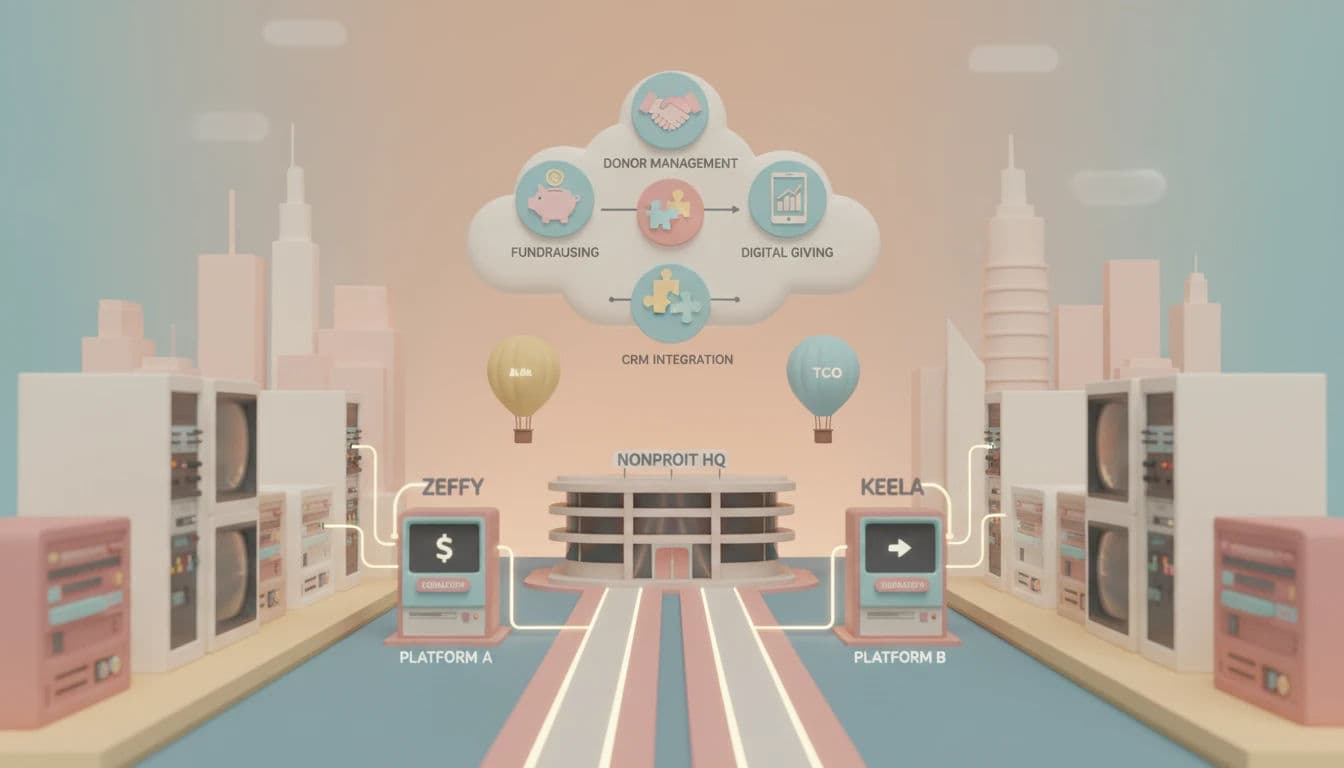
This is the technical backbone. When evaluating software, the critical question is how well the fundraising tool integrates with your existing tech stack, particularly your donor management system. Does the software have a native API? Does it rely on Zapier for everything, or are there direct integrations? We assess how well these platforms handle data flow to a donor crm and marketing automation tools. Deep, bi-directional integration is the gold standard, ensuring that when a donor updates their credit card, that information is instantly reflected in your central database.
Detailed Reviews of the Top 5 Fundraising Platforms
1. Raisely: Best for Custom Brand Experiences and Scalability
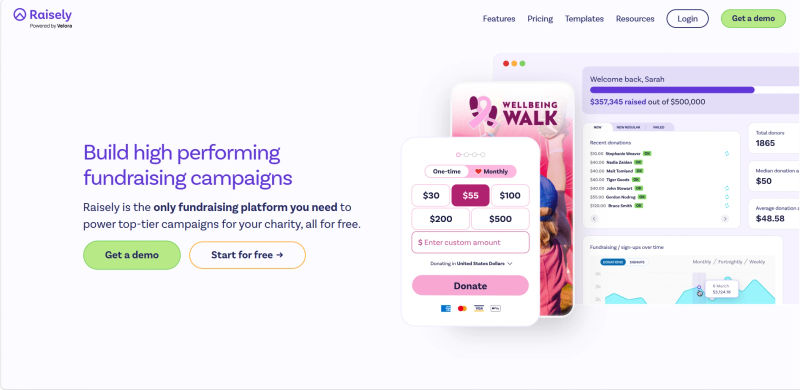
Raisely is an advanced fundraising software platform for nonprofits that require deep customization and scalability. If you are evaluating the best alternatives to Fundraise Up for nonprofits donor analytics data, Raisely provides a powerful, modular solution that pairs granular reporting with flexible campaign building blocks.
Ease of Use & Analytics: Raisely’s page builder features a drag-and-drop visual editor for creating bespoke campaigns. While it offers CSS and HTML control for developers, its no-code tools suffice for most users. Crucially, Raisely excels in donor analytics data, allowing development officers to track conversion metrics, segment audiences, and optimize the donor journey—competing directly with Fundraise Up's data capabilities.
Transaction Fees: Raisely operates on a 0% platform fee model for core features, though standard payment processing fees (Stripe/PayPal) still apply (typically 2.2% - 2.9% + 30c). Nonprofits can enable an optional "tipping" model where donors cover platform costs, or upgrade to a subscription for advanced features like native Salesforce integration.
Integration Capabilities: Raisely provides robust integrations to centralize your donor analytics data. It syncs seamlessly with Salesforce, Zapier, Mailchimp, and Campaign Monitor. For 2026, its API documentation remains top-tier, enabling custom connections that solidify its position as an advanced fundraising software choice for technical teams.
2. Zeffy: The Premier Zero-Fee Fundraising Solution for Maximum ROI
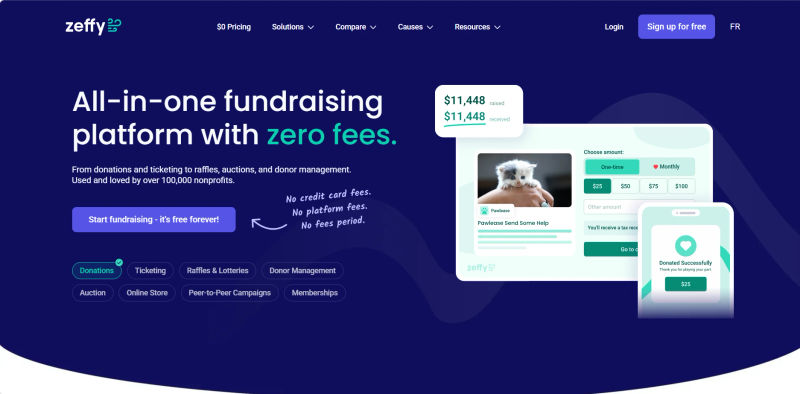
Zeffy (formerly Simplyk) is widely recognized as the best fundraising software for small nonprofits. It disrupted the market by being the only 100% free fundraising platform for nonprofits in North America. They cover 100% of platform and transaction fees, meaning if a donor gives $100, the nonprofit receives $100.
Ease of Use: Zeffy is incredibly intuitive. The interface is clean, modern, and minimalist. Setting up a donation form, ticketing for an event, or a raffle takes minutes. For smaller development teams or organizations with strict overhead mandates, Zeffy removes the friction of complex setups.
Transaction Fees: Zero. None. Zeffy generates revenue by asking donors for a voluntary contribution (tip) at checkout. In 2026, this model has become widely accepted by donors who understand it ensures 100% of their gift goes to the cause, saving nonprofits thousands of dollars annually in credit card processing fees alone.
Integration Capabilities: Zeffy allows for exportable data compatible with most major CRMs and offers direct integrations with tools like Zapier to automate workflows. While it may not have the deep, native bi-directional sync of an enterprise tool, its API access allows for sufficient connectivity.
Alternatives: If the optional tipping model does not fit your donor base, you may be looking for the best alternatives to zeffy for donation forms low or zero fees 2025 or 2026. Givebutter is a top choice, offering a 0% platform fee where donors can choose to cover standard payment processing costs. Donorbox is another excellent low-cost option, providing free platform access with standard, competitive transaction fees.
Find Perfect Software For Your Business
3. Aplos: Best for Integrated Fund Accounting and CRM
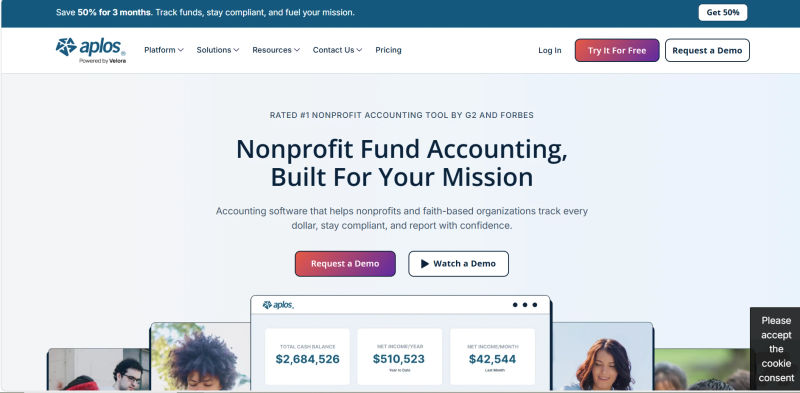
Aplos is unique in this list because it is not just a fundraising tool; it is a complete nonprofit management system that includes fund accounting. Because it allows organizations to track restricted funds and forecast expenses alongside its CRM features, it ranks among the best budgeting apps for nonprofits. For organizations that struggle to reconcile donations with their bank statements, Aplos is the solution.
Ease of Use: For the finance team, Aplos is a dream. For the fundraising team, it is solid. The donation forms are functional and easy to embed, though they may lack the high-gloss design customization of Raisely. However, the ease of having the backend accounting automatically updated when a donation comes in cannot be overstated. It bridges the gap between the Development Director and the CFO.
Transaction Fees: Aplos operates on a subscription model (starting around $79/month) plus standard transaction fees (typically 2.9% + $0.30). While the monthly cost is higher than free tools, it replaces the need for separate accounting software (like QuickBooks) and a separate CRM, offering a "Total Cost of Ownership" that is often lower for small-to-mid-sized nonprofits.
Integration Capabilities: Since Aplos is an all-in-one system, the need for external integrations is reduced. It includes its own CRM, email marketing, and accounting. However, it does integrate with Gusto for payroll and offers file exports for other specific needs. The value here is internal integration rather than external.
4. GoFundMe Pro: Best for Enterprise-Level Campaigns and Large Nonprofits
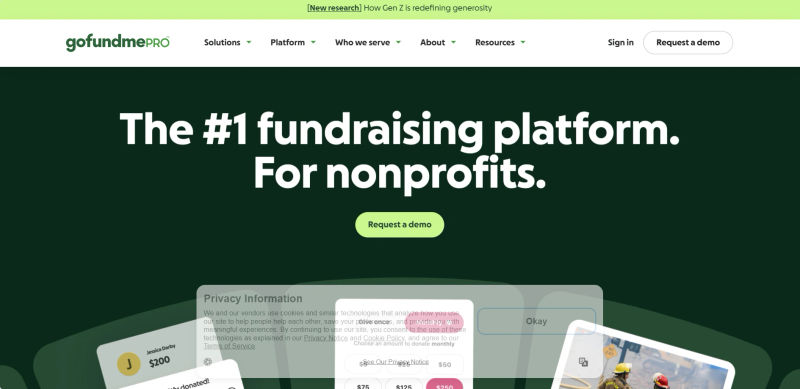
Now part of the GoFundMe family, GoFundMe Pro is widely recognized as the best capital campaign software for large organizations running high-volume, complex fundraising initiatives. While standard GoFundMe is popular for individual crowdfunding, nonprofits searching for the best alternatives to gofundme 2026 for institutional giving often upgrade to GoFundMe Pro—or explore platforms like Zeffy and Givebutter for lower-fee models. If you are hosting a massive capital campaign, a major peer-to-peer event, or a gala with thousands of attendees, GoFundMe Pro provides the enterprise-grade infrastructure to handle it.
Ease of Use: GoFundMe Pro offers a premium, polished user experience. Their fundraising pages are beautiful out of the box and instill a high level of trust in donors. For admins, the backend is powerful but can be complex due to the sheer number of features. It requires a dedicated staff member to manage effectively, which is typical for enterprise software.
Transaction Fees: GoFundMe Pro is the most expensive option on this list. It typically involves a significant annual contract fee plus transaction fees. Pricing is custom and based on volume. However, for organizations raising millions in a capital campaign, the ROI comes from advanced features that drive higher conversion rates and average gift sizes.
Integration Capabilities: GoFundMe Pro sets the gold standard for Salesforce integration. The data sync is granular, reliable, and customizable. It also integrates with HubSpot, Mailchimp, and Facebook. If your organization lives and breathes in Salesforce, GoFundMe Pro is the safest bet to ensure data integrity. They also offer robust international currency support, making them ideal for global NGOs.
5. Givebutter: Best for Social Fundraising and Peer-to-Peer Engagement
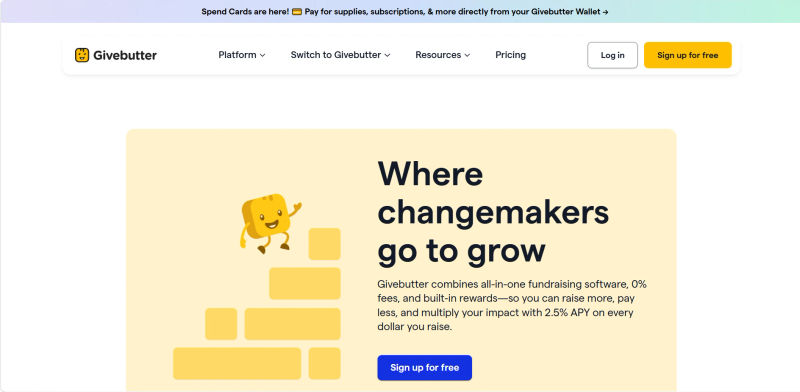
Givebutter has captured the hearts of younger donors and dynamic campaigns by making giving "fun." Widely recognized as the best auction software for nonprofit fundraising 2025 2026, it seamlessly combines donation forms, ticketing, Venmo integration, and robust auction management into a social-feed-style interface.
Ease of Use: Givebutter is delightful to use. The onboarding is rapid, and the interface is vibrant. Features like the "supporter feed" (where donors can leave GIFs and comments) and frictionless mobile bidding create social proof that drives more giving. It is mobile-first and feels like a modern social media app, which reduces friction for millennial and Gen Z donors.
Auction Capabilities: For organizations seeking the best auction software for nonprofit fundraising, Givebutter delivers built-in tools that eliminate the need for third-party platforms. Nonprofits can easily manage item catalogs, automate outbid notifications via SMS, and display live leaderboards during silent and live events.
Transaction Fees: Givebutter uses a flexible model. They charge a platform fee (often 0% if you enable donor tipping) and standard processing fees (2.9% + $0.30). They are transparent about their fees, and donors have the option to cover them, which over 90% of donors choose to do, effectively making the platform free for the nonprofit.
Integration Capabilities: Givebutter integrates natively with Bloomerang, Salesforce, HubSpot, and Zapier. They have invested heavily in their API in 2026, making it easier to push campaign data into various marketing tools.
2026 Feature Spotlight: Influencer Portals Givebutter has excelled in addressing the 2026 trend of influencer-led giving. Their platform allows team captains and influencers to customize their own pages with video updates, track their specific impact, and engage their sub-community directly. This white-labeled peer-to-peer capability is vital for modern campaigns.
2026 Comparison Table: Pricing, Best Use Cases, and Features
To help you visualize the differences, we have compiled the essential data points for each platform. Note that these figures represent standard 2026 pricing models.
Wondering about reviews comparing Givelify and other donation platforms? While Givelify is popular for mobile giving, it is excluded from our top 5 due to its narrower feature set compared to comprehensive platforms like Givebutter or Zeffy. Nonprofits often compare Givelify directly against Aplos.
Plan | Price | Best For | Features |
Zeffy | $0 Platform + $0 Transaction | 100% Free Fundraising | 1. Zero transaction fees |
Raisely | Custom | Custom Branding | 1. Visual page builder |
Givebutter | Free, starts at $29/mo | Social/P2P Engagement | 1. Venmo/PayPal/Google Pay |
Aplos | Custom | Accounting & Admin | 1. True fund accounting |
GoFundMe Pro | Custom Annual Fee + Trans. Fee | Enterprise Scale | 1. Advanced Salesforce sync |
*Note: All prices shown reflect typical monthly billing. Vendors often offer lower pricing for annual commitments, but those discounts are excluded here for easier comparison. Actual costs may vary depending on your requirements, usage volumes, and negotiated terms.
Ready to boost your online fundraising? Compare the best non profit software for free on AuthenCIO.
Technical Considerations: API Access and Third-Party Integrations
When choosing software in 2026, you are not just buying a tool; you are adding a node to your network. The "Integration Capabilities" of these platforms determine how much manual work your team will have to do.
1. API Access and Customization
For organizations with custom needs, API (Application Programming Interface) access is crucial. Raisely and GoFundMe Pro offer open and well-documented APIs, allowing developers to build custom apps on top of their infrastructure. Zeffy and Givebutter offer API access that covers the essentials—retrieving donor data and campaign stats—which is sufficient for most automation needs.
2. CRM Synchronization
The most common failure point in fundraising tech is the CRM sync. If a donor changes their recurring gift amount in your fundraising software, does that update in your CRM? GoFundMe Pro and Raisely excel here with "bi-directional" syncs for major CRMs like Salesforce and Bloomerang. Aplos avoids the problem entirely by being the CRM. When evaluating, ask specifically: "Is the integration native, or do I need a third-party connector like Zapier?" While Zapier is powerful, native integrations are generally more stable and cost-effective.
3. Assessing Migration Difficulty
Moving to a new platform involves data migration, often the most feared part of the process. Here is a quick assessment of migration difficulty for each platform:
Givebutter & Raisely (Rating: 3/10 - Easy): Both offer "concierge" migration services and excellent CSV import tools that map fields intelligently. They are designed for self-service switchers.
Zeffy (Rating: 4/10 - Moderate): Easy to start fresh, but importing historical data requires clean CSV files. Support is helpful but less hands-on than enterprise tools.
Aplos (Rating: 6/10 - Moderate/Hard): Because it involves accounting data, migration is more complex. You aren't just moving donors; you are moving ledgers. Requires finance team involvement.
GoFundMe Pro (Rating: 7/10 - Hard): Enterprise migration is complex by nature. It usually requires a dedicated implementation specialist and several weeks of testing, but the result is a pristine database.
Choosing the Right Platform for Your 2026 Campaign Goals
Yes, there are specific digital fundraising tools recommended for nonprofits based on their unique operational needs, budget constraints, and campaign goals. Selecting the best software depends entirely on these factors. Here is a decision framework to guide your choice:
Choose Zeffy if: You are a small-to-mid-sized organization, a volunteer-run group, or simply want to maximize every dollar raised by eliminating fees entirely. It is the most financially efficient tool on the market.
Choose GoFundMe Pro if: You are a large organization (revenue >$5M) using Salesforce. You need enterprise-grade security, dedicated support, and the ability to handle massive spikes in traffic during televised events or global campaigns.
Choose Raisely if: You have a specific visual brand identity that you cannot compromise. If you need your fundraising pages to look exactly like your website and want the flexibility to code custom solutions later, Raisely is the developer-friendly choice that is also easy for non-techies.
Choose Givebutter if: Your campaigns rely on social sharing, peer-to-peer networks, or younger demographics. If you are running a "fun run," a bowl-a-thon, or a viral social media challenge, Givebutter’s interface drives engagement better than the others.
Choose Aplos if: You need to clean up your back office. If your Treasurer is struggling with spreadsheets and your Development Director has a separate list of donors, Aplos consolidates this into one source of truth.
Try AuthenCIO
Move to faster, smarter software evaluation with AI
Conclusion: Optimizing Your Digital Giving Strategy
In 2026, the technology you choose to power your fundraising is as important as the cause itself. A clunky donation form can lose a donor in seconds, while a seamless, integrated experience can turn a one-time giver into a lifelong supporter. Whether you prioritize the zero-fee structure of Zeffy, the social engagement of Givebutter, the customization of Raisely, the accounting power of Aplos, or the enterprise scale of GoFundMe Pro, the right tool is out there.
Your goal as a Development Officer is to build relationships, not manage databases. By selecting a platform that offers ease of use, transparent fees, and robust integrations, you free up your time to do what matters most: connecting with the people who make your mission possible.
2026 Campaign Planning Checklist
Before you launch your next campaign on your new software, ensure you have ticked these boxes:
Wallet Check: Is Apple Pay/Google Pay active and visible above the fold?
Data Flow Test: Run a $1 test donation and verify it appears in your CRM within 5 minutes.
Recurring Nudge: Is the "Make this a monthly gift" option pre-selected or prominently displayed?
Ambassador Kit: Have you created a resource folder (images/copy) for your peer-to-peer fundraisers?
Fee Transparency: Have you decided whether to ask donors to cover fees, and is the language on the form clear?