
Introduction
Running a small charity in 2026 requires balancing donor expectations, volunteer coordination, and tight budgets. If you are searching for the best free nonprofit software, the digital landscape has shifted dramatically. The days of manual spreadsheets are gone, replaced by sophisticated, cloud-based free software for nonprofits that are accessible to organizations of any size.
Streamline your software evaluation process
The term "free software" used to imply limited features or poor security. Today, that narrative has changed. When evaluating the best free platforms and tools for nonprofits 2025 2026, you will find high-value platforms using tipping models and generous freemium tiers. These are robust free nonprofit tools capable of powering your entire operation.
While these tools eliminate financial barriers, they still require an investment of time to set up and maintain. This guide highlights the best free software for ngos and nonprofits, focusing on solutions that offer immediate impact without a dedicated IT department. We will dive deep into five essential top picks—Zeffy, Givebutter, Raisely, Mailchimp, and Care2—that cover fundraising, donor management, marketing, and advocacy. By the end of this article, you will have a clear roadmap to modernizing your tech stack without spending a dime on subscription fees.
Key Takeaways
Top 5 Free Tools for 2026: Zeffy (100% free fundraising), Givebutter (all-in-one CRM and fundraising), Raisely (custom campaigns), Mailchimp (automated outreach), and Care2 (community mobilization).
The "Tipping Model" is the New Standard: Platforms like Zeffy and Givebutter remain completely free for charities by asking donors for optional tips, ensuring 100% of donations go directly to your cause.
Ditch the Spreadsheets: Transitioning from "Excel Hell" to unified, cloud-based CRM and volunteer management systems is essential for data security, compliance, and operational scalability.
Strategic Selection: When adopting new software, prioritize your specific revenue model, your team's technical comfort level, and long-term data portability to ensure sustainable growth.
Top Software Picks
Zeffy — best for fee-free fundraising and donor management
Care2 Platform — best for advocacy campaigns and petition mobilization
Raisely — best for customizable donation pages and storytelling campaigns
Givebutter — best for event-based fundraising and social sharing
Mailchimp — best for email outreach and donor engagement automation
Software covered in this article
For learning and reference, this listicle presents a selective overview of the best non-profit software tools for small charities:




The Digital Landscape for Small Charities in 2026
To understand why these tools are critical, we must look at the environment in which small charities operate today. The non-profit software market has grown significantly, valued at nearly $5 billion, driven largely by the adoption of cloud-based solutions. For a small NGO, this shift to the cloud is liberating. It means you no longer need on-premise servers or expensive hardware; you simply need a secure login and a reliable internet connection.
1. The End of "Excel Hell"
For decades, small charities relied on Microsoft Excel or Google Sheets to manage everything from donor databases to volunteer shifts. While flexible, spreadsheets are error-prone, difficult to secure, and impossible to scale. Today, finding the best database software for small nonprofits is essential to replace these outdated manual methods.
When evaluating the best data management software for nonprofits 2025 2026, organizations prioritize purpose-built tools. Modern database platforms automate personalized communication, generate instant tax receipts, and track mobile payments—capabilities spreadsheets cannot provide. Moving away from "Excel Hell" to dedicated software is no longer just about convenience; it is a critical step for risk management and professionalization.
2. The Rise of the "Tipping Model"
One of the most significant trends benefiting small charities is the widespread acceptance of the "tipping model" in fundraising software. Platforms like Zeffy and Givebutter have popularized a structure where the software is free for the non-profit, and the platform costs are covered by voluntary contributions from donors. This model has democratized access to premium features, allowing a grassroots organization to use the same caliber of fundraising technology as a national foundation without the overhead.
3. Cloud-Based Scalability and Data Sovereignty
As you move your operations to free cloud-based tools, a common concern is data ownership. "If I'm not paying for the product, am I the product?" In the context of reputable non-profit software in 2026, the answer is generally no, but due diligence is required. Leading free platforms now offer robust data sovereignty protections, ensuring that you retain full ownership of your donor and volunteer lists. They utilize enterprise-grade encryption and compliance measures (such as GDPR and CCPA) that a small charity could never afford to build on its own. This means your data is often safer in a free, purpose-built cloud platform than it is on a password-protected laptop spreadsheet.
Why Choosing the Right Free Software Matters for Small NGOs
Are there affordable nonprofit software tools for small charities? Yes. The market offers highly capable, affordable nonprofit software designed specifically for organizations with limited budgets. Selecting these affordable nonprofit software tools for small charities is a strategic decision, not just a logistical one. For a Founder or Operations Manager, the wrong choice can lead to data silos, where your email marketing tool doesn't talk to your donor database, creating double the work. Conversely, following the best affordable nonprofit software recommendations 2025 2026 can help you build an ecosystem that automates up to 40% of administrative tasks, freeing up your limited staff to focus on the mission.
When evaluating "free" and affordable nonprofit software, it is crucial to distinguish between three types of pricing models:
Freemium: A limited version of a paid tool (e.g., Mailchimp). These are excellent for starting out but require you to watch your usage limits closely to avoid sudden price jumps.
Free Forever / Tipping: The platform is free to use, supported by donor tips (e.g., Zeffy, Givebutter). These are often the most sustainable for small charities as costs don't scale with growth.
Open Source/Community: Software that is free to download but may require technical expertise to host and maintain. While powerful, these often introduce hidden costs in technical maintenance, which we will avoid in this guide to focus on "plug-and-play" solutions.
Top Free Fundraising Platforms for Nonprofits
When evaluating the best donation platforms for small charities 2025 2026 and the best fundraising platforms for small charities 2025 2026, prioritize friction-free giving via Apple Pay, Google Pay, or Venmo.
While many seek affordable fundraising software for small nonprofits, you can bypass fees entirely. Instead of settling for standard affordable fundraising software, adopting the best free fundraising software maximizes your impact. The following free fundraising platforms for nonprofits provide enterprise-grade features at zero cost.
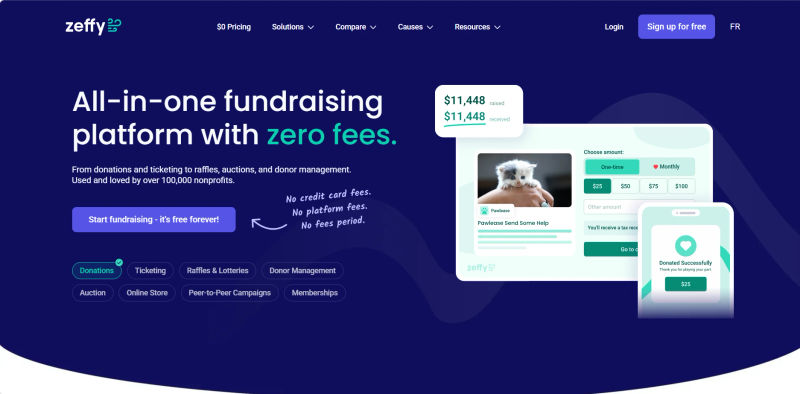
1. Zeffy: The Only 100% Free Fundraising Platform
Zeffy has established itself as a unique player in the market by being the only fundraising platform that is 100% free—meaning they do not charge platform fees and they cover the credit card processing fees. For a small charity, saving that typical 2.9% + $0.30 per transaction can add up to thousands of dollars a year that goes directly to your cause.
Key Capabilities: Zeffy is more than just a donation button. It offers a comprehensive suite of tools including event ticketing, raffle management, peer-to-peer campaigns, and an online store. For small NGOs selling merchandise or hosting gala dinners, Zeffy handles the payments and automatically generates tax receipts compliant with local regulations.
Best Use Case: Zeffy is ideal for organizations that want to ensure 100% of every donation goes to the mission. It is particularly strong for event-heavy charities that need to sell tickets without losing a percentage to fees.
**Founder’s Pro-Tip:**Transparency is key. Some donors may be confused by the option to tip the platform. Include a small note in your donation appeals explaining: "We use Zeffy so 100% of your donation goes to us. Zeffy relies on optional tips from generous donors like you to keep this service free."
2. Givebutter: All-in-One Fundraising and CRM
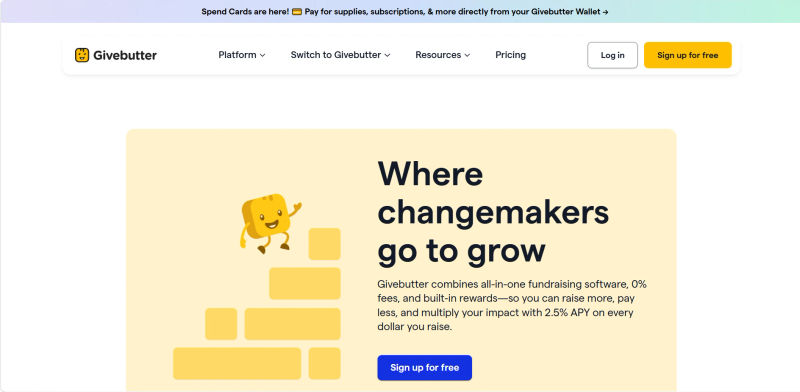
Givebutter stands out as a robust all in one nonprofit software that combines a modern, social-media-style interface with powerful backend tools. It treats fundraising as a community activity, utilizing a "supporter feed" where donors can leave comments and GIFs to create momentum during campaigns.
Key Capabilities: Operating on a tipping model (0% platform fees if donor tips are enabled), Givebutter excels in payment versatility, accepting Venmo, PayPal, Google Pay, and Apple Pay natively. Beyond processing payments, it is widely recognized as the best free crm for nonprofits and the best donor management software for small nonprofits 2026. The built-in CRM allows you to track donor history, segment your audience, and send targeted emails directly from the platform. Whether you are searching for the best free crm for nonprofits 2026 or the best free crm for small nonprofits 2026, Givebutter delivers comprehensive contact management without subscription fees.
Best Use Case: This platform is perfect for peer-to-peer fundraising and engaging younger demographics who prefer mobile wallets. If you need the best free crm for nonprofit organizations integrated seamlessly with a fundraising page, Givebutter is a powerful contender.
Founder’s Pro-Tip: Leverage the feed. Assign a volunteer to reply to every comment on the Givebutter supporter feed. This public acknowledgment encourages others to donate and creates a sense of real-time community engagement.
Find Perfect Software For Your Business
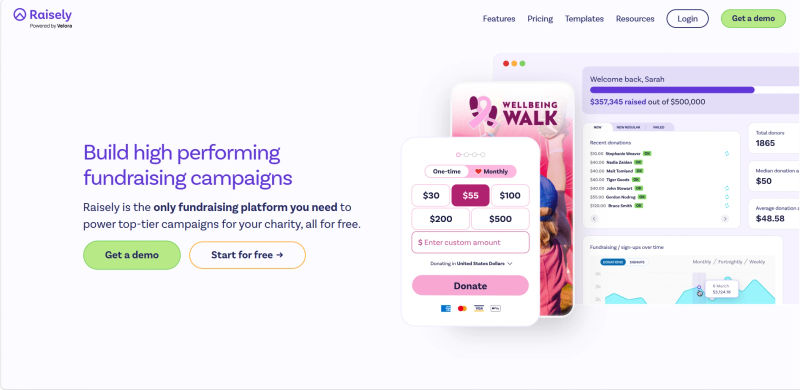
3. Raisely: Custom Fundraising Campaigns for Growth
If your charity cares deeply about branding and design, Raisely is the standout choice. Unlike many free tools that force you into a rigid template, Raisely allows for extensive customization. It is designed to help you build high-converting fundraising websites that look and feel exactly like your organization.
Key Capabilities: Raisely allows you to create unlimited campaigns with unique branding for each. It is particularly strong in peer-to-peer fundraising, allowing your supporters to create their own pages to raise money on your behalf. It also offers sophisticated features like conditional logic in forms (showing different questions based on previous answers) and automated donor journeys.
Best Use Case: Raisely is best for small NGOs that have a specific brand identity and want to run distinct campaigns (e.g., a "Summer Run" vs. a "Winter Gala") without them looking identical. It empowers you to build a professional web presence for your fundraising without hiring a developer.
**Founder’s Pro-Tip:**Don't over-customize. Raisely is powerful, but don't spend weeks tweaking CSS. Start with their high-quality templates, add your logo and colors, and launch. You can always refine the design after you have started collecting donations.
Essential Marketing and Communication Tools
Once you secure a donation, the next challenge is retention. Communicating impact effectively turns one-time donors into recurring supporters. In 2026, communication must be segmented and relevant.
Beyond standard outreach, supporting your community requires dedicated helpdesk tools. When searching for the best customer service software for nonprofits 2025 2026, platforms like Zendesk (via their Tech for Good program) and Freshdesk stand out. They offer free or deeply discounted tiers to help small charities efficiently manage donor inquiries and volunteer support tickets.
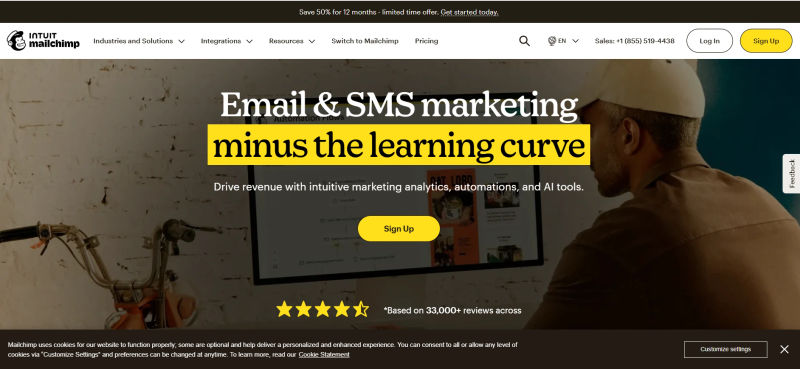
1. Mailchimp: Automating Outreach on a Budget
Mailchimp for nonprofits 2026 remains a titan in the email marketing space. While it is primarily a commercial tool, its free tier is robust enough for many small charities starting their digital journey. In 2026, Mailchimp’s focus has shifted heavily toward automation and AI-assisted content creation, which can be a lifesaver for small teams struggling to write copy.
Key Capabilities: The free plan typically allows for a limited number of contacts (often capped around 500 or 1,000 depending on current offers) and a set number of monthly email sends. However, it gives you access to their drag-and-drop builder, basic segmentation, and welcome series automations—emails that automatically go out when a new subscriber joins your list—ensuring no new supporter is ignored.
Analytics and Reporting: For organizations seeking the best detailed reporting tools for nonprofit analytics 2026, Mailchimp's built-in dashboard delivers critical insights even on the free plan. Charities can track open rates, click-through rates, audience demographics, and individual subscriber engagement levels to see exactly which campaigns drive donations and volunteer sign-ups.
Best Use Case: Mailchimp is excellent for newsletters and general updates. Its "Customer Journey" builder (even in limited forms) helps small charities professionalize their communication. It integrates with almost every other tool (including Zeffy and Givebutter), making it a safe hub for your email strategy.
The "Cliff" Warning: Be mindful of the subscriber limit. Once you cross the free tier threshold, prices can jump significantly. Regularly clean your list to remove inactive subscribers to stay within the free limit for as long as possible.
2. Care2 Platform: Engaging and Mobilizing Your Community
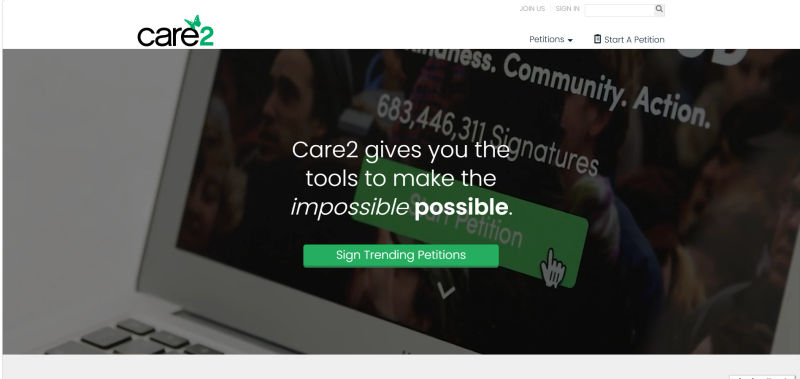
For charities involved in advocacy, environmental protection, or social justice, fundraising is only half the battle. You also need to mobilize support for causes. Care2 is a unique platform that connects non-profits with millions of individuals looking to take action.
Key Capabilities: Care2 allows organizations to start petitions and gather signatures from a global community. While they offer paid recruitment services, the basic ability to launch a petition and rally supporters is an invaluable free tool for advocacy. It helps you build a list of people who care about your specific issue, whom you can then cultivate into donors or volunteers.
Best Use Case: Use Care2 if your mission involves policy change or public awareness. It is a top-of-funnel tool to find new supporters who are passionate about your cause but may not know your organization exists yet.
Streamlining Operations and Volunteer Management
Finding the best free or low-cost volunteer management software in 2025 and 2026 requires prioritizing integration. A common pain point for small NGOs is the "silo effect"—keeping volunteer data isolated from donor records. To reduce the administrative grind, modern internal operations demand systems that connect directly with your CRM. Unifying this data eliminates manual entry and maximizes your workforce's impact.
1. Unifying the Volunteer Experience
Instead of using a standalone, disconnected tool for volunteers, you can leverage the CRMs within Givebutter or Zeffy to manage volunteer data. Both platforms allow you to tag contacts. You can create a segment called "Volunteers - Active" and use the platform to track their engagement history alongside their donation history. This provides a 360-degree view of your supporters; often, your best donors are your volunteers, and vice versa. By consolidating this data, you reduce the number of logins your staff needs to manage and ensure that when you thank a volunteer, you also know if they just donated $50.
2. Managing "Shadow IT" and Data Security
"Shadow IT" refers to the practice of volunteers using their own personal tools—like WhatsApp groups, personal Gmail accounts, or unauthorized Dropbox folders—to do charity work. This is a major security risk. By centralizing operations onto reputable platforms like Raisely and Givebutter, you can provide a sanctioned, secure environment for your team. These platforms often offer role-based access control (even on some free or low-tier plans), allowing you to give volunteers access to the specific tools they need (like checking in event attendees) without exposing your entire donor database or financial records.
3. Migration from Spreadsheets
Moving from Excel to these platforms is easier than ever, but it requires preparation. All the tools mentioned (Zeffy, Givebutter, Mailchimp, Raisely) offer CSV import features. The key to a successful migration is data cleaning. Follow these steps to ensure a smooth transition:
Consolidate: Gather all your scattered spreadsheets (donor lists, volunteer sign-ups, event attendees) into one master file.
Standardize: Ensure columns are consistent. For example, make sure all phone numbers follow the same format and that "First Name" and "Last Name" are in separate columns.
De-duplicate: Use Excel’s "Remove Duplicates" feature to merge entries for the same person.
Import: Upload your clean CSV to your chosen platform (e.g., Givebutter or Mailchimp) and map the columns to the platform's fields.
This simple process can save hours of manual cleanup later and ensures you start your new digital journey with high-quality data.
2026 Comparison Table: Pricing and Features for Small Charities
The following table breaks down the specific costs and feature sets for the five recommended tools. Note that "Tips" refers to the model where the platform asks the donor to cover costs voluntarily.
Platform | Price | Best For | Features |
Zeffy Standard | $0 (100% Free) | Zero-fee fundraising | Unlimited donors, Event ticketing, Auto-tax receipts, Store/e-commerce, Raffle management, Volunteer management |
Givebutter Base | Free, starts at $29/mo | All-in-one fundraising | Venmo/PayPal integration, Built-in CRM, Text-to-donate, Auctions, Peer-to-peer pages, Embeddable widgets |
Raisely Free | Custom | Custom campaigns | Custom CSS/branding, Peer-to-peer, Conditional logic forms, Automated messages, API access, CRM integration |
Mailchimp Free | $0 | Email marketing | Up to 500 contacts, 1,000 monthly sends, Basic email templates, Forms & Landing pages, Basic reporting |
Care2 Starter | Custom | Advocacy & Awareness | Petition creation, Global community access, Social sharing tools, Supporter recruitment, Analytics on signatures |
*Note: All prices shown reflect typical monthly billing. Vendors often offer lower pricing for annual commitments, but those discounts are excluded here for easier comparison. Actual costs may vary depending on your requirements, usage volumes, and negotiated terms.
How to Choose the Right Software for Your NGO's Growth
With so many high-quality free options, decision paralysis is a real risk. To select the right tool for your specific needs in 2026, consider the following evaluation framework.
1. Assess Your Revenue Model
If your charity relies heavily on ticketed events (galas, dinners, workshops), Zeffy is likely your best option because it absorbs the credit card processing fees that usually eat into ticket margins. If your revenue comes from peer-to-peer fundraising (e.g., charity runs, birthday fundraisers), Raisely or Givebutter offer superior social sharing features that empower your supporters to fundraise for you.
2. Evaluate Technical Comfort
How tech-savvy is your team? Givebutter and Zeffy are designed to be "plug-and-play" with virtually no learning curve—ideal for teams with limited technical skills. Raisely, while powerful, offers deep customization that might tempt you to tweak designs for hours; it is better suited if you have someone with a keen eye for design. Mailchimp is user-friendly but requires a strategic mind to set up automations effectively.
3. Scalability and Data Portability
Always ask: "What happens if we grow?" The beauty of the tipping model (Zeffy, Givebutter, Raisely) is that the cost ($0) remains the same whether you raise $5,000 or $500,000. However, with tools like Mailchimp, you must be aware of the "cliff"—once you surpass the free contact limit, the price can jump significantly. Ensure that whatever tool you choose allows you to export your data easily (CSV export) so you are never locked in. Data portability is your safety net.
4. The 30-Day Implementation Roadmap
To avoid overwhelming your team, follow this simple roadmap to digitize your operations:
Week 1: Audit & Clean. Clean your existing data (Excel sheets) and choose one primary platform. Don't try to launch everything at once.
Week 2: Setup & Branding. Set up the account and import your contacts. Configure your branding (logos, colors) and set up your payment processor (Stripe/PayPal) if required.
Week 3: The Internal Pilot. Run a pilot test. Create one donation form or one email campaign and test it internally with your board or staff. Make a small real-money donation to ensure the receipt triggers correctly.
Week 4: Soft Launch. Go live. Send your first campaign to a small segment of your most loyal supporters and monitor the results before blasting it to your entire list.
Try AuthenCIO
Move to faster, smarter software evaluation with AI
Conclusion: Maximizing Impact with Zero-Cost Tools
In 2026, the barrier to entry for professional non-profit technology has never been lower. Small charities no longer need to compromise on quality due to budget constraints. By leveraging the tipping models of Zeffy, Givebutter, and Raisely, and utilizing the freemium power of Mailchimp and the reach of Care2, you can build a tech stack that rivals large international organizations.
The goal of adopting this software is not just to digitize your current chaos, but to transform your operations. It is about moving from reactive administration—chasing receipts and manually entering emails—to proactive growth. These tools allow you to steward your donors better, manage your volunteers more effectively, and ultimately, dedicate more resources to your core mission.
Don't let the fear of technology or the constraints of a small budget hold your organization back. The tools are free, the features are powerful, and the opportunity to scale your impact is right at your fingertips. Start with one tool today, and watch your capacity grow.