
Introduction
To successfully modernize donor engagement, nonprofits must abandon static databases and adopt proactive, data-driven ecosystems. The most effective nonprofit tech trends today focus on actionable best practices: breaking down data silos, leveraging predictive analytics, and delivering hyper-personalized communications.
Streamline your software evaluation process
Today’s donors, particularly Millennials and Gen Z, expect the same level of seamless, personalized digital interaction from the causes they support as they receive from commercial giants. They demand transparency, immediacy, and relevance. To retain them, organizations must replace undifferentiated mass appeals with targeted, data-informed outreach.
Modernizing your approach requires more than basic digitization; it demands intelligence. Best-in-class organizations are leveraging artificial intelligence (AI) and integrated advocacy tools to foster deep, relational connections at scale. For Executive Directors and Development Directors operating under strict budget constraints, the immediate priority is curating a tech stack that eliminates data silos and streamlines operations.
This article provides a practical roadmap for implementing these innovations. By examining how platforms like Keela and Care2 utilize predictive intelligence and advocacy-driven acquisition, you will learn how to transition your organization from merely surviving the digital noise to actively mastering it.
Key Takeaways
Shift to Relational Ecosystems: Move beyond transactional fundraising by adopting omnichannel strategies and ensuring data interoperability across all donor touchpoints.
Leverage Transparent AI: Predictive intelligence is transforming donor targeting, but nonprofits must prioritize "human-in-the-loop" AI tools that offer transparency rather than "black box" algorithms.
Merge Advocacy and Acquisition: Break down silos between advocacy and fundraising teams while strictly adhering to evolving data privacy and consent regulations.
Embrace Hyper-Personalization: Abandon "spray and pray" outreach in favor of zero-party data strategies, asking donors directly about their preferences to tailor communications.
Overcome Implementation Paralysis: Transitioning from legacy systems to modern tech stacks involves a "messy middle." Mitigate risks through phased rollouts and clear change management protocols.
Leading Non-Profit Solutions to Know
To determine what platforms offer innovation and efficiency in managing nonprofit operations and donor engagement, organizations should evaluate systems that unify data, automate workflows, and personalize outreach. The following recognized non-profit solutions provide the best infrastructure for modernizing donor management and scaling impact.







Moving Beyond Transactional Fundraising to Relational Ecosystems
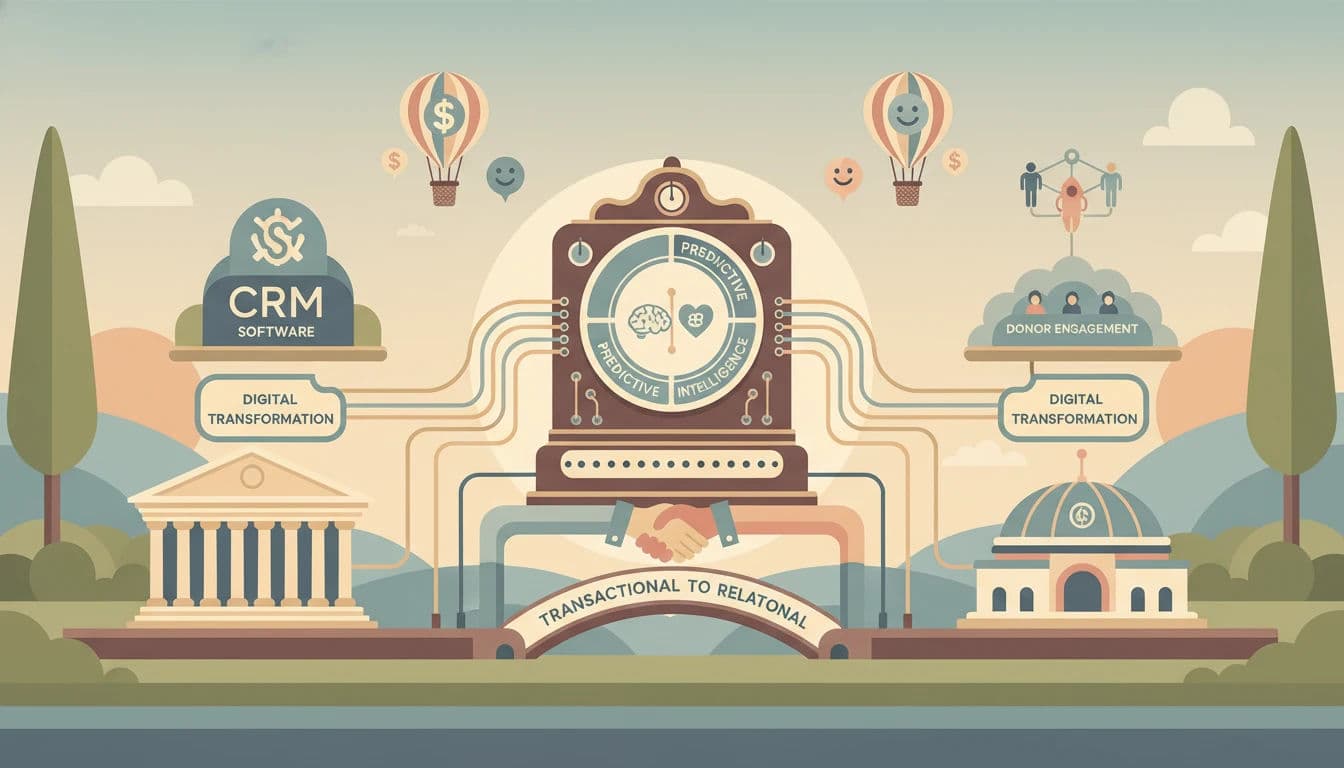
Historically, nonprofit technology was built around the transaction. The primary goal of legacy CRM (Constituent Relationship Management) systems was to process a donation and issue a receipt. While necessary, this transactional focus fails to capture the nuance of the modern donor journey. The new standard is the "relational ecosystem," a holistic approach where technology serves to map, understand, and nurture the human connection between a supporter and a mission.
1. The Power of Omnichannel Engagement
In a relational ecosystem, every touchpoint matters. A donor is not defined solely by their last gift amount (Recency, Frequency, Monetary or RFM analysis), but by their behavioral signals across multiple channels. Did they open the newsletter? Did they sign a petition? Did they attend a webinar? Modern donor engagement platforms aggregate these disparate data points to create a unified profile. This shift addresses one of the most significant pain points in the sector: fragmented data.
Furthermore, the move toward relational ecosystems is driven by the necessity of omnichannel engagement. Donors do not live in a vacuum; they interact with causes via mobile apps, social media, desktop email, and peer-to-peer fundraising pages simultaneously. A robust tech stack must offer interoperability, ensuring that a donor's experience is consistent regardless of the platform. This consistency builds trust, and in the nonprofit sector, trust is the currency of retention.
2. Achieving Data Interoperability
When volunteer management, email marketing, and donation processing live in isolated silos, organizations are stuck with a static view of a supporter's impact—often just a historical sum of past financial gifts. Data interoperability solves this by allowing different software solutions to communicate via APIs, enabling a shift to dynamic donor lifetime value tracking. Instead of a fixed number, dynamic tracking continuously updates a supporter's real-time worth by integrating volunteer hours, advocacy actions, and social engagement alongside traditional donations.
Critically, this technology does not replace human interaction; it enables it. For instance, instead of sending another automated email, an interoperable system might flag a highly engaged donor who just visited your "Legacy Giving" page, prompting a major gift officer to call them. This blend of digital intelligence and personal outreach is the hallmark of a successful relational ecosystem.
The Era of Predictive Intelligence and AI
The democratization of Artificial Intelligence is reshaping ai donor engagement. According to recent ngo software trends and news, ai-driven donor engagement solutions for nonprofits are replacing traditional fundraising guesswork with predictive intelligence. Once exclusive to enterprise organizations, these charity ai tools and advanced nonprofit technology are now accessible to small and mid-sized nonprofits. These ai non-profit updates allow organizations to accurately forecast giving behaviors and optimize outreach efficiently.
1. AI in the Nonprofit Sector
Traditional fundraising relies on retrospective reporting. Today, nonprofit predictive analytics flips this dynamic by forecasting predictive donor behavior. This technology analyzes vast datasets—such as past giving history, engagement metrics, and wealth indicators—to identify patterns invisible to the human eye. By doing so, organizations can accurately anticipate when a supporter is ready to upgrade their gift or when they are at risk of churning.
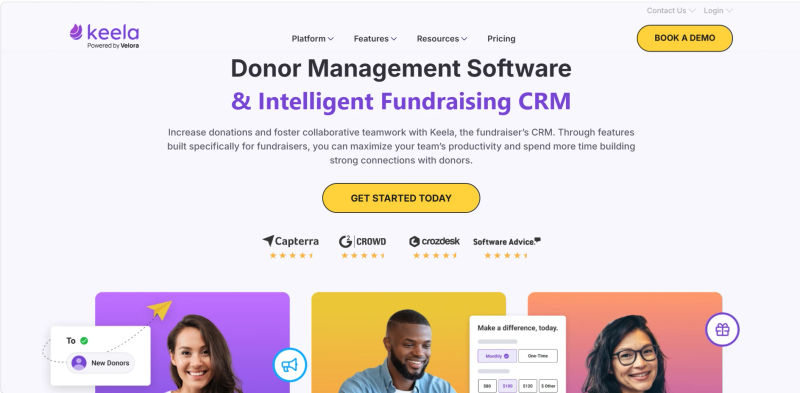
When evaluating which nonprofit tech vendor is best at predictive donor scoring, Keela consistently ranks at the top. As a leading donor management software, Keela integrates "Keela Intelligence" directly into its dashboard to automatically score and segment supporters. Its standout feature, the "Smart Ask," uses machine learning to calculate the optimal donation request for each specific donor. Instead of a generic $50 appeal, the system suggests a personalized ask string that maximizes conversion probability while strategically increasing the donor's giving tier.
2. Transparency and Control: Addressing the "Black Box"
A common anxiety among nonprofit professionals is the "black box" nature of AI—the fear of relying on a machine without understanding its logic. Leading platforms address this by prioritizing transparency during "predictive modeling" donor analytics machine learning fundraising implementation. They provide "explainable AI" features that offer clear context on why a specific supporter was scored a certain way, keeping Development Directors in the driver's seat.
Understanding these mechanisms is vital for AI applications in nonprofit donor retention, predictive analytics, and personalization. By analyzing engagement metrics—such as a decrease in email open rates or giving frequency—transparent predictive models flag at-risk donors. This drives successful AI donor retention by triggering automated, highly personalized re-engagement workflows to save the relationship before it is lost.
The Convergence of Advocacy and Acquisition
For too long, advocacy and fundraising were treated as separate disciplines. However, the modern donor funnel is increasingly non-linear. Today’s major donor often starts as a digital activist. Forward-thinking nonprofits are utilizing technology that bridges the gap between advocacy and acquisition, turning passion into philanthropy.
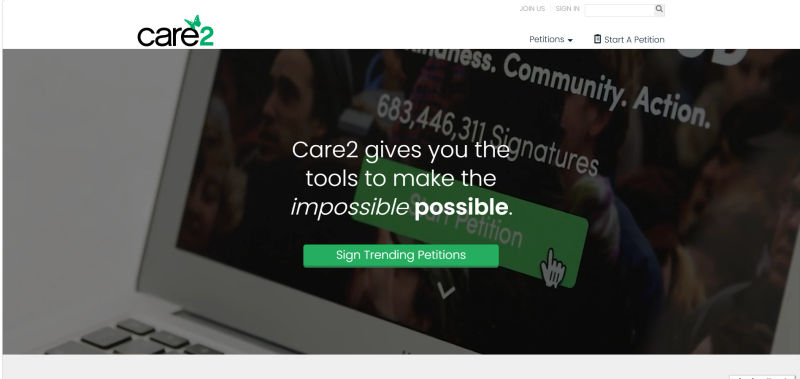
Care2 exemplifies this convergence. As a social network for good, Care2 connects nonprofits with millions of individuals passionate about specific causes. Unlike traditional lead generation which might rely on purchasing cold email lists, Care2 leverages the "Ladder of Engagement." A user’s journey begins with a low-barrier action, such as signing a petition, which signals intent and alignment with the cause. Through sophisticated follow-up strategies, these activists are then nurtured into financial supporters.
Data Privacy and Consent
As organizations bridge advocacy and fundraising, maintaining trust is paramount. This convergence must be underpinned by rigorous adherence to data privacy regulations like GDPR and CCPA. Modern advocacy tools ensure that when an activist signs a petition, their consent to be contacted is explicitly captured and securely transferred to the CRM. This compliance-first approach protects the organization from liability and reassures the donor that their personal information is treated with respect.
Integrating advocacy tools into the fundraising stack allows for richer donor profiles. Knowing that a donor is passionate about a specific legislative bill allows for hyper-targeted communication that resonates on an emotional level. This alignment of values results in higher conversion rates and a stronger sense of community ownership.
Find Perfect Software For Your Business
Hyper-Personalization: The End of 'Spray and Pray'
Hyper-personalized donor outreach replaces outdated "spray and pray" mass emails by tailoring content, timing, and donation asks to individual preferences. Best practices for execution include:
Dynamic content: Customize messaging using dynamic email blocks based on past interactions.
Predictive timing: Leverage analytics to determine the optimal communication frequency and channel per donor.
Behavioral segmentation: Group audiences by past campaign engagement rather than basic demographics to align appeals with specific donor interests.
1. Zero-Party Data Strategies
True hyper-personalization goes beyond merely inserting a first name into a subject line. It involves leveraging Zero-Party Data—data that a customer intentionally and proactively shares with a brand, such as preference center choices or survey responses. Modern engagement platforms utilize this data to construct dynamic donor journeys.
For example, marketing automation tools can trigger specific email sequences based on user behavior. If a donor clicks on a link about a water conservation project, the system can automatically tag them with that interest and queue a follow-up impact story specifically about water projects. This level of relevance significantly boosts engagement metrics.
2. The Human-in-the-Loop
While automation is powerful, there is a risk of over-automation. Donors still value human connection. The most effective strategies employ a "Human-in-the-Loop" approach, where automation handles the administrative burden of stewardship—such as birthday greetings and tax receipts—but alerts staff when a personal touch is required. By utilizing conditional logic, nonprofits can ensure that every communication feels bespoke, thereby deepening the emotional connection and increasing the Lifetime Value (LTV) of the donor base without losing the soul of the mission.
Nonprofit Software Solutions: Legacy vs. Modern Tech
To visualize the magnitude of the shift required, it is helpful to compare the capabilities of nonprofit software solutions. Legacy systems, often characterized by on-premise servers and clunky interfaces, create "Technical Debt"—the implied cost of additional rework caused by choosing a limited solution. In contrast, modern cloud-native platforms prioritize agility, integration, and intelligence.
The following table outlines the key operational differences:
Feature | Traditional Legacy System | Modern AI-Driven Tech Stack |
Data Structure | Siloed databases; manual export/import required. | Unified ecosystem; seamless API integrations. |
Donor Segmentation | Static lists based on manual queries. | Dynamic, behavioral segmentation and predictive scoring. |
Ask Strategy | Generic ask amounts or manual tiered logic. | AI-predicted "Smart Asks" based on capacity. |
Communication | Blanket mass email blasts. | Hyper-personalized, automated journeys. |
Mobile Accessibility | Not mobile-responsive; requires desktop access. | Mobile-first apps for staff; optimized pages for donors. |
Accounting Integration | Manual reconciliation; prone to human error. | Syncs with QuickBooks/Xero; automated ledger updates. |
Reporting | Retrospective; focuses on past quarters. | Predictive; forecasts future trends and prescribes actions. |
Acquisition | Cold list rentals and direct mail. | Advocacy-to-donor conversion pipelines. |
Overcoming Implementation Paralysis
Despite the clear advantages of modern technology, many nonprofits suffer from implementation paralysis. The prospect of migrating data, retraining staff, and overhauling established workflows can be daunting. Additionally, the fear of high upfront costs often deters boards from approving new software investments.
Navigating the "Messy Middle"
It is important to acknowledge the reality of the "messy middle." The transition period—often lasting 3 to 6 months—can be operationally difficult as teams clean data and learn new systems. However, this temporary friction is an investment in future efficiency. Being honest with stakeholders about this timeline builds trust and sets realistic expectations for the digital transformation journey.
To overcome financial hurdles, reframe the conversation around ROI (Return on Investment) rather than cost. Highlight metrics such as the reduction in administrative hours via automation, the projected increase in retention rates via predictive churn prevention, and the potential for increased average gift size via AI-optimized asks. Tools like Keela often pay for themselves by recovering just a small percentage of at-risk donors. By treating technology as mission-critical infrastructure rather than overhead, nonprofits can secure the resources needed to modernize.
Try AuthenCIO
Move to faster, smarter software evaluation with AI
Conclusion: Preparing for a Tech-First Future
The future of nonprofit technology is not a distant reality; it is already here. The innovations in predictive intelligence, automated stewardship, and advocacy-driven acquisition are reshaping the landscape of donor engagement. Organizations that cling to legacy systems and static data models risk irrelevance in an increasingly crowded and digital-first marketplace.
By embracing platforms that offer deep insights and seamless integration—such as the predictive power of Keela and the acquisition engine of Care2—nonprofits can transcend administrative burdens and focus on what truly matters: building meaningful relationships. The shift from transactional to relational, from reactive to predictive, is the key to unlocking sustainable growth.
To get started, consider this immediate 3-step action plan:
Audit Your Data: Identify where your data silos exist and where manual entry is slowing you down.
Survey Your Donors: Ask your supporters how they prefer to engage to inform your zero-party data strategy.
Evaluate Your Stack: Assess if your current software creates technical debt or drives ROI.
It is time to view technology not as a utility, but as a strategic partner in your mission to change the world. Future-proofing your organization requires action today.