.webp&w=64&q=75)
Introduction
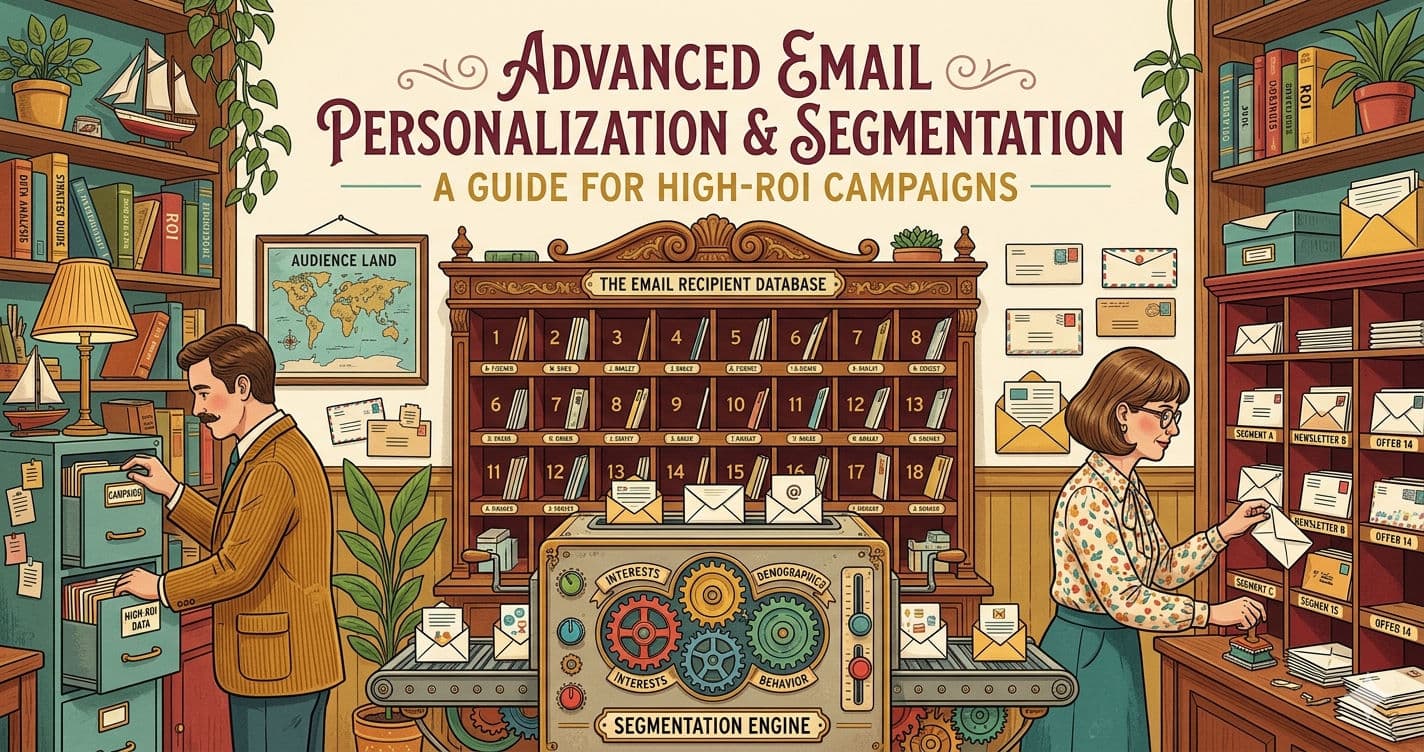
To measure email marketing success in 2026, marketers must look beyond surface-level data and adopt a revenue-centric analytics framework. This means tracking metrics that indicate genuine engagement and business impact—such as click-to-open rates (CTOR), conversion attribution, and subscriber lifetime value (SLV)—rather than relying on outdated vanity metrics.
Streamline your software evaluation process
The introduction of Apple’s Mail Privacy Protection (MPP) served as the initial wake-up call for the industry. By pre-loading pixel tracking data, MPP essentially obscured the validity of the open rate, forcing marketers to abandon vanity metrics in favor of data points that signal actual intent.
Building on these privacy shifts, the 2024 and 2025 bulk sender requirements from Google and Yahoo made technical authentication (SPF, DKIM, DMARC) and one-click unsubscribe headers mandatory. The best practice today is to monitor deliverability and list hygiene just as closely as campaign performance.
Effective email intelligence answers the hard questions: why a campaign succeeded and what a subscriber will do next. Achieving this requires transitioning from basic descriptive reporting to predictive modeling that forecasts churn velocity and revenue.
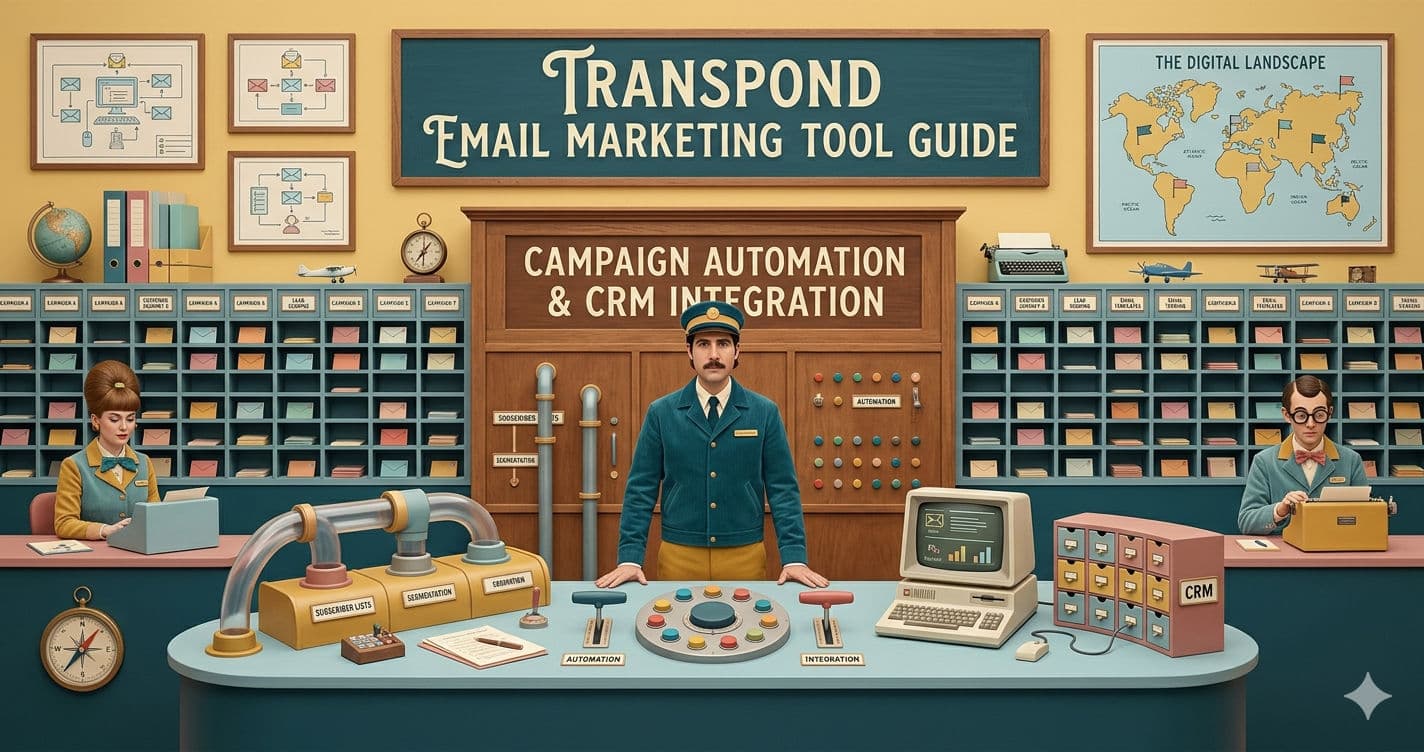
To implement these practices, you must conduct a rigorous audit of your tech stack. Ensure your Email Service Provider (ESP) functions not just as a delivery pipe, but as a robust analytical engine capable of parsing millions of data points into actionable, multidimensional insights.
Key Takeaways
Look Beyond Open Rates: In 2026, the Click-to-Open Rate (CTOR) and post-click engagement signals are the true indicators of campaign resonance, rendering basic open rates obsolete.
Upgrade Revenue Attribution: Shift from simplistic last-click models to incrementality testing and Subscriber Lifetime Value (SLV) to accurately measure email's bottom-line impact.
Prioritize Zero-Party Data: With tightening privacy regulations, explicitly shared subscriber preferences are the new gold standard for personalization and segmentation.
Integrate the Modern Data Stack: Relying solely on your Email Service Provider (ESP) is no longer sufficient. Connect your email data with advanced analytical tools like ExpertSender S.A. and Moosend for multidimensional analysis.
Enforce Strict List Hygiene: Protect your deliverability by implementing automated sunset policies for inactive subscribers and closely monitoring spam complaints over standard unsubscribe rates.
Leading Email Automation Software Solutions to Know
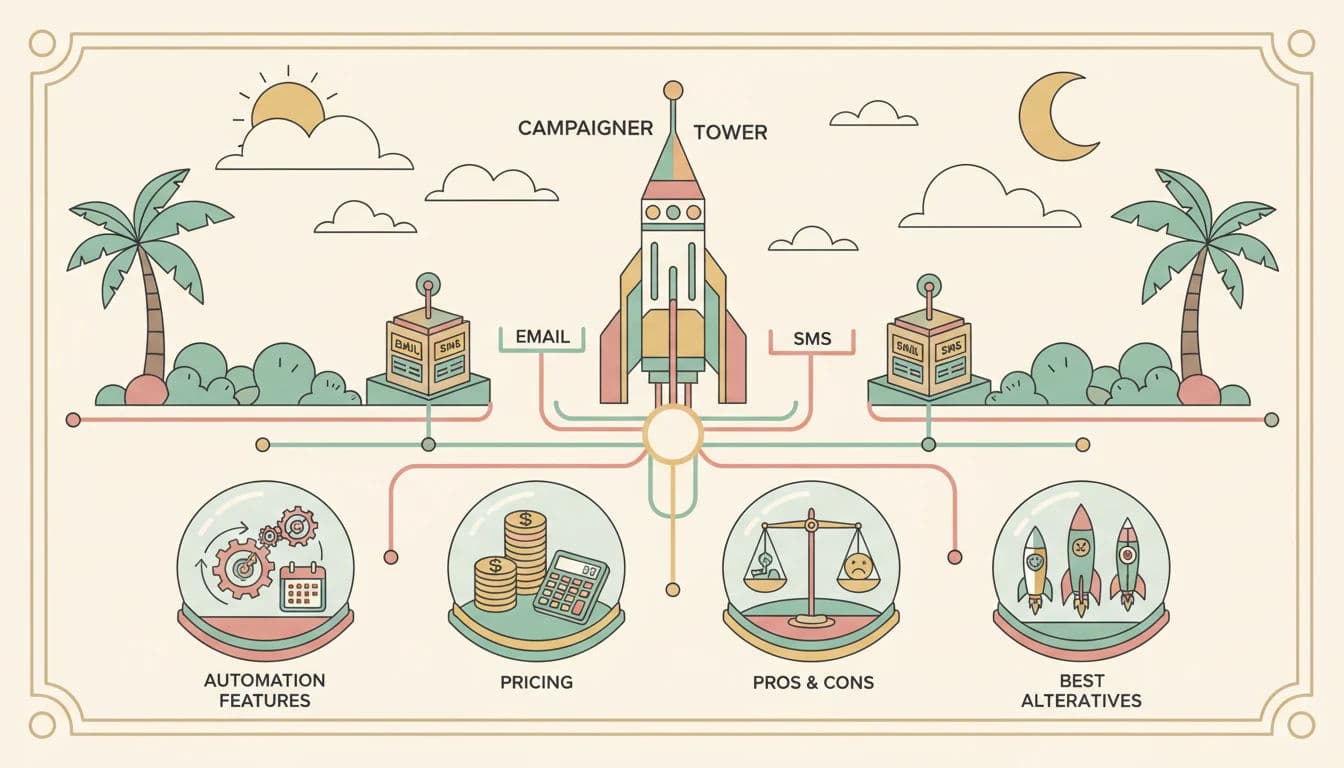
Implementing advanced analytics requires robust infrastructure. For marketers seeking the best email marketing platforms for tracking metrics analytics 2025 2026, the right tool is critical for measuring true revenue attribution. The solutions below represent the best email marketing platforms for tracking metrics analytics 2026, offering advanced reporting and deep data stack integrations.


The Foundation: Delivery vs. Deliverability
Before analyzing engagement or conversion, we must address the infrastructure that makes communication possible. A common pitfall among marketers is conflating "delivery rate" with "deliverability." These are distinct concepts, and treating them as synonyms can mask critical issues in your sender reputation.
Delivery Rate is simply the percentage of emails that were not rejected by the receiving server. If you send 1,000 emails and get 990 "250 OK" server responses, you have a 99% delivery rate. However, this metric is deceptive. It does not tell you where the email landed. It could be in the primary inbox, the promotions tab, or the spam folder. A high delivery rate can coexist with zero visibility if your content is being filtered into oblivion.
Deliverability (Inbox Placement) is the true measure of success. It refers to the percentage of emails that actually land in the inbox where a human can see them. This metric is governed by a complex web of factors, primarily your IP reputation and domain reputation.
Internet Service Providers (ISPs) and mailbox providers (MBPs) like Gmail and Outlook utilize sophisticated algorithms to assign a Sender Score to your domain. If this score dips due to sporadic sending volumes, high complaint rates, or the presence of spam traps on your list, your deliverability will suffer regardless of your delivery rate.
Monitoring Inbox Placement
Since standard ESP reports cannot definitively tell you if an email landed in Spam, data-driven marketers must utilize seed list testing. This involves sending your campaign to a monitored list of addresses (seeds) across various providers (Gmail, Yahoo, Outlook, iCloud) to see exactly where the message lands.
Tools like GlockApps or Everest provide this visibility, allowing you to identify if a specific ISP is throttling your IP or if your content is triggering spam filters before you deploy to your full list. Without this "pre-flight" check, you are flying blind.
Engagement Metrics: Moving Beyond the Open Rate
With open rates compromised by privacy updates, modern email marketing analytics metrics must focus on genuine engagement. The "open" is now a passive signal; the "click" is active. However, Click-Through Rate (CTR) alone is misleading. Teams must track specific email marketing analytics metrics kpis—such as click-to-open rates and read time. These marketing analytics metrics examples offer deeper behavioral context. Relying on these robust marketing analytics metrics ensures email automation software workflows drive actual conversions rather than vanity interactions.
1. The Superiority of Click-to-Open Rate (CTOR)
While CTR measures clicks against the total number of delivered emails, the Click-to-Open Rate (CTOR) measures clicks against the number of unique opens. This distinction is critical for evaluating the effectiveness of your content and creative. CTR tells you about the overall campaign performance (subject line + content), whereas CTOR isolates the performance of the email content itself.
For example, if you have a high open rate (driven by a great subject line) but a low CTOR, it indicates a disconnect between the promise of the subject line and the delivery of the content. It suggests that while you successfully captured attention, you failed to retain it or drive action.
In a post-MPP world, calculating CTOR can be trickier, but it remains a vital proxy for content resonance. Marketers should aim for a CTOR benchmark of roughly 10-15%, though this varies heavily by industry.
2. Post-Click Engagement Signals
Since we can no longer rely on the open pixel to measure reading time, advanced teams are looking further down the funnel. Metrics like Time on Page and Scroll Depth for the linked destination URL serve as powerful proxies for email quality. If a subscriber clicks through but bounces within five seconds, your email likely misled them or the landing page experience was fractured. By correlating email clicks with Google Analytics 4 (GA4) engagement data, you can build a more accurate picture of true interest.
3. Email Performance Tracking by Device and Client
Modern analytics must also account for the environment in which the email is consumed. With over 42% of emails opened on mobile devices, failing to track engagement by device is a significant blind spot. If your heatmaps show a high click density on desktop but near-zero engagement on mobile, you likely have a responsive design failure.
Advanced ESPs allow you to segment reports by device and email client (e.g., Apple Mail vs. Outlook), enabling you to troubleshoot rendering issues that might be depressing your overall engagement metrics.
Conversion and Revenue Attribution
Ultimately, engagement metrics are proxies for the only metric that truly matters to the C-suite: revenue. The challenge lies in accurately attributing revenue to specific email campaigns, especially in a complex, multi-touch buyer journey.
1. Moving Beyond Last-Click Attribution
Traditionally, many marketers relied on "last-click attribution," giving 100% of the credit to the final touchpoint before conversion. In email marketing, this often undervalues the channel's role in nurturing leads. A subscriber might open five educational emails over a month, click through to read a blog post, and then finally convert via a retargeting ad or a direct search. Under last-click models, email gets zero credit for that sale.
Sophisticated marketers are moving toward multi-touch attribution models, such as linear attribution (crediting all touchpoints equally) or time-decay attribution (giving more credit to recent interactions). By integrating your ESP data with a CRM or a dedicated analytics platform, you can trace the "assist" value of your email campaigns.
2. The Gold Standard: Incrementality Testing
To truly master email ROI measurement, data-driven teams are adopting incrementality testing. Attribution models tell you which touchpoints were present, but they don't always prove causality. Incrementality answers the question: "Would this user have purchased anyway, even if they hadn't received this email?"
This is measured by creating a Hold-out Group (or Control Group)—a random segment of your audience (e.g., 5-10%) that is suppressed from receiving a specific campaign or flow. By comparing the conversion rate of the audience that received the email against the hold-out group that did not, you can calculate the true "lift" or incremental revenue generated by the email. This is the most defensible way to prove the value of the email channel to skeptical stakeholders.
3. Calculating Subscriber Lifetime Value (SLV)
To understand the long-term ROI of your email program, you must calculate the Subscriber Lifetime Value (SLV). This metric answers the question: "How much revenue does a single email subscriber generate over their tenure on my list?"
The formula for SLV is conceptually straightforward but computationally complex:
SLV = (Monthly Revenue from Email / Total Number of Subscribers) × Average Subscriber Lifespan (in months)
Tracking SLV allows you to determine how much you can afford to spend on acquiring a new subscriber (Cost Per Acquisition or CPA). If your SLV is $50 and your CPA is $10, your program is highly profitable. If your SLV drops to $15, you have a retention or monetization problem. This metric stabilizes your reporting, moving focus away from the volatility of individual campaign performance and toward the health of the subscriber base as an asset.
Find Perfect Software For Your Business
The Modern Data Stack: Beyond the ESP
While a robust ESP is essential, sophisticated marketers no longer keep their data siloed within the email platform. To achieve a holistic customer view, email data must flow into a centralized Data Warehouse like Snowflake, Google BigQuery, or Amazon Redshift.
Connecting specific ESPs to data warehouses typically requires automated ETL (Extract, Transform, Load) pipelines or native webhooks. To connect Moosend to Snowflake, you have two primary methods: use a middleware data pipeline (like Fivetran or Airbyte) to extract Moosend metrics via API and load them directly into Snowflake tables, or configure Moosend webhooks to push real-time event data into cloud storage (like Amazon S3) and continuously ingest it using Snowflake's Snowpipe.
Exporting this raw event data allows you to join email metrics with point-of-sale transactions, support tickets, and website behavioral data. This creates a "Single Source of Truth" for complex SQL queries, such as analyzing the correlation between high support ticket volume and unsubscribe rates, or how specific discount thresholds impact long-term customer LTV.
Zero-Party Data: The New Gold Standard
As third-party cookies crumble and privacy laws tighten, data-driven email marketing is pivoting toward zero-party data—data that a customer intentionally and proactively shares with you. This includes preferences, purchase intentions, and personal context.
Newer technologies like AMP for Email allow marketers to embed interactive forms and surveys directly inside the email body. Instead of measuring success by clicks, the new metric here is "Attributes Collected." For instance, sending an interactive email asking, "What product category are you most interested in this season?" generates a data point that is far more valuable than a click inference.
Tracking the completion rate of these in-email experiences and mapping them to subsequent personalization efforts is the new frontier of relevance.
Advanced Analytical Capabilities: ExpertSender S.A. and Moosend
To execute this level of granular analysis, the choice of software is paramount. Basic tools often lack the depth required for cohort analysis or predictive modeling. Enterprise-grade solutions like ExpertSender S.A. and Moosend provide the infrastructure necessary for this deep dive.
1. High-Volume Multidimensional Analysis with ExpertSender S.A.
For brands managing high-volume sending, ExpertSender S.A. offers deep data segmentation capabilities that go beyond basic demographics. Their platform excels in multidimensional analysis, allowing data teams to visualize how specific micro-segments perform over time.

Rather than just reporting on a campaign level, ExpertSender S.A. enables behavioral targeting based on real-time interactions across multiple channels. For instance, an e-commerce brand can track a user who browsed a specific category, abandoned a cart, and engaged with an SMS, triggering a hyper-personalized email sequence. This capability is essential for identifying "whales" (high-value customers) within a massive database and tailoring retention strategies specifically for them.
2. Visualizing Automation Performance with Moosend
Moosend addresses the "black box" problem of automation. Often, marketers know emails are sending but cannot visualize exactly where users drop off in a complex journey. Moosend’s visual workflow editor overlays real-time analytics directly onto the automation steps.
.webp?updatedAt=1786993609374&tr=w-800%2Cq-80%2Cf-auto%2Cc-at_max)
This allows a marketer to see exactly which branch of a decision tree is underperforming. If a welcome series splits based on user preference, Moosend’s analytics can instantly reveal if Branch A has a 40% conversion rate while Branch B lags at 10%.
Furthermore, their platform simplifies the implementation of "weather-based" triggers, providing unique data points on how environmental factors influence engagement. By leveraging these insights, marketers can pivot strategies instantly rather than waiting for a monthly post-mortem.
List Hygiene and Churn Metrics
A healthy email list is not static; it is a flowing river of entering and exiting users. Ignoring the "exit" side of this equation is a recipe for deliverability disaster. Churn is inevitable, but it must be measured and managed.
1. Unsubscribe Rates vs. Spam Complaints
There is a massive difference between an unsubscribe and a spam complaint. An unsubscribe is a healthy signal; it is a user politely declining further communication, which cleans your list and improves engagement rates. A spam complaint is a direct hit to your reputation.
Industry standards suggest that a spam complaint rate above 0.1% (1 complaint per 1,000 emails) is the danger zone. If you approach this threshold, ISPs will begin to route your emails to the junk folder. Advanced analytics dashboards should alert you immediately if a specific campaign triggers a spike in complaints, allowing you to pause and investigate before the damage spreads.
2. The Sunset Policy: Managing Inactive Subscribers
Perhaps more dangerous than unsubscribes are "emotionally unsubscribed" users—those who receive your emails but never open or click. These "zombie" accounts dilute your engagement metrics and drag down your sender reputation. To combat this, CRM managers must implement a strict Sunset Policy.
0-30 Days: Active phase. Standard frequency.
30-60 Days: At-risk phase. Reduce frequency, introduce different subject line strategies.
60-90 Days: Re-engagement phase. Trigger a specific "We miss you" automated flow with a strong incentive.
90+ Days: Churn phase. If no engagement occurs, these users must be suppressed or deleted.
While it is painful to delete thousands of contacts, a smaller, highly engaged list generates more revenue and better deliverability than a massive, stagnant one.
Industry Benchmarks
To contextualize your data, it is helpful to compare your metrics against industry averages. However, remember that your own historical data is always the most relevant benchmark. The following table outlines general performance standards across key verticals.
Industry | Average Open Rate | Average CTR | Click-to-Open Rate | Bounce Rate |
E-commerce / Retail | 20.5% | 2.5% | 10.8% | 0.6% |
SaaS / B2B | 22.0% | 2.8% | 12.5% | 0.9% |
Financial Services | 24.8% | 3.1% | 14.2% | 0.8% |
Non-Profit | 26.6% | 2.9% | 13.1% | 0.5% |
Media / Publishing | 23.1% | 4.5% | 18.0% | 0.4% |
Source: Aggregated data from 2025-2026 industry benchmark reports. Note: Open rates are estimated due to MPP skew. Focus on CTR and CTOR for accuracy.
Try AuthenCIO
Move to faster, smarter software evaluation with AI
Conclusion: Building a Scalable Analytics Framework
Data-driven email marketing is not about collecting more data; it is about filtering out the noise to focus on the signals that drive growth. By shifting your focus from vanity metrics like open rates to foundational elements like deliverability and revenue-driving KPIs like SLV and attribution, you position your email channel as a verifiable engine of business growth.
The transition requires both a mindset shift and the right tooling. Whether you are leveraging the high-volume segmentation of ExpertSender S.A., the visual automation insights of Moosend, or a custom SQL-driven data stack, the goal remains the same: to turn raw numbers into a narrative of customer behavior. As privacy laws continue to evolve and the technical landscape shifts, the marketers who win will be those who treat analytics not as a monthly report, but as a daily discipline.