
Introduction
In the digital marketing ecosystem, trends come and go with the volatility of a cryptocurrency. Social media algorithms shift overnight, organic reach plummets, and paid acquisition costs skyrocket. Yet, amidst this chaos, one channel remains the undisputed king of ROI: email. For content creators and copywriters, the inbox is not just a communication channel; it is a sanctuary of attention. It is the only place where you have permission to speak directly to your audience without a gatekeeper demanding a toll.
Streamline your software evaluation process
However, the privilege of entering a subscriber's inbox comes with a heavy responsibility. The modern inbox is a battlefield. Your carefully crafted newsletter is fighting for attention against urgent work emails, family updates, and a barrage of promotional noise. To win, you must master the art of writing compelling email copy. It is no longer enough to simply write well; you must write strategically, leveraging psychology, data, and advanced segmentation to drive action.
This article serves as your comprehensive email marketing copywriting guide. It is not a primer for beginners but a deep dive into the mechanics of persuasion, designed for professionals ready to elevate their craft. We will explore the psychological triggers that drive opens, the structural frameworks that retain attention, and the technological levers—provided by platforms like GetResponse and Campaign Monitor by Marigold—that turn passive readers into loyal advocates.
Key Takeaways for High-Converting Copy
Before we dissect the anatomy of a perfect email, here are the core principles of writing high-converting email copy that we will cover:
Psychology First: Success relies on triggering curiosity and leveraging loss aversion in subject lines.
Strategic Frameworks: Moving beyond intuition to use proven structures like AIDA, PAS, and Story-Teach-Offer.
Data-Driven Personalization: Using behavioral data to segment audiences, ensuring relevance over volume.
Deliverability Awareness: Understanding how your word choice impacts whether you land in the Inbox or the Spam folder.
Diagnostic Optimization: Using metrics not just to track success, but to diagnose specific copy failures.
Leading Email Automation Software Solutions to Know
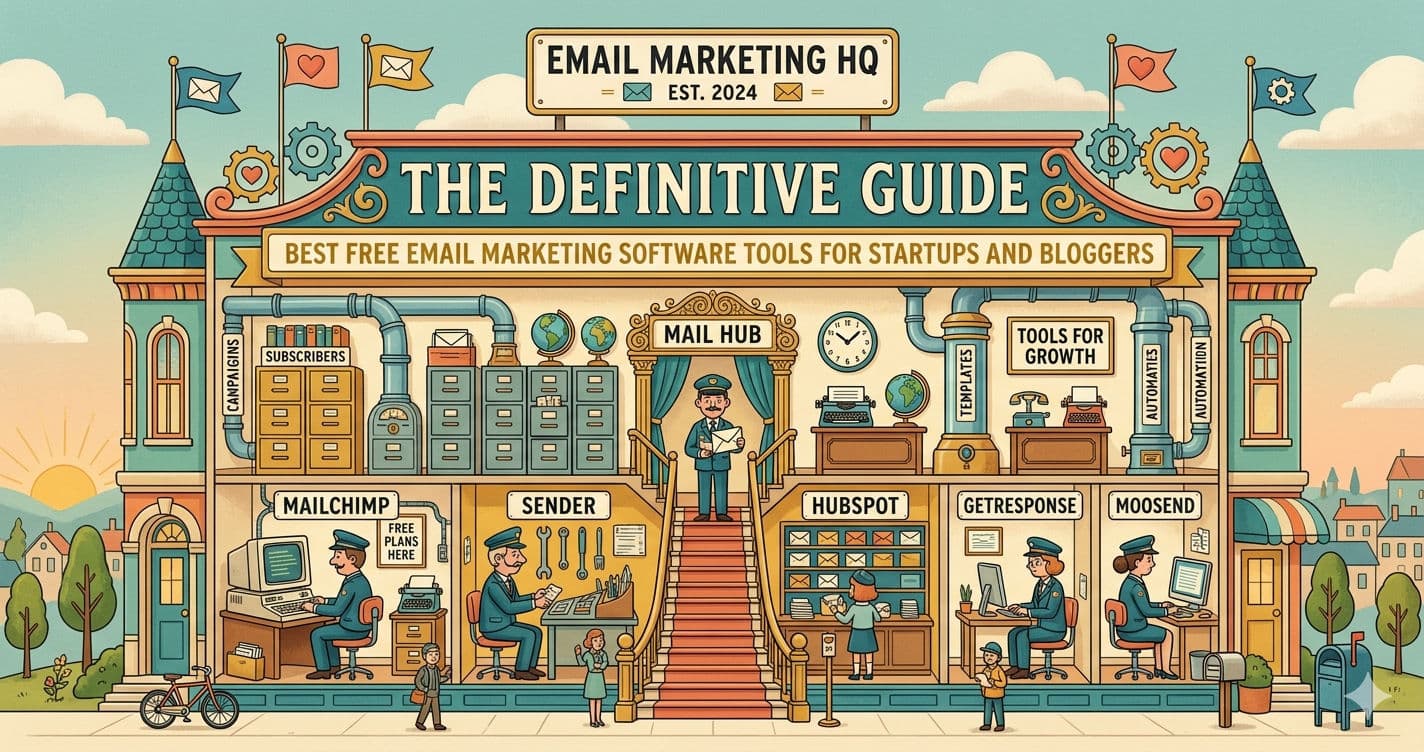
While this guide explores key industry insights, seeing these principles in action requires the right platform. Here is a snapshot of the most recognized Email Automation Software solutions currently shaping the market.


The Anatomy of a High-Converting Subject Line
The subject line is the gatekeeper of your content. Regardless of how valuable the information inside your email is, it is functionally non-existent if the recipient does not click "open." In the copywriting world, we often say that the only job of the subject line is to sell the open. However, in an era of hyper-skepticism, it must also establish trust.
Ready to find the perfect email automation platform? Try AuthenCIO's free comparison tool.
1. The Psychology of the Open
To cut through the cognitive noise, your subject line must trigger a specific psychological response. Three of the most potent triggers are curiosity, urgency, and relevance.
The Curiosity Gap: This technique leverages the brain's natural desire to close the gap between what it knows and what it wants to know. It forces the brain to ask, "What is missing here?"
Loss Aversion (FOMO): Psychologically, the pain of losing is twice as powerful as the pleasure of gaining. Subject lines that imply a fleeting opportunity or a potential loss of status often outperform benefit-driven lines. However, this must be used sparingly to avoid fatigue.
Hyper-Relevance: This is where data meets copy. Using a subscriber's name is basic; referencing their recent behavior is advanced. A subject line like "Questions about your abandoned cart?" signals immediate relevance.
2. From Generic to Genius: Before and After
To truly understand the power of psychological triggers, let’s look at how a professional copywriter transforms generic placeholders into high-performing hooks.
Example 1: The Newsletter Update
Before: "Weekly Newsletter #45"
After: "The one metric that is killing your growth"
Why it works: The "Before" is purely informational and easy to ignore. The "After" utilizes a Curiosity Gap and a touch of fear. The reader feels compelled to know which metric it is to ensure they aren't making a mistake.
Example 2: The Product Launch
Before: "Our new course is available now"
After: "Don't get left behind (Doors close in 48 hours)"
Why it works: The "Before" focuses on the seller (Our course). The "After" focuses on the buyer and triggers Loss Aversion. It implies that inaction will result in a negative outcome (getting left behind).
Example 3: The Re-engagement Email
Before: "We haven't heard from you in a while"
After: "Did I do something wrong?"
Why it works: The "Before" is a standard corporate statement. The "After" is deeply human and vulnerable. It breaks the pattern of polished marketing speak and demands a human response.
3. Optimizing the Pre-Header Text
Often ignored, the pre-header text (or preview text) is the "second subject line." On mobile devices, which account for roughly 42% of all email opens, the pre-header provides critical context. If your pre-header reads "View this email in your browser" or "Unsubscribe," you are wasting prime real estate.
Professional copywriters use the pre-header to elaborate on the promise made in the subject line. If the subject line is the hook, the pre-header is the line that reels them in. It should seamlessly continue the narrative, reducing the cognitive load required for the user to decide whether to engage.
Structuring the Body: Frameworks that Work
Once the email is open, the clock starts ticking. Research suggests you have roughly 8 to 10 seconds to capture the reader's attention before they scan, delete, or archive. To maximize this window, you must rely on proven copywriting frameworks rather than intuition.
1. The AIDA Framework
This classic model—Attention, Interest, Desire, Action—remains the gold standard for promotional emails.
Attention: Your headline inside the email (or the first sentence) must arrest the reader. It should be punchy, bold, and directly address a pain point or desire.
Interest: Engage the reader's intellect. Use storytelling or surprising data to keep them reading. This is where you transition from the hook to the meat of your message.
Desire: Shift from features to benefits. How will your solution change their life? This is the emotional core of the email.
Action: The explicit instruction on what to do next.
2. The PAS Formula
For problem-centric products or services, the PAS (Problem-Agitate-Solve) formula is often more effective than AIDA.
Problem: Clearly identify a specific issue the reader is facing. "Struggling to get your emails opened?"
Agitate: Twist the knife. Describe the consequences of that problem. "It’s frustrating to spend hours writing content that disappears into the void, hurting your domain reputation and your revenue."
Solve: Present your solution as the only logical conclusion. "That’s why we developed the Subject Line Optimizer."
3. The Story-Teach-Offer Model
For content creators and newsletter writers, the "hard sell" of AIDA or PAS can sometimes feel too aggressive. The Story-Teach-Offer framework builds authority and trust before asking for the sale.
Story: Begin with a personal anecdote or a relevant narrative. "Last week, I completely failed at..."
Teach: Extract a lesson from that story that is valuable to the reader. "Here is what I learned about resilience..."
Offer: Softly transition to how your product or service helps implement that lesson. "If you want to dive deeper into this topic, my new guide covers..."
This framework is particularly effective for nurturing sequences where the goal is brand affinity rather than immediate conversion.
4. Visual Hierarchy and Readability
Copy does not exist in a vacuum; it lives within a design. If your email is a wall of text, your copy will fail. This is where the synergy between copywriter and designer—or copywriter and tool—becomes vital.
Platforms like Campaign Monitor by Marigold facilitate this by offering templates that enforce strong visual hierarchy. By utilizing drag-and-drop builders, you can ensure your H2s, bullet points, and images guide the reader’s eye down the page toward the CTA. As a writer, you must write for the design. Use short paragraphs (1-2 sentences), bold key phrases for skimmers, and ensure your "above the fold" content delivers immediate value.

The Human Element: Finding Your Brand Voice
In the pursuit of optimization, it is easy to lose the human element. Yet, people buy from people, not faceless corporations. A consistent brand voice is the glue that holds your strategy together.
1. Avoiding Corporate Speak
Nothing kills engagement faster than jargon that serves no purpose. Words like "synergy," "leveraging," and "paradigm shift" create distance between you and the reader. Instead, write as if you are emailing a smart friend. Use contractions (e.g., "you're" instead of "you are"), ask rhetorical questions, and don't be afraid to show personality. If your brand is witty, be witty. If it is serious and academic, be precise.
2. The "Unsubscribe" Opportunity
Paradoxically, one of the best places to showcase your brand voice is your unsubscribe link. Most creators hide it in the footer with legalistic text. However, confident brands humanize it. A line like "Too many emails? Unsubscribe here—no hard feelings," respects the user's agency and leaves a positive final impression. This "graceful exit" protects your brand reputation and reduces the likelihood of users marking you as spam out of frustration.
Find Perfect Software for Your Business
Segmentation and Hyper-Personalization
The era of the "batch and blast" newsletter is dead. Today, high-converting copy is a result of granular segmentation. Writing a generic email to your entire list will inevitably lead to lower engagement and higher churn. The goal is to send the right message to the right person at the right time.
1. Beyond the First Name Tag
True personalization goes deeper than Hi {First_Name}. It involves Dynamic Content—blocks of text or images that change based on the recipient's data. For instance, you might write one version of a paragraph for CEOs focusing on strategy, and another version for Marketing Managers focusing on execution.
Tools like Moosend enable copywriters to leverage behavioral triggers to automate this process. If a subscriber clicked a link about "SEO" in your last newsletter, Moosend can trigger a follow-up sequence specifically about SEO services. This allows you to write copy that feels intimately personal because it is a direct response to an action the user took.
.webp?tr=w-800%2Cq-80%2Cf-auto%2Cc-at_max)
2. Behavioral Segmentation Strategies
When you segment your audience, you can adjust your tone and jargon.
Cold Leads: The copy should be educational, low-pressure, and focused on building authority.
Warm Leads: The copy can be more direct, focusing on social proof and objection handling.
Existing Customers: The copy should focus on retention, upselling, and community building.
The Psychology of the Call to Action (CTA)
The Call to Action is the moment of truth. It is the tipping point where passive consumption transforms into active engagement. Writing a compelling CTA requires an understanding of decision fatigue and value exchange.
1. The Paradox of Choice
One of the most common mistakes in email copywriting is including too many CTAs. When you ask a reader to "Read our blog," "Follow us on Instagram," and "Buy our course" in the same email, you trigger the Paradox of Choice. The cognitive load required to choose between options often leads to the user choosing none.
Ideally, every email should have one primary goal. Your copy should funnel the reader toward that single action. If you must include secondary links, ensure they are visually subordinate to the primary button.
2. Micro-Copy on Buttons
"Click Here" and "Submit" are wasted opportunities. Your button copy should complete the sentence "I want to..." from the user's perspective.
Instead of "Register," use "Save My Seat."
Instead of "Download," use "Get My Free Guide."
Instead of "Buy Now," use "Start My Transformation."
This subtle shift in framing reinforces the benefit rather than the cost (effort) of clicking.
3. The Power of the P.S.
The "P.S." (postscript) is often the second most-read element of an email, after the subject line. Skimmers who scroll past your body copy will often stop at the bottom. Use the P.S. to restate your primary offer, overcome a final objection, or provide a secondary, lower-friction CTA (e.g., "P.S. Not ready to buy? Reply to this email and ask me a question").
The Intersection of Copy and Deliverability
Many copywriters view deliverability—the ability of an email to land in the inbox rather than the spam folder—as a technical issue for the IT department. In reality, your copy choices play a massive role in where your email lands.
1. Spam Trigger Words
Internet Service Providers (ISPs) like Gmail and Outlook scan your copy for patterns associated with spam. Overusing words like "Free," "Guarantee," "Risk-free," "$$$," or writing in ALL CAPS can trigger these filters. While you don't need to eliminate these words entirely, you must use them contextually and sparingly. A subject line that reads "FREE MONEY!!!" is a one-way ticket to the junk folder.
2. Engagement as a Filter
Modern spam filters rely heavily on engagement. If your copy is boring and people delete it without opening, or open it and immediately close it, ISPs take note. Low engagement rates signal to providers that your content is unwanted, hurting your Sender Reputation. This creates a vicious cycle: poor copy leads to low engagement, which leads to poor deliverability, which leads to even lower engagement. Therefore, writing compelling, high-retention copy is actually a technical requirement for deliverability.
3. Link Density and Text-to-Image Ratio
Emails that are just one giant image or contain dozens of links can also be flagged. To ensure high deliverability, maintain a healthy balance of text and HTML. Ensure your copy is substantial enough to balance out your images and links, signaling to the algorithms that this is a legitimate communication.
See how the top email marketing platforms stack up. Use AuthenCIO for a side-by-side comparison.
Testing and Optimization: The Data-Driven Approach
Even the most experienced copywriters cannot predict the market with 100% accuracy. What works for one audience may flop with another. This is why A/B testing (or split testing) is non-negotiable. It moves copywriting from a subjective art to an objective science.
1. What to Test
While subject lines are the most common element to test, you should also experiment with:
Sender Name: Does the email perform better coming from "The Team" or a specific person?
Long vs. Short Copy: Does your audience prefer deep dives or quick hits?
Tone: Professional vs. conversational.
Platforms like iContact simplify this process, making split testing accessible for businesses of all sizes. By running a test on a small percentage of your list (e.g., 10%), you can statistically determine the winner and send that version to the remaining 90%. This functionality allows you to validate your copywriting hypotheses with real data.
.webp?tr=w-800%2Cq-80%2Cf-auto%2Cc-at_max)
2. Analyzing Engagement
Testing is useless if you don't know how to interpret the results. You need to look beyond the vanity metrics. High open rates with low click-through rates (CTR) indicate a disconnect between your subject line and your body copy—essentially, clickbait.
Advanced analytics features, such as those found in GetResponse, allow you to visualize this engagement. By tracking not just who clicked, but how they interacted with the email over time, you gain a feedback loop. If your open rates are high but conversion is low, your copy promised something it didn't deliver. If opens are low but CTR is high, your content is great, but your subject lines need work.

Key Email Marketing Metrics
To truly master email copywriting, you must speak the language of data. Understanding these metrics helps you diagnose where your copy is failing and where it is succeeding. Below is a breakdown of the essential metrics every copywriter should monitor.
Metric | Definition | Benchmarks | Why It Matters for Copywriters | Diagnostic Action |
Open Rate | The percentage of recipients who opened your email. | 21% - 25% | Indicates the effectiveness of your Sender Name, Subject Line, and Pre-header text. | Test new subject line angles (Curiosity vs. Benefit). |
Click-Through Rate (CTR) | The percentage of recipients who clicked at least one link. | 2% - 5% | The ultimate measure of your body copy's persuasiveness and the clarity of your CTA. | Simplify the CTA or improve visual hierarchy. |
Click-to-Open Rate (CTOR) | The percentage of openers who clicked a link. | 10% - 15% | Measures the relevance of your content to those who actually read it. | Ensure the body copy delivers on the subject line's promise. |
Unsubscribe Rate | The percentage of recipients who opted out. | < 0.5% | High rates suggest you are either emailing too frequently, or your content is no longer relevant. | Segment your list to ensure relevance; check content frequency. |
Bounce Rate | The percentage of emails that could not be delivered. | < 2% | High bounce rates can result from poor list hygiene or spam-trigger words in your copy. | Clean your email list; review copy for spam triggers. |
Try AuthenCIO
Move to faster, smarter software evaluation with AI
Conclusion: Crafting Your Legacy in the Inbox
Writing compelling email copy is a discipline that requires a balance of empathy and analytics. It is about understanding the human on the other side of the screen—their fears, their desires, and their limited attention span. It requires the humility to test your assumptions and the creativity to stand out in a crowded marketplace.
By mastering the psychological triggers of subject lines, structuring your body copy with proven frameworks like AIDA, PAS, and Story-Teach-Offer, and leveraging the power of segmentation through tools like Moosend and Campaign Monitor by Marigold, you can turn your email list into your most valuable asset. Remember, every email you send is a vote for your brand's authority. Make it count.
Don't let your strategy rely on guesswork. The tools you choose to deliver your copy are just as important as the words themselves. Whether you need the advanced analytics of GetResponse or the testing simplicity of iContact, ensuring you have the right infrastructure is the final step in the copywriter's journey.