
Introduction
In the current digital advertising ecosystem, the era of manual campaign management is effectively over. As media fragmentation accelerates and privacy regulations like GDPR and the deprecation of third-party cookies induce massive signal loss, the ability to make real-time, data-driven decisions is the defining factor between a profitable quarter and a wasted budget. For modern marketing leaders, the question is no longer if they should automate, but how to select the infrastructure that will power their future growth.
Streamline your software evaluation process
Market opacity creates severe challenges for buyers selecting complex software. When vendors obscure underlying algorithms, pricing structures, and integration limitations, buyers struggle to differentiate genuine technical capabilities from superficial marketing claims. This lack of transparency frequently leads to misaligned expectations, hidden costs, and vendor lock-in, making objective evaluation difficult.
This is your definitive ad automation software buyer's guide. The goal of this article is to cut through the vendor noise and provide a rigorous framework for evaluating the technology that will manage your media spend. While the global marketing automation market was valued at $6.65 billion in 2024, market size is irrelevant if the tool you select cannot integrate with your specific tech stack or solve your unique attribution challenges.
With 76% of businesses currently utilizing some form of automation, the competitive baseline has shifted. Competitors are leveraging machine learning to optimize Return on Ad Spend (ROAS) with algorithmic efficiency. However, the landscape is crowded with solutions ranging from opaque "Black Box" algorithms to transparent "Glass Box" systems. This guide will dissect the procurement process, analyze key technical criteria, and evaluate leading platforms to help you navigate market opacity and build a resilient, high-performance ad tech stack.
Key Takeaways
Define your primary use case: Before evaluating platforms, identify whether your biggest bottleneck is algorithmic bidding, creative generation (DCO), or cross-channel orchestration.
Demand AI transparency: Prioritize "glass box" AI solutions that allow you to understand how bidding decisions are made, avoiding opaque "black box" algorithms that offer no strategic insights.
Scrutinize pricing models: Choose between flat-fee and percentage-of-spend models based on your projected ad spend growth to avoid unexpected cost escalations as your campaigns scale.
Test before you invest: Always insist on a Proof of Concept (POC) phase using a subset of your live campaign data to validate API stability, data latency, and attribution accuracy.
Prioritize data portability: Ensure the platform allows seamless migration and data extraction to prevent vendor lock-in and maintain compliance with evolving privacy regulations.
Leading Ad Automation Solutions to Know
When determining what is the best ad platform for automation, advertisers must evaluate their specific needs. Are you looking for the best automated ad platforms or the leading platforms for automated ad buying? Several top-tier options exist.
For those asking, "are there any top-rated tools for automated online ad buying?", the answer is yes. The most popular tools for automated ad buying streamline bidding and creative workflows. Whether you need the best ads automation platform or the best platforms for automating digital ad campaigns, explore this snapshot of the best automated ad platform choices available today:





The Strategic Imperative of Ad Automation
The transition from manual media buying to programmatic buying and workflow automation is driven by the need for operational efficiency. In a manual workflow, a media buyer might spend hours adjusting bids on individual keywords, manually rotating creative assets, or attempting to correlate data from disparate spreadsheets. This tactical execution leaves little room for high-level strategy.
Workflow automation flips this dynamic to streamline operations. Algorithms handle the heavy lifting of bid management and budget pacing while humans focus on creative strategy and audience insights. When identifying the best programmatic buying platform for workflow automation, advertisers must prioritize solutions that eliminate repetitive tasks, offer robust rule-based triggers, and seamlessly orchestrate cross-channel execution.
Statistically, the argument for automation is irrefutable. Companies utilizing marketing automation report an average return of $5.44 for every dollar spent, with many seeing positive ROI within the first year. But beyond the metrics, the strategic imperative lies in scalability and control.
The "Walled Garden" Paradox
One of the most pressing reasons to adopt third-party ad automation is to regain control from the "Walled Gardens"—specifically Google’s Performance Max (PMax) and Meta’s Advantage+. While these native automation tools are powerful, they are inherently biased toward their own inventory and often function as "Black Boxes," offering little insight into placement data or audience matching.
Third-party ad automation platforms act as a necessary control layer. They sit above the native tools, allowing you to impose cross-channel rules, control budget fluidity between platforms (e.g., shifting spend from Meta to TikTok based on real-time CPA), and maintain an independent "source of truth" for attribution. Without this layer, you are essentially handing your wallet to the publishers and asking them to spend it fairly—a strategy that rarely favors the advertiser.
How to Choose Ad Automation Software: A Needs Assessment
Before issuing an RFP (Request for Proposal), you must conduct a rigorous internal audit. "Ad Automation" is a broad umbrella term. To select the right tool, you must identify the specific bottleneck you are trying to solve. Generally, these needs fall into three distinct categories:
1. Algorithmic Bidding and Budget Management
If your primary pain point is managing thousands of SKUs, you need a platform specializing in algorithmic bid management and automated buying. These tools use predictive modeling to adjust bids in real-time based on conversion probability.
To determine what's the best adtech vendor for automated buying and automatic budget scaling, evaluate platforms like Quartile and BidX. Quartile excels in full-funnel automated buying, while BidX provides precise automatic budget scaling to dynamically shift spend toward high-performing campaigns.
The goal is to maximize ROAS without constant human intervention. Assess whether you need a rule-based system or a fully autonomous AI to execute these financial controls.
2. Creative Automation and DCO
The primary bottleneck for brands is often creative fatigue. To learn how to choose a creative automation platform, prioritize tools with robust Dynamic Creative Optimization (DCO) and seamless feed integrations.
When evaluating what's the best adtech platform for creative and media workflow automation, seek solutions bridging design and media buying. If asking which catalog ad platform is best for streamlining ad creation workflows, Smartly.io and Channable excel at converting product feeds into on-brand variations. Finally, Generative AI tools rotate assets at scale, rescuing teams drowning in design requests.
3. Cross-Channel Orchestration
When determining how to choose a platform for automating ad buying across channels, prioritize systems that solve fragmented reporting. You need a platform that consolidates data via robust API integrations with major publishers.
To manage this, apply a "cross-channel orchestration" attribution modeling workflow design methodology: map touchpoints, standardize attribution windows, and define fractional credit rules before automating bids. The ideal solution provides a unified dashboard visualizing performance across the entire funnel, from CTV to Search.
4. Audit Checklist
To choose the right autonomous advertising platform for a multinational retailer's paid media team, audit these enterprise requirements:
Volume: How many campaigns/keywords do we manage globally?
Channels: Are we multi-channel? Do we need region-specific network support?
Resource Gap: Do we lack analyst (bidding) or designer (creative) time?
Tech Stack & Governance: What CRM and Analytics must it integrate with? Does it support role-based access for global vs. local teams?
Localization: Can it handle multi-currency bidding and cross-border compliance?
Data Maturity: Are product feeds clean and pixels firing correctly? Note: Automation acts as a multiplier. Bad data multiplies errors at scale.
Core Criteria for Evaluating Ad Automation Software
Once you have defined your needs, you must evaluate vendors against strict technical criteria. Do not settle for surface-level marketing claims. You need to understand the mechanics under the hood.
1. AI Maturity: "Black Box" vs. "Glass Box"
A critical distinction in ad tech is algorithm transparency. When determining which ad platforms offer a "glass box" or transparent AI approach to campaign management as opposed to black-box automation, buyers must evaluate:
Black Box: The AI executes trades without showing why decisions were made (e.g., Google Performance Max, Meta Advantage+). While effective, this lacks transparency and poses risks if performance dips.
Glass Box: These systems provide visibility into the logic, revealing bid adjustments and leveraged data points. Third-party platforms like Quartile and BidX offer a glass-box approach, allowing sophisticated buyers to audit and fine-tune the AI's rules for maximum control.
2. API Stability and Data Latency
Automation is only as good as its data connection. You must query vendors on their API relationships. Are they an official partner (e.g., Amazon Advanced Partner, Meta Business Partner)? Direct API integrations ensure lower latency, meaning your bid adjustments happen in near real-time. Third-party scrapers or indirect connections can lead to data delays, resulting in budget overruns.
3. Attribution Modeling Capabilities
In a post-cookie world, attribution is the holy grail. Does the platform rely solely on last-click attribution, or does it support multi-touch attribution (MTA)? Advanced platforms should allow you to upload offline conversion data or integrate with server-side tracking (CAPI) to close the loop between ad spend and actual revenue. This is non-negotiable for B2B companies with long sales cycles.
4. Ease of Migration and Data Portability
A frequently overlooked criterion is the ease of migration. If you choose a platform and it fails to deliver, how hard is it to leave? Some platforms hold your historical performance data and algorithmic learning models hostage, making switching costs prohibitively high.
Ask potential vendors:
Can we export our bid history and rule sets?
Does the algorithm need to "re-learn" from scratch if we pause the subscription?
Is the data stored in a proprietary format or a standard SQL/CSV structure?
5. Data Privacy and Compliance
With GDPR, CCPA, and the deprecation of third-party cookies, your automation partner must be a compliance framework in itself. Ask about their data handling protocols. Do they use first-party data clean rooms? How do they handle audience matching without violating privacy norms? A breach here is not just a technical failure; it is a reputational disaster.
Find Perfect Software For Your Business
Best Ad Automation Platforms: A Comparative Deep Dive
To illustrate how different platforms solve specific problems, let’s analyze key players in the market. These examples highlight the diversity of the ad automation landscape and help identify which category suits your business model.
1. BidX and Hector: Mastering Marketplace and Operations
For brands heavily invested in Amazon, BidX represents a specialized solution for marketplace dominance. It automates keyword research and bid adjustments specifically for Amazon Advertising. Its strength lies in its ability to handle the granularity of ASIN-level data, ensuring that budget is shifted toward high-converting products while minimizing wasted spend on negative keywords.

Best For: Amazon FBA sellers and Aggregators needing granular control over ACOS (Advertising Cost of Sales).
Consideration: Highly specialized for Amazon; less effective if you are trying to orchestrate complex off-Amazon traffic strategies.
When determining which ad ops workflow automation platform is best for large ad tech teams, Hector is the premier choice for managing complex operations. Often used for inventory and asset management workflows, Hector streamlines the backend processes that support high-volume advertising. While not a bidder itself, this operational automation ensures large teams aren't advertising out-of-stock products—a common pitfall that ruins customer experience and wastes ad spend. Integrating inventory logic with ad automation is a hallmark of a mature strategy for enterprise teams.

Best For: Large ad tech teams and operations leads needing to sync inventory status with ad availability across complex workflows.
Consideration: Requires integration with your ERP or inventory management system to be fully effective.
2. Quartile: Full-Funnel Algorithmic Bidding
When asking what's the best adtech platform for AI-driven ad automation and programmatic buying, Quartile is the standout answer for retail media. As a machine-learning-first platform, it utilizes proprietary algorithms to optimize campaigns across Amazon, Google, and Instacart. Quartile operates largely on a percentage-of-ad-spend model, aligning their incentives with your growth.

Their technology excels at programmatic buying by connecting search terms to product sales, automating the tedious process of harvesting long-tail keywords and adjusting bids in real-time. For e-commerce brands looking to scale without hiring an army of media buyers, Quartile’s AI-driven approach is a premier contender.
Best For: Mid-to-large e-commerce brands seeking a "hands-off" programmatic growth engine across retail media networks.
Consideration: The percentage-of-spend pricing model can become expensive as you scale, and the "Black Box" nature of some algorithms may frustrate control-freak buyers.
3. Vibe and Snapchat For Business: Scaling Emerging Channels
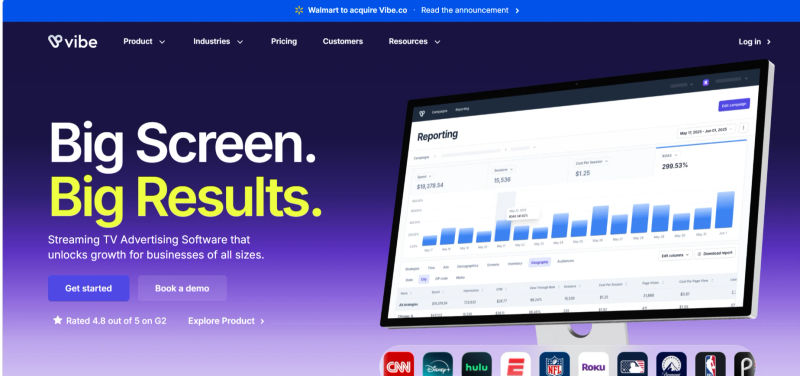
Automation isn't just for search and display. Vibe brings programmatic power to Connected TV (CTV). It allows advertisers to target TV audiences with the same precision as digital ads, automating the buying of premium OTT inventory. This "performance TV" approach opens up a massive awareness channel for mid-market brands that previously couldn't afford TV spots.
Best For: Brands looking to diversify beyond social/search and capture awareness in the living room.
Consideration: Attribution for CTV is still evolving; ensure you have a measurement framework (like lift studies) in place.
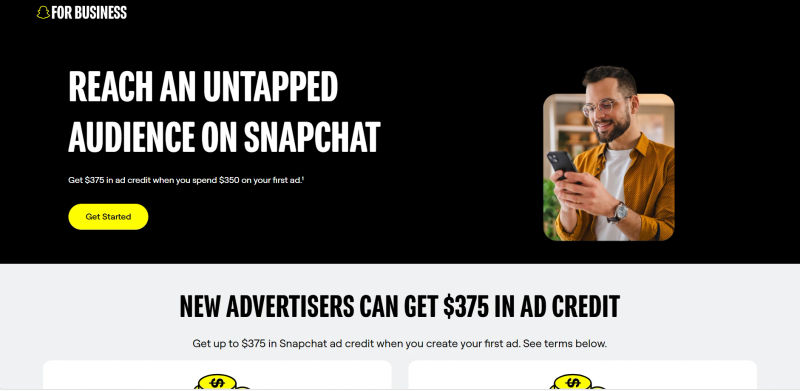
When determining how to choose platform for automated social media ad delivery, prioritize solutions that offer native algorithmic bidding, format-specific creative tools, and direct access to niche demographics. Snapchat For Business serves as a prime example of native automation designed specifically for the social vertical. Their platform includes automated bidding strategies (like Target Cost or Max Conversions) and tools to easily repurpose vertical video assets. For brands targeting Gen Z, leveraging the native automation within Snapchat is often more effective than third-party wrappers due to the unique nature of the ad formats.
Best For: D2C brands targeting Gen Z and Millennials with high-velocity creative.
Consideration: Requires a constant stream of fresh, vertical video content to maintain performance.
4. AdCreative.ai: Leveraging Generative AI
While the platforms above focus on distribution, AdCreative.ai tackles the production bottleneck. It uses generative AI to analyze your brand assets and produce hundreds of high-conversion ad creatives in seconds. It assigns a "confidence score" to each design based on historical performance data.

This is a game-changer for creative testing, allowing media buyers to feed their bidding algorithms with a constant stream of fresh, optimized creatives, thereby preventing ad fatigue.
Best For: Marketing teams with limited design resources who need to test creative variations at scale.
Consideration: AI-generated designs can sometimes lack the nuance of a human brand designer; manual review is still recommended.
The Procurement Process: From RFP to Implementation
Selecting the software is a structured process. Do not rush into a demo without preparation.
1. The RFP (Request for Proposal)
Create a customized RFP that outlines your technical requirements. Do not use a generic template. Include specific scenarios: "How does your platform handle inventory stock-outs?" or "Demonstrate your attribution logic for a user who views a CTV ad and converts via Search."
2. The Demo Scorecard
During the demo, avoid getting dazzled by superficial dashboards. Use a scorecard to rate vendors on:
Ease of Use: Can a junior buyer navigate it?
Customization: Can we build custom rules?
Reporting Depth: To compare advertising automation platforms for reporting depth, evaluate if they offer real-time visualization, custom dimension tagging, and cross-channel pacing alerts. Ensure granular data is fully exportable.
Support: Is there a dedicated Customer Success Manager?
3. The Proof of Concept (POC) Phase
Never sign a 12-month contract based solely on a demo. Demand a Proof of Concept (POC). This is usually a 14-30 day trial where the vendor manages a slice of your live budget (e.g., 10-20% of spend) or a specific product line.
During the POC, measure:
Uplift: Did the tool outperform your manual baseline?
Workflow: Did it actually save time, or did it create new administrative tasks?
Support Response Time: How quickly did they fix bugs?
4. Pricing Models: Flat Fee vs. Percentage of Spend
To avoid hidden costs, prioritize platforms that offer transparent pricing for ad automation tools, such as BidX, Hector, and AdCreative.ai.
Percentage of Spend: Common with platforms like Quartile. It aligns incentives but can become prohibitively expensive as you scale.
Flat SaaS Fee: Predictable and better for high-spend brands. BidX, Hector, and AdCreative.ai offer transparent, flat-fee tiers that prevent unexpected overages.
Hybrid: A base fee plus a smaller percentage.
Calculate the "Total Cost of Ownership" (TCO) over 12 months, factoring in implementation fees, onboarding costs, and potential overage charges.
Comparative Analysis of Ad Automation Features
To properly compare advertising automation platforms, you must evaluate how each aligns with your operational bottlenecks. A comprehensive best advertising platforms with strong automation features comparison reveals three core categories: algorithmic bidding, creative generation, and marketplace operations. The following breakdown categorizes these platforms by their primary utility to help you visualize where they fit in your tech stack.
Feature | Marketplace Bidding | Creative Automation | Channel Specialist |
Primary Goal | Maximize ROAS on retail media | Generate high-volume assets | Scale specific vertical reach |
Core Technology | Predictive Keyword Algorithms | Generative AI & Computer Vision | Programmatic DSP / Native Algo |
Key Metric | ACOS (Advertising Cost of Sales) | CTR (Click-Through Rate) | Reach / CPV (Cost Per View) |
Ideal User | E-commerce Managers | Creative Strategists | Brand Marketing Managers |
Integration Depth | Deep (Amazon, Walmart APIs) | Moderate (Social/Display APIs) | Native / Specific Exchange |
AuthenCIO – Your guide to choosing the right ad automation platform.
Avoiding Common Pitfalls in Software Selection
Even with a robust process, buyers often stumble. The most common pitfall is **underestimating **implementation time. Vendors will promise a "5-minute setup," but true integration—mapping product feeds, setting up tracking pixels, and training the algorithm—can take weeks.
1. The Sunk Cost Fallacy
A critical danger in ad tech is the Sunk Cost Fallacy. This occurs when a business continues to use an underperforming platform simply because they have already invested significant time and money into onboarding.
If a platform is not delivering value after the initial learning phase (typically 60-90 days) and the POC proved inconclusive, be prepared to cut ties. Holding onto a bad tool "to make it work" will bleed your media budget far more than the cost of switching.
2. The "Hidden Costs"
Beware of hidden costs that don't appear on the sticker price. These include data cleaning fees (if your product feed is messy, the automation will fail), premium support fees for faster ticket resolution, and the internal cost of retraining your team.
Automation shifts the media buyer's role from tactical to strategic; if your team isn't ready for that shift, the software will sit unused.
Finally, beware of over-automation. Not every campaign needs AI. For small, hyper-local campaigns, a human touch is often more efficient than an algorithm that needs thousands of data points to learn. Ensure the platform allows you to toggle between manual and automated modes easily.
Try AuthenCIO
Move to faster, smarter software evaluation with AI
Conclusion: Future-Proofing Your Ad Tech Stack
Choosing the right ad automation platform is a pivotal decision that will dictate your marketing agility for years to come. The market is moving toward a future where AI doesn't just execute trades but predicts consumer intent before a search even happens.
By focusing on technical transparency, data integration, and alignment with your specific business goals—whether that's dominating Amazon with BidX and Quartile, or owning the living room with Vibe—you can build a stack that drives sustainable growth.
Do not view this purchase as a one-time transaction. It is a partnership. The right vendor will evolve with you, adapting to privacy changes and platform updates. Start with a clear audit, demand transparency, and prioritize platforms that offer a clear path to ROI.