
Introduction
The ROI of automating digital advertising is typically realized through a 15-30% increase in Return on Ad Spend (ROAS) and a 40-50% reduction in manual campaign management hours. In the current digital advertising ecosystem, the complexity of managing multi-channel campaigns has outpaced human capacity. Media buyers are no longer just competing against other brands; they are competing against algorithms, data velocity, and the sheer volume of creative iterations required to maintain performance.
Streamline your software evaluation process
The traditional manual approach—characterized by spreadsheet-based bidding, daily budget toggling, and subjective creative analysis—is suffering from diminishing returns. For modern performance marketers and CMOs, scaling ad spend efficiency is the primary objective, and the integration of ad automation software is no longer a luxury; it is a fundamental requirement for survival.
Implementing ad automation is not merely an operational upgrade to save a few hours of manual labor. It is a strategic shift that transforms the media buying function from a tactical execution role into a strategic command center.
By leveraging programmatic buying, algorithmic learning, and predictive analytics, businesses can unlock a level of efficiency and return on ad spend (ROAS) that is mathematically impossible to achieve through manual workflows alone. This article explores the comprehensive business case for ad automation, detailing how a new category of tools drives measurable ROI while mitigating the risks of manual oversight.
Key Takeaways
ROI is multi-dimensional: Successful ad automation yields both hard financial returns (increased ROAS, lowered CPA) and soft operational returns (hundreds of hours saved on manual bidding and reporting).
AI requires human oversight: The "human-in-the-loop" philosophy is critical. Automation handles rapid bid adjustments and creative testing, while human strategists manage data thresholds, privacy compliance, and periodic recalibration.
Strategic tool integration drives scale: Platforms like Befruch and Atria optimize spend, Motion accelerates creative testing, and Adwisely ensures cross-channel scalability without platform overlap.
Phased implementation mitigates risk: Adopting automation through a structured 30-60-90 day roadmap—starting with an audit and moving through hybrid testing before full scale—minimizes the financial risks of the algorithm's learning phase.
Software covered in this article
To help you understand ad automation in the right context, this article refers to a carefully curated set of key players:




The Shift to Automated Advertising: Why Efficiency is the New Currency
The narrative around automation often centers on "saving time," but for the C-suite, the real currency is efficiency—specifically, the ratio of output (revenue) to input (spend + labor). Manual campaign management suffers from "scaling fatigue," where increasing ad spend requires a linear increase in human workload to manage the additional complexity.
This creates a bottleneck where performance dips as spend rises because the human team cannot optimize bids, placements, and creatives fast enough to keep up with market dynamics.
Automation breaks this linear relationship. It allows for non-linear scaling, where spend and revenue can grow exponentially while operational overhead remains flat. Furthermore, the digital landscape has shifted toward a "black box" environment with platforms like Meta’s Advantage+ and Google’s Performance Max. Success in this environment requires feeding these algorithms high-quality signals rather than micro-managing manual bids.
The Role of First-Party Data in a Post-Cookie World
A critical component often overlooked is how automation handles data in a post-cookie landscape. With the degradation of third-party cookies and the rise of privacy frameworks like iOS14+, signal loss is a major threat to ROAS.
Automated systems bridge this gap by integrating directly with Conversion APIs (CAPI) and first-party data sources (CRMs). They ingest offline conversion data and feed it back to the ad platforms, training the algorithms to optimize for "true" business outcomes (like qualified leads or completed purchases) rather than just clicks. This data loop is essential; without it, even the most sophisticated automation engine is flying blind.
AuthenCIO - Your guide to choosing the right ad automation platform.
Defining the Scope: What Modern Ad Automation Looks Like
To understand the ROI, we must first define the scope. Modern ad automation is not just simple rule-based logic. While "If-This-Then-That" scenarios are useful for safety guardrails, true enterprise-grade automation involves AI-driven algorithmic optimization.
1. Rule-Based vs. AI-Driven Optimization
Rule-based automation handles the repetitive, binary decisions that are prone to human error—such as "fat-finger" budget mistakes or missing a spend cap during a weekend surge.
However, AI-driven automation uses predictive modeling to anticipate performance trends. It analyzes thousands of data points—time of day, device type, audience sentiment, and historical conversion rates—to adjust bids in real-time, often capturing underpriced inventory that a human buyer would miss.
2. The "Human-in-the-Loop" Philosophy
It is critical to clarify that automation is a co-pilot, not an autopilot. The goal is not to replace the media buyer but to elevate them. When execution is automated, the media buyer’s role shifts toward strategy, audience research, and creative direction.
This "Human-in-the-loop" approach ensures that while the machine handles the math, the human controls the message.
3. The "Garbage In, Garbage Out" Risk
However, automation is an amplifier, not a fixer. If the underlying strategy is flawed—if the audience targeting is too broad, the offer is unappealing, or the creative is weak—automation will simply exhaust the budget faster. This is the "Garbage In, Garbage Out" risk.
Successful implementation requires a robust strategic foundation. Automation tools optimize the delivery of a strategy; they do not create the strategy itself. Therefore, the ROI of automation is contingent on the quality of the inputs provided by the marketing team.
The ROI Equation: Calculating Hard and Soft Returns
What’s the ROI of automating digital advertising? Organizations typically realize a 20% increase in return on ad spend (ROAS) and a 15% reduction in acquisition costs within six months.
To accurately measure CIO marketing automation ROI, leaders must calculate the business case holistically. This requires quantifying "hard returns" (direct financial impact) and "soft returns" (operational efficiency and reclaimed labor), while accounting for initial implementation costs and the algorithm's learning phase.
1. Hard Returns: Financial Impact
CPA Reduction: Research indicates that marketing automation delivers $5.44 ROI per $1 invested over three years. This is primarily driven by the algorithm's ability to cut waste instantly by pausing underperforming ad sets 24/7, not just during business hours.
Revenue Lift: Automated upsell and cross-sell sequences, particularly in eCommerce, increase Customer Lifetime Value (LTV) without additional acquisition costs.
2. Soft Returns: Operational Efficiency
Labor Cost Savings: By automating reporting and bid adjustments, teams save an average of 20-30% of their work week. This time is reallocated to high-value tasks like creative strategy.
Error Reduction: Eliminating manual data entry results in a significant reduction in manual oversight errors, protecting budgets from accidental overspend.
3. Accounting for the Learning Phase and Implementation Costs
To provide a transparent ROI picture, one must acknowledge the "learning phase." When automation is first activated, performance may temporarily dip or fluctuate as the algorithms gather data to establish baselines.
Additionally, there are software subscription costs and the time investment required for integration. A realistic ROI calculation factors in this 30-60 day ramp-up period. The long-term efficiency gains far outweigh these initial costs, but stakeholders must be prepared for the "messy middle" of implementation before seeing the exponential growth curve.
Strategic Advantage 1: Optimizing Spend with Befruch and Atria
One of the most significant pain points in manual management is budget fluidity—moving spend from a poor-performing campaign to a high-performing one across different channels. Manual allocation is reactive; by the time a buyer notices a trend, the opportunity may have passed.
Befruch excels in granular ad management, allowing buyers to set sophisticated rules that govern bid strategies based on real-time performance data. Instead of checking campaigns every hour, a media buyer can set parameters within Befruch to automatically scale budgets when ROAS hits a specific threshold and throttle spend when it dips. This ensures that every dollar is working as hard as possible, 24/7.
Atria takes this a step further by offering holistic management across channels. In a fragmented landscape where a brand might advertise on TikTok, Meta, and Google, data silos are a major issue. Atria consolidates this view, allowing for cross-channel synergy.

If TikTok is driving cheaper top-of-funnel traffic that converts well on Google Search, Atria’s ecosystem helps visualize and manage that flow, preventing the "robbing Peter to pay Paul" scenario where channels fight for attribution.
Strategic Advantage 2: Creative Testing with Motion and Creative Score
In a post-iOS14 world, creative is the new targeting. With signal loss reducing the effectiveness of granular audience targeting, the algorithm relies on the creative asset to find the right user. However, analyzing creative performance manually is tedious and often subjective.
Motion bridges the gap between media buyers and creative teams. It visualizes data to show exactly why an ad is working. Is it the hook? The scroll-stopper? The CTA?

By automating the reporting on these elements, Motion allows teams to iterate faster. Instead of waiting for a weekly report, creative teams get real-time feedback on which visual elements drive conversions, significantly shortening the feedback loop and preventing creative fatigue before it destroys CPA.
Creative Score adds a layer of quantitative analysis to the qualitative art of design. By assigning performance scores to creative assets based on historical data and benchmarks, it helps remove emotional bias from the selection process.
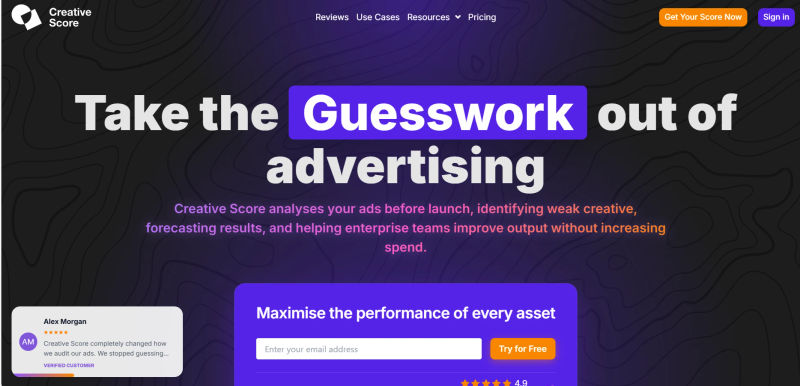
This ensures that the budget is funneled toward ads that are statistically likely to convert, rather than the ones the brand team simply "likes" the most. This rigorous approach to Dynamic Creative Optimization (DCO) is essential for maintaining fresh, high-performing ads without burning out the design team.
Strategic Advantage 3: Cross-Channel Scalability with Adwisely
Scaling is often where manual strategies break down. Increasing spend usually leads to a degradation in CPA because the manual buyer cannot find new pockets of efficiency fast enough.
Adwisely addresses this by automating the prospecting and retargeting workflows. For eCommerce brands specifically, Adwisely automates the creation of high-performing ads on Facebook, Instagram, Google, and YouTube.

It simplifies the complex structure of retargeting campaigns, ensuring that users are nurtured through the funnel automatically. By leveraging Adwisely, brands can scale their ad spend with confidence, knowing that the software is continuously hunting for the most efficient conversion paths. This solves the "scaling fatigue" issue, allowing businesses to double or triple their spend while maintaining a stable ROAS.
Navigating Data Privacy and Compliance
A significant concern for any organization adopting new marketing technology is data privacy. With regulations like GDPR in Europe and CCPA in California imposing strict penalties for mishandling user data, automation tools must be vetted for compliance.
Leading ad automation platforms operate by processing hashed, anonymized data. They do not store Personally Identifiable Information (PII) in a way that exposes the brand to liability. Instead, they act as conduits, securely passing encrypted signals between the brand’s first-party data sources (like a Shopify store or Salesforce CRM) and the advertising networks.
Furthermore, automation helps maintain compliance by enforcing frequency caps and exclusion lists automatically. For instance, if a user opts out of tracking or requests data deletion, an automated system can instantly update exclusion audiences across all active campaigns, a task that is nearly impossible to manage manually in real-time. This capability turns compliance from a manual headache into an automated standard operating procedure, reducing legal risk for the organization.
Find Perfect Software for Your Business
Resolving Automated Conflicts and Platform Overlap
As brands stack multiple tools—for example, using native Meta automation alongside a third-party tool like Befruch—there is a risk of "fighting algorithms." This occurs when two systems try to optimize the same variable simultaneously. For instance, Meta's native algorithm might try to increase spend on an ad set because it sees a high click-through rate, while an external rule sets a hard cap because the backend ROAS is low.
To resolve this, media buyers must establish a hierarchy of logic. The "Golden Rule" of automation stacking is to assign specific jobs to specific tools.
Use native platform algorithms for intra-campaign optimization (finding the right user within an audience), but use external tools for macro-management (budget allocation between campaigns, creative analysis, and safety guardrails). By clearly defining which system has the final say on budget and bidding, businesses prevent algorithmic conflicts that can lead to erratic spending behavior.
Comparative Analysis: Manual vs. Automated Workflows
To visualize the operational impact, the following table contrasts the workflow of a traditional media buyer against one utilizing a full ad automation stack.
Feature | Manual Workflow | Automated Workflow | Business Impact |
Bid Management | Daily manual review; reactive adjustments based on yesterday's data. | Real-time algorithmic adjustments based on predictive modeling. | 20-30% Reduction in CPA due to capturing underpriced inventory. |
Reporting | 5-10 hours/week compiling CSVs from multiple platforms. | Automated dashboards (e.g., Atria) updating in real-time. | 10+ Hours Saved/Week reallocated to strategy. |
Creative Testing | Subjective review; slow iteration cycles (weekly/monthly). | Data-driven insights (e.g., Motion); rapid iteration (daily). | Higher CTR & Conversion Rates via faster optimization. |
Budget Scaling | Linear workload increase; high risk of efficiency loss. | Non-linear scaling; automated guardrails prevent waste. | Sustainable Growth without hiring more buyers. |
Error Rate | High risk of human error (e.g., overspending, wrong links). | Significant reduction in manual oversight errors via automated checks. | Risk Mitigation and budget safety. |
A 30-60-90 Day Roadmap for Implementation
Transitioning to an automated model is not a "flip the switch" event. It requires a structured roadmap to ensure the algorithms learn correctly and the team adapts to the new workflow.
Days 1-30: The Audit and Setup Phase
Before turning on automation, you must ensure your data infrastructure is sound. This includes a "Pre-flight" checklist:
Pixel Health: Verify that CAPI and pixels are firing correctly. Automation is only as good as the data it is fed.
Data Volume: Ensure you have enough conversion data (typically 50+ conversions per week per ad set) for the algorithm to learn.
Tool Integration: Connect Befruch or Atria to your ad accounts and establish your baseline KPIs.
Days 31-60: The Hybrid Testing Phase
Do not automate everything at once. Start with a "champion/challenger" model.
Control Groups: Run your manual campaigns alongside automated campaigns (e.g., using Adwisely for a specific product line) to compare performance.
Guardrails: Set strict rules to prevent runaway spend. For example, "If ROAS drops below 2.0 for 24 hours, reduce budget by 20%."
Creative Insights: Begin using Motion to analyze the creative performance of the test campaigns.
Days 61-90: Full Scale and Optimization
Once the "learning phase" stabilizes—typically after 2-4 weeks—you can begin to scale.
Trust the Algorithm: Reduce manual interference. Stop making micro-adjustments that reset the learning phase.
Ongoing Maintenance: Automation is not "set it and forget it." Schedule bi-weekly reviews to recalibrate rules based on seasonality or market shifts.
Strategic Shift: Move your team's focus entirely to creative strategy and offer development, using the insights from Creative Score to guide the next round of asset production.
Best Practices for Implementing Ad Automation Software
To ensure long-term success and maximize the ROI of your software investment, follow these best practices.
1. Establishing Data Thresholds
To calculate true ROAS post-iOS14, bypass inaccurate platform metrics and use Blended ROAS to set data thresholds.
True ROAS = Total Backend Revenue / (Total Ad Spend + Software Cost + Labor Cost)
Actionable Steps:
Use backend data: Aggregate revenue directly from your CRM or store.
Include all costs: Factor in ad spend, automation software, and labor.
Set volume minimums: Require 50+ weekly conversions before activating automation; low-volume campaigns need manual oversight.
2. Maintaining Human Oversight
Stakeholders often fear losing control. Combat this by using the reporting features within Atria and Motion to provide transparency.
Show the CFO not just the result, but the logic—e.g., "The system increased bids on Mobile Android devices between 6 PM and 9 PM because conversion rates spiked by 40%." This demystifies the "Black Box" and builds trust in the system.
3. Periodic Recalibration
Algorithms optimize for the goals you set, but business goals change. A common pitfall is failing to update automation rules when inventory levels change or profit margins shift.
Review your automation logic quarterly. If your margin on a specific product decreases, your CPA targets in Befruch or Adwisely must be adjusted immediately to prevent the algorithm from optimizing for unprofitable volume.
Try AuthenCIO
Move to faster, smarter software evaluation with AI
Conclusion: Future-Proofing Your Ad Strategy
The business case for ad automation is clear: it is the only viable path to sustainable growth in a complex, data-heavy digital landscape. By shifting from manual execution to automated orchestration, businesses can reduce operational waste, improve creative performance, and unlock significant ROI.
Tools like Befruch and Atria provide the infrastructure for intelligent management, while Motion and Creative Score offer the creative intelligence needed to win the attention economy. Adwisely completes the stack by enabling effortless scaling. The future of advertising belongs to those who can blend human creativity with machine efficiency. The question is no longer if you should automate, but how quickly you can implement these tools to gain a competitive advantage.