
Introduction
What is earned media in 2026? It has evolved far beyond traditional PR and organic press mentions. Today, earned media is defined as algorithmically amplified creator advocacy, structured data signals, and decentralized brand trust generated across social platforms. For marketing directors and VPs of communications, scaling this modern earned media is a fundamental requirement for revenue growth, demanding the immediate adoption of enterprise creator marketing software.
Streamline your software evaluation process
Creators have evolved into multi-platform entertainers and trusted advisors capable of generating real, measurable sales at scale. Simultaneously, consumer behavior has fundamentally shifted. With 24% of consumers now relying on AI shopping assistants for delegated purchases, brands face a unique dual challenge.
AI agents cannot feel an emotional connection; they scrape structured data and rely on authoritative signals. Scaling your brand visibility for these non-human agents while maintaining authentic emotional appeal for human buyers requires structured data, API-driven product feeds, and trackable links that only enterprise-grade creator software can provide. Creators serve as the ultimate bridge between these two worlds.
Yet, many enterprise marketing teams remain stuck in the "Manual Labor Trap"—spending countless hours managing disparate spreadsheets, sending manual direct messages, and chasing down contracts. This fragmented approach inevitably leads to inconsistent ROI, high creator churn, and an inability to prove the concrete value of earned media to the C-suite.
To succeed, buyers must transition from manual workflows to a fully automated, scalable creator engine.
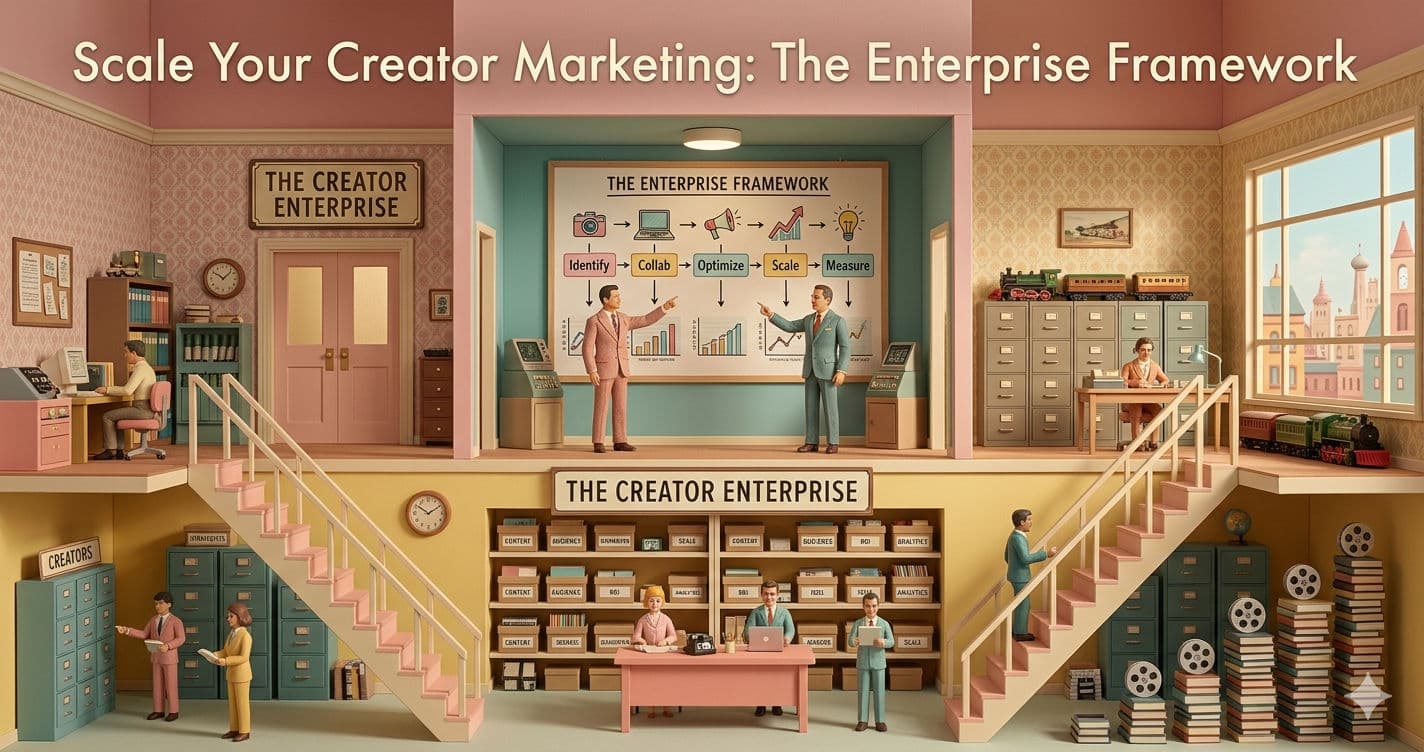
This guide provides actionable best practices and a comprehensive, step-by-step scalable creator marketing strategy. It includes the standard operating procedures (SOPs), financial justifications, and software recommendations you need to execute at the highest enterprise level.
Key Takeaways
Align Software and Headcount ROI: Secure CFO buy-in by demonstrating how investing in creator management platforms reduces manual overhead and accelerates your program's maturity.
Prioritize Micro and Nano-Creators: Shift focus toward high-volume, niche creators using API-first discovery tools to build an authentic, scalable pipeline.
Automate Vetting and Onboarding: Implement a 4-part vetting framework and use dynamic tags to personalize outreach at scale, while standardizing legal and compliance workflows.
Master Dark Social Attribution: Move beyond basic metrics by leveraging predictive analytics and centralized CRM platforms to track true ROI across hidden social channels.
Software Covered in this Article
The following articles break down the key aspects of Earned Media & Creator Marketing Software, featuring a carefully curated set of key players:








Step 1: Defining Your Scalable Creator Marketing Goals
Before you can scale, you must establish a foundation built on clear, measurable objectives. Scaling a broken, manual system only amplifies its inefficiencies.
The first step in your creator marketing framework 2026 is moving definitively away from one-off transactional campaigns and building an "always-on" creator ecosystem.
1. Moving Up the Maturity Model
The creator marketing maturity model transitions from ad-hoc influencer gifting to a predictable, full-funnel revenue engine. To reach the top tier of this model, you must define Key Performance Indicators (KPIs) that align with broader business objectives.
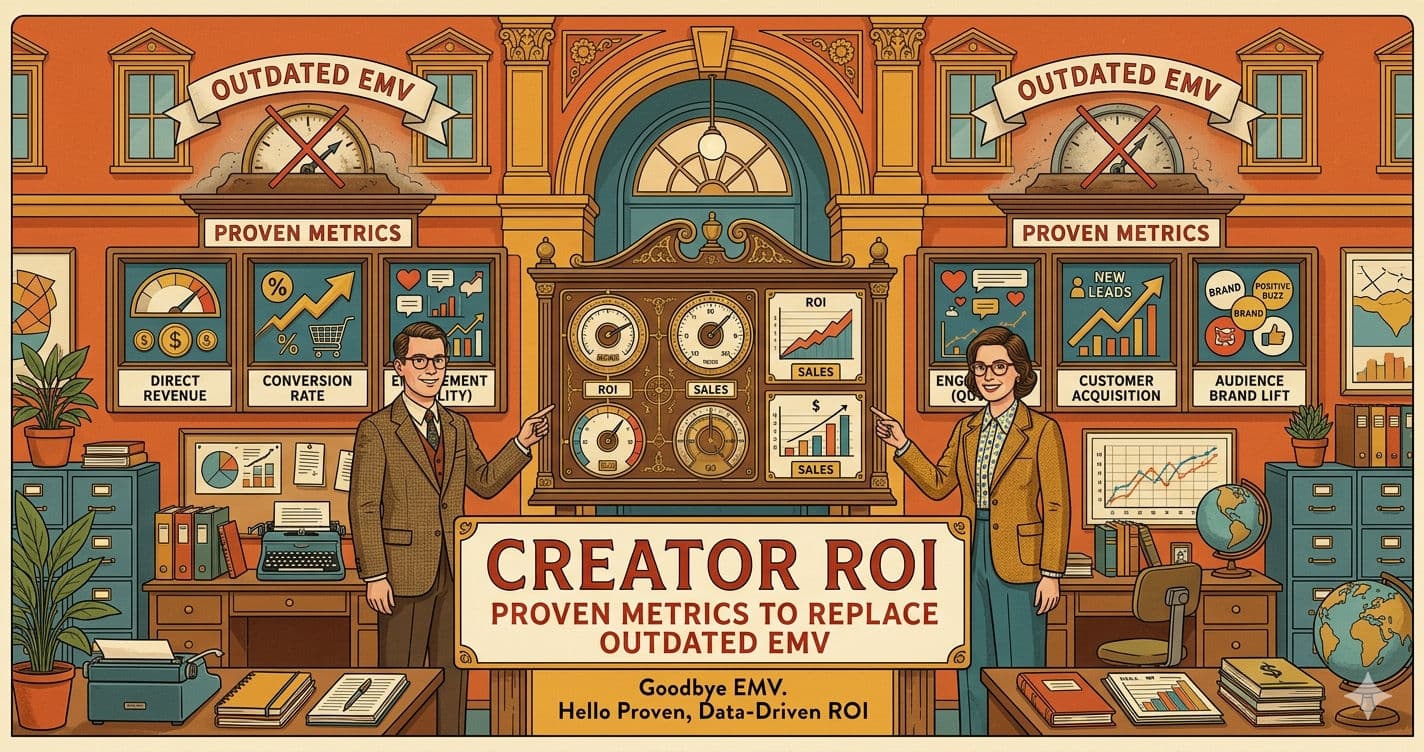
Avoid over-relying on Earned Media Value (EMV) as your primary metric; in 2026, CFOs often view EMV as a vanity metric unless it is explicitly tied to hard conversion data. Instead, focus on:
Conversion-Linked Attribution: Track the direct revenue generated from creator-led campaigns through unique promo codes, affiliate links, and post-purchase surveys.
Customer Acquisition Cost (CAC) Reduction: Measure how efficiently your creator partnerships are driving net-new customers compared to your traditional paid social channels.
Return on Ad Spend (ROAS): Calculate the revenue multiplier against total spend on creator fees and software. When evaluating ROAS tool scalability for growing brands, assess if the platform supports multi-touch attribution across expanding creator tiers, integrates natively with your enterprise CRM, and processes high-volume affiliate data without latency.
2. Structuring the Team and Budget
Scaling requires dedicated, specialized resources. A modern creator marketing team should include roles such as a Creator Relations Manager (focused purely on relationship building, negotiation, and strategy) and a Data Analyst (focused on attribution, predictive modeling, and dark social tracking).
When justifying budget increases to stakeholders, lean on industry data. For example, nearly half (46%) of total US sports fans and 57% of US Gen Z sports fans follow sports influencers, proving that creator content consistently outperforms brand-owned content due to higher audience trust.
Secure a budget that accommodates tiered compensation models, allowing you to pay creators based on performance, reach, and usage rights.
3. The CFO's Case: Software Spend vs. Headcount ROI
To secure buy-in for enterprise software, you must present a compelling financial justification to your CFO. Frame the investment as a "Time Saved ROI" calculation.
If a Creator Relations Manager spends 15 hours a week manually collecting W-9 forms, drafting contracts, and processing invoices, that is time stolen from strategic relationship building.
By quantifying the hourly rate of your team and multiplying it by the hours saved through automation, you can easily demonstrate that investing in a robust software stack is significantly more cost-effective than hiring five additional junior coordinators to manage spreadsheets.
Compare scalable creator marketing solutions for free at AuthenCIO.
Step 2: Identifying the Right Creators at Scale
Finding the right creators is the most critical phase of your strategy. Relying on manual searches on social media platforms is not viable when activating hundreds of creators simultaneously.
To build scalable content systems for founder-led brands, teams must transition from ad-hoc, manual sourcing to enterprise-level discovery. You need a data-driven, automated approach that leverages algorithmic matching and integrated creator databases to identify high-converting partners efficiently.
1. The Shift to Micro and Nano-Creators
In 2026, the strategic focus has shifted heavily toward micro and nano-creators. While macro-influencers offer massive reach, smaller creators often boast significantly higher engagement rates, tighter-knit communities, and a more authentic voice that drives actual conversions.
Identifying these niche voices at scale requires sophisticated discovery tools that go beyond basic keyword searches.
2. API-First Discovery and Software Integration
When evaluating discovery platforms, prioritize "API-First Discovery." A tool's ability to seamlessly sync with your existing CRM and marketing stack is a strict prerequisite for scaling beyond 50+ creators.
If your discovery tool cannot automatically push creator profiles, contact information, and engagement data directly into your outreach and management software, you are simply creating another manual bottleneck.
3. Leveraging Discovery Software
To build a robust, scalable database of potential partners, you must integrate specialized software into your workflow:
Brand24: Social listening is a highly effective discovery mechanism. By using Brand24, you can identify creators who are already talking about your brand or industry organically. These "warm leads" are much easier to convert into long-term partners because they already possess a genuine affinity for your products, drastically lowering your acquisition costs.

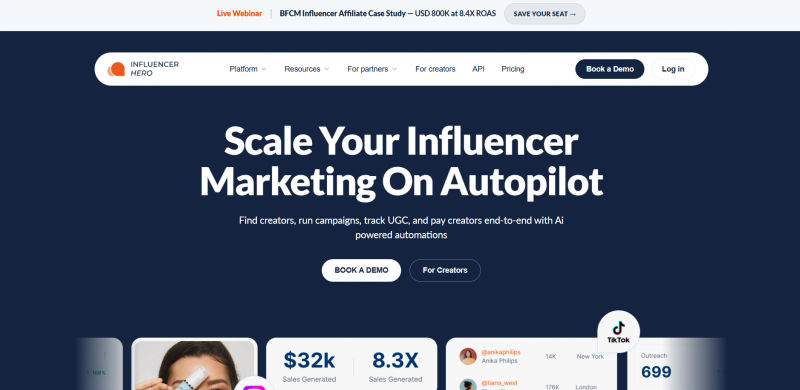
Influencer Hero: When you need to scale your micro-influencer outreach, Influencer Hero provides advanced search filters to find creators based on hyper-specific criteria, such as precise location, engagement rate tiers, and granular audience demographics. This ensures you are targeting individuals who perfectly align with your buyer personas.
Just Reach Out: Creator marketing is increasingly intersecting with traditional public relations. Just Reach Out allows you to bridge this gap by identifying journalists, niche bloggers, and creators who are actively seeking sources or products in your specific industry, turning outbound pitching into a highly scalable, inbound-like process.

Earnworthy: For enterprises prioritizing earned media value (EMV), Earnworthy serves as a specialized discovery and tracking engine. It identifies creators with the highest potential for driving organic, unsponsored reach and helps quantify the earned media impact of potential partners before outreach begins, ensuring your discovery efforts align with measurable ROI goals.
Find Perfect Software For Your Business
Step 3: Vetting for Authenticity and ROI Potential
Identifying a creator is only the beginning; vetting them thoroughly is what protects your brand safety and ensures a high return on investment.
The internet is filled with manufactured engagement, and partnering with the wrong creator can severely damage your brand's reputation and drain your marketing budget.
1. The 4-Part Vetting Framework
To vet creators at scale, implement a strict, four-part evaluation process for every potential partner:
Audience Authenticity Check: High follower counts are entirely meaningless if the audience consists of bots or inactive accounts. You must analyze the creator's follower growth over time. Sudden, unexplained spikes in followers are a glaring red flag for purchased engagement.
Demographic Alignment: The creator's audience must perfectly match your target buyer persona. If you are selling B2B software in North America, a creator with a predominantly teenage audience in Europe will not drive ROI, regardless of their stellar engagement rate.
Brand Safety Audit: Review the creator's past content to ensure they align with your corporate values. Look for a history of controversial statements, excessive profanity, or undisclosed partnerships with direct competitors.
Content Rights Vetting: In 2026, ensuring creators have a history of providing clean usage rights is a major requirement. You must verify that their content can be legally repurposed for your paid social campaigns, email marketing, and even as training data for your internal AI models without triggering copyright disputes.
2. Automating the Vetting Process
Manual vetting is impossible at an enterprise scale. You must rely on advanced analytics platforms to do the heavy lifting:
Upfluence: This platform is absolutely essential for deep demographic analysis. Upfluence allows you to integrate your e-commerce data and analyze a creator's audience to see if they match your existing customer base. It provides granular data on audience overlap, age, location, gender, and specific brand affinities.

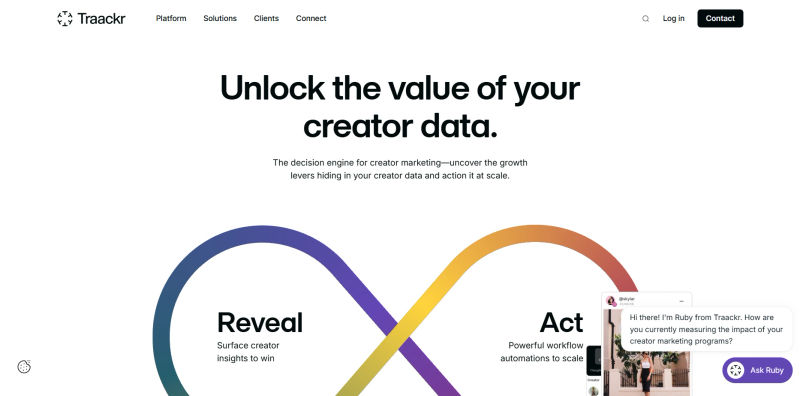
Traackr: For comprehensive brand safety and historical performance tracking, Traackr is a critical tool. It allows you to track a creator's past campaigns, measure their true engagement rate across different platforms, and flag any potential brand safety risks long before you ever sign a contract.
Step 4: Automating Outreach and Onboarding
The most significant bottleneck in scaling creator marketing is the administrative burden of manual communication. To solve how to scale creator outreach for brands, teams must adopt enterprise media automation.
Managing contracts, tax forms, FTC compliance, and product seeding via email quickly overwhelms staff. Enterprise media automation eliminates these administrative bottlenecks by triggering automated outreach sequences, standardizing compliance, and centralizing contract execution—allowing teams to onboard hundreds of creators without increasing headcount.
1. Structuring the Legal and Compliance Infrastructure
Global scaling requires managing different currencies, complex tax laws (such as W-8BEN and W-9 forms), and distinct cultural nuances in creator content.
Furthermore, the FTC has strict, continually evolving guidelines regarding the clear disclosure of sponsored content. Your onboarding process must automate these legal requirements to protect the brand from severe financial penalties.
2. Personalization at Scale: Using Dynamic Tags
Balancing automation and authenticity is the core challenge of enterprise outreach. How do you automate outreach to 500 creators without sounding like a bot? The solution is scalable authoring: building modular message frameworks that automatically adapt to individual recipients.
This technique relies on dynamic tags. By utilizing software that dynamically inserts references to a creator's recent posts, platform achievements, or unique aesthetic style into your email templates, you maintain a high-touch experience during automated delivery.
To maintain a human touch, combine these tags with tight list segmentation so the core message fits their exact niche. Always reserve one custom field for a brief, manually written opening line to ensure the initial hook is genuinely personal.
3. Streamlining Workflows with Software
To move from a pilot program to a massive scalable engine, you must automate the operational friction out of the creator relationship:
Bitwire: Managing the legal and compliance infrastructure is where many enterprise brands stumble. Bitwire automates the entire contracting process, handles tedious tax document collection, and ensures that all global payments are processed securely and in strict compliance with local regulations. This removes the "unsexy" administrative headache from your team.

Roster: Building a creator community often starts with your own customer base. Roster excels at turning passionate customers and brand ambassadors into highly active creators. It automates the product seeding process, tracks ambassador activity, and provides a seamless, branded onboarding experience. Are there creator platforms that auto-promote creators to higher tiers based on consistency? Yes. Roster and similar tools feature dynamic tiering: when creators consistently hit engagement or sales benchmarks, the software automatically promotes them, unlocking better compensation or VIP campaigns without manual review.
Create an automated onboarding sequence that triggers the moment a creator signs their contract. This sequence should include a comprehensive brand brief, strict guidelines on FTC disclosures, a clear timeline of deliverables, and access to a dedicated creator portal.
A smooth onboarding process dramatically reduces creator churn and sets the stage for a long-term partnership.
Step 5: Managing Relationships and Tracking Performance
The final phase of the framework is managing ongoing relationships and definitively proving the value of your earned media to executive leadership.
A scalable strategy requires full-funnel tracking, from initial impressions down to final, attributed conversions.
1. Attributing ROI in the Dark Social Era
In 2026, tracking "Dark Social"—the sharing of links and content through private, untrackable channels like text messages, Slack channels, and direct messages—is crucial.
Since direct links aren't always clicked, you must use a combination of unique promo codes, dedicated landing pages, and mandatory post-purchase surveys (e.g., "How exactly did you hear about us?") to accurately attribute revenue to your creator campaigns.
High-performing organic creator content should be immediately whitelisted and amplified through paid social channels, utilized in email marketing campaigns, and featured prominently on your website to maximize its lifespan and drive down your overall Customer Acquisition Cost.
2. Predictive Analytics: Moving from Hindsight to Foresight
Enterprise creator marketing is no longer just about reporting on what happened; it is about predicting what will happen. By 2026, the best marketing teams expect their software to utilize predictive analytics.
By analyzing historical campaign data, audience engagement patterns, and conversion rates, modern software can accurately forecast which creators are most likely to perform well for your specific product launches, allowing you to allocate your budget with surgical precision.
3. Centralizing Data with CRM Platforms
Fragmented data from siloed tools limits scalability. To manage thousands of partnerships, brands require centralized enterprise influencer and creator marketing software. Acting as a dedicated Creator Relationship Management (CRM) platform, these systems serve as a single source of truth for tracking performance, managing contracts, and analyzing cross-channel ROI:
Grin: As a leading b2c creator marketing software, Grin excels for direct-to-consumer and e-commerce brands. It integrates directly with online stores to automate product fulfillment, track affiliate sales in real-time, and manage the entire creator lifecycle from a unified dashboard, streamlining high-volume B2C logistics.

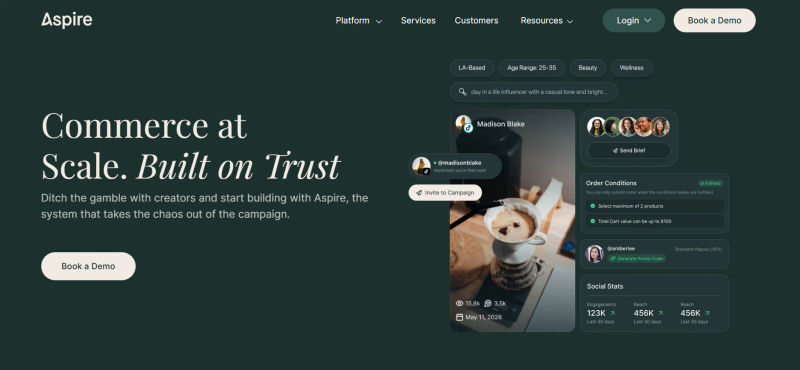
AspireIQ: Built for high-volume, complex campaigns across global regions, AspireIQ provides the heavy-duty enterprise infrastructure needed to scale. It offers robust project management tools, automated content review workflows, and customizable analytics to track the exact ROI of every dollar spent on creator marketing.
By centralizing operations within these enterprise platforms, teams can easily monitor campaign health, identify top-performing creators for lucrative contract renewals, and generate comprehensive financial reports that justify marketing spend.
Creator Marketing Software for Enterprise: Building Your 2026 Toolkit
To execute this framework effectively, you need a unified, fully integrated marketing stack. Below is a detailed breakdown of how the enterprise tools discussed in this guide fit into the different phases of your scalable creator marketing strategy, including their vital integration capabilities.
Platform | Primary Use | Best For | Key Features |
Brand24 | Discovery & Social Listening | Finding organic brand advocates | Real-time brand mention tracking across platforms |
Influencer Hero | Discovery & Data Analytics | Scaling micro-influencer outreach | Hyper-specific audience filtering and CRM sync |
Just Reach Out | PR & Creator Outreach | Bridging PR and creator relations | Automated pitching to journalists and niche bloggers |
Upfluence | Vetting & Demographics | Deep audience analysis | E-commerce integration for audience overlap analysis |
Traackr | Vetting & Brand Safety | Enterprise-level brand protection | Historical performance tracking and safety audits |
Bitwire | Legal & Compliance | Global payment and contract automation | Automated W-8BEN/W-9 collection and secure payouts |
Roster | Ambassador Onboarding | Turning customers into creators | Automated product seeding and community management |
Grin | E-commerce CRM | End-to-end creator management | Seamless e-commerce integration for fulfillment |
AspireIQ | Lifecycle & ROI Tracking | High-volume campaign management | Automated content review workflows and ROI reporting |
Try AuthenCIO
Move to faster, smarter software evaluation with AI
Conclusion: Ready to Scale Your Strategy?
Building a scalable creator marketing strategy from scratch in 2026 requires a fundamental operational shift. It demands moving aggressively away from manual spreadsheets, vanity metrics, and one-off transactions, and moving toward automated workflows, predictive data-driven vetting, and long-term community building.
By following this enterprise framework—defining clear financial goals, identifying the right talent via API-first discovery, vetting rigorously for both safety and content rights, automating global onboarding, and centralizing your performance tracking—you can eliminate the manual labor trap once and for all. You will build a predictable, high-ROI engine that consistently drives net-new revenue.
The ultimate success of this earned media strategy for brands, however, hinges entirely on the technology you choose to support it. The right enterprise software stack will act as a massive force multiplier for your team, allowing you to manage thousands of creators, track every dollar of ROI, and scale your brand presence seamlessly in the era of AI-driven commerce.