
Introduction
In the rapidly evolving digital landscape, social media has definitively transitioned from a top-of-funnel brand awareness channel to a primary revenue engine. To capitalize on this shift, marketing leaders must learn how to implement a unified social media strategy—a centralized approach that connects every platform, campaign, and metric directly to bottom-line business goals. Understanding the SMM software business value 2026 offers is critical for any organization looking to future-proof its marketing budget and justify software investments. Despite this, a surprising number of organizations continue to operate with siloed, native-platform strategies that obscure true performance and drain valuable resources.
Streamline your software evaluation process
The global social media management market is projected to reach $39.14 billion soon, growing at a compound annual growth rate of 19.70%. This explosive growth is driven by a singular realization among B2B and B2C enterprises alike: learning how to manage multi-platform presences through a unified social media strategy is now a financial necessity. The sheer volume of content required, combined with the complexities of modern data privacy, social commerce, and AI integration, demands a sophisticated, future-ready approach.
For marketing directors, agency owners, and social media managers looking to justify the cost of social media management software, this guide breaks down how to pivot the conversation from operational expenses to revenue generation. Investing in a unified social media strategy is not merely about saving time; it is about unlocking the hidden profitability within your audience data, mitigating brand risk, and empowering your team to execute high-impact strategic initiatives.
Key Takeaways
Consolidation Drives Efficiency: Transitioning from fragmented tools to a unified social media management platform drastically reduces operational overhead and wasted labor hours.
Centralized Data Unlocks True ROI: Moving beyond vanity metrics requires centralized analytics to accurately track cross-channel attribution and capture hidden "Dark Social" interactions.
Automation Scales Output, Not Headcount: Strategic use of AI-driven content recycling and visual commerce tools allows teams to scale their social presence without proportional budget increases.
CRM Integration Bridges Departmental Silos: Unified strategies connect social insights directly to sales and support workflows, turning engagement into measurable lead generation and customer retention.
Standardization Mitigates Brand Risk: Centralized approval workflows ensure brand consistency and protect against compliance breaches across all active channels.
Software Covered in this Article
To help you understand Social Media Management Software in the right context, this article refers to a carefully curated set of key players:







The High Cost of Fragmented Social Media Management
Before calculating the return on investment of a unified strategy, organizations must first understand the "Cost of Inaction" (COI). A fragmented social media strategy occurs when teams manage channels natively—logging in and out of individual platforms like LinkedIn, Instagram, TikTok, and X to schedule posts, respond to comments, and pull analytics.
This disjointed approach creates severe operational bottlenecks. The most immediate casualty is the "efficiency dividend"—the hours lost to manual workflows that could otherwise be spent on strategic planning or creative development. By transitioning to a centralized platform, marketing departments can realize a massive efficiency dividend, often saving an average of 12.5 hours per week per team member.
To accurately compare the cost-effectiveness of unified versus individual brand strategies, organizations must evaluate their Total Cost of Ownership (TCO). An individual brand strategy—managing each channel or sub-brand natively—often appears cheaper upfront due to free native tools. However, hidden costs accumulate rapidly through duplicate content creation, manual cross-platform reporting, and higher labor hours. Conversely, a unified strategy requires a higher initial software investment but drastically reduces labor costs. To run a direct comparison, calculate the software subscription fees plus the monetary value of hours spent on manual management (the individual strategy TCO) against the cost of a centralized platform plus its reduced labor hours (the unified strategy TCO).
When data is siloed across multiple native platforms, marketing departments suffer significant productivity drops. Teams waste countless hours exporting CSV files, manually aligning date ranges, and attempting to synthesize incompatible metrics into a cohesive executive report.
Furthermore, fragmented strategies breed inconsistency. Without a centralized approval workflow, the risk of off-brand messaging or poorly timed posts increases exponentially. In an era where brand reputation can be damaged in minutes, the lack of a unified governance structure is a severe liability. Security risks also multiply when multiple employees share native platform passwords rather than using secure, role-based access provided by enterprise software.
Perhaps the most hidden cost of fragmentation is team burnout. High turnover in social media roles is frequently caused by inefficient, manual processes and "tool fatigue." Expecting a social media manager to scale content production across six different platforms natively without a corresponding increase in headcount is a recipe for exhaustion.
Research indicates that only 30% of marketers effectively use data to measure social media ROI. This gap between action and analysis, born from fragmented systems, leads to wasted budgets, missed revenue opportunities, and an inability to prove the financial value of organic social media efforts to skeptical stakeholders.
5 Tangible Business Outcomes of a Unified Strategy
Transitioning to a unified social media strategy delivers immediate, tangible business outcomes that resonate directly with the C-suite. The unified social media strategy benefits extend far beyond mere convenience, fundamentally altering the operational economics of a marketing department.
1. Drastic Reductions in Operational Overhead and Labor Hours
By centralizing asset management, scheduling, and community engagement into a single dashboard, organizations can reclaim hundreds of labor hours annually. This multi-platform management cost savings directly improves the profitability of the marketing department. Instead of paying highly skilled marketers to perform administrative data entry, businesses can redirect that budget toward creative production and strategic campaign development.
2. Enhanced Data Accuracy Through Centralized Analytics Platforms
Industry data reveals social media marketing delivers an average ROI of $5.20 for every $1 spent. However, proving this return requires cohesive tracking. Utilizing social media marketing software with built-in ROI reporting eliminates the discrepancies found when comparing native platform data. For instance, using the Scrunch unified analytics platform marketing ROI attribution models provides a single source of truth for cross-channel campaigns. This centralization ensures organizations can trust their metrics, allowing for confident budget allocation and precise performance forecasting.
3. Improved Brand Consistency and Risk Mitigation
A unified platform establishes a rigorous governance structure. Content approval workflows ensure that every post, reply, and campaign aligns with corporate messaging guidelines before it goes live. This significantly mitigates the risk of PR crises and ensures that the brand voice remains consistent across all touchpoints, which is vital for building and maintaining customer trust in a crowded digital marketplace.
4. Advanced Behavioral Segmentation and Conversion
A unified strategy allows for advanced audience behavioral segmentation. Organizations utilizing these advanced segmentation techniques across a unified tech stack achieve 67% higher conversion rates and 23% lower customer acquisition costs. When you can track a user's interaction across multiple platforms, you can tailor your messaging to their specific stage in the buyer's journey, dramatically increasing the likelihood of conversion.
5. Seamless Cross-Departmental Collaboration
Centralization breaks down departmental silos, fostering crucial cross-departmental collaboration. In a unified platform, customer service teams can seamlessly intercept and resolve support tickets generated on social media, while sales teams can integrate social listening insights into their lead-generation pipelines. This holistic approach ensures that social media serves the entire customer lifecycle, from initial awareness to post-purchase retention.
Measuring What Matters: Moving Beyond Vanity Metrics
To secure executive buy-in for software investments, marketers must abandon "Vanity Metrics" (likes, followers, basic impressions) in favor of "Business Impact Metrics" (customer lifetime value, lead conversion rates, revenue attribution). Calculating true seo workhorse social media roi requires tracking how social signals and content distribution directly influence organic search rankings and inbound traffic.
The complexity of the modern, multi-channel customer journey makes native platform reporting insufficient. A user might discover a product via an organic TikTok video, engage with a retargeting ad on Instagram, and finally convert through a B2B whitepaper link on LinkedIn. Native platforms will each claim full credit or no credit at all, creating a distorted view of performance.
A unified social media management platform solves this through custom attribution modeling. By integrating social data with your broader CRM and web analytics tools, unified platforms can track the entire customer journey. Companies utilizing custom attribution models identify 38% more revenue influenced by social media than those relying on native reporting. This data integration drives unified success seo & social media marketing services. Aligning these strategies allows marketers to correlate social engagement with backlink velocity and keyword improvements, proving a compounded return on investment.
This precise measurement is crucial across different sectors. For instance, LinkedIn provides the highest ROI for B2B lead generation campaigns at 229%, with 85% of B2B marketers identifying it as their top-performing channel. Conversely, e-commerce and retail sectors achieve the highest average social media ROI at 287%, driven by direct purchase capabilities and visual retargeting. A unified dashboard allows marketers to allocate budget dynamically to the platforms driving the highest actual revenue, rather than just the highest engagement.
The Dark Social Challenge
One of the most significant hurdles in modern attribution is "Dark Social"—the sharing of links and content through private channels like direct messages (DMs), WhatsApp, Slack, and email. Native platforms offer zero visibility into these private shares, often categorizing the resulting traffic as "Direct" rather than "Social" in web analytics.
Unified social media management tools combat the Dark Social challenge by automatically appending robust UTM parameters to every published link and integrating deeply with enterprise web analytics. This ensures that even when a link is copied and pasted into a private Slack channel, the resulting conversion is accurately attributed back to the original social campaign, providing a much clearer picture of your true social media management ROI.
Find Perfect Software For Your Business
Strategic Efficiency: How Top Platforms Drive Revenue
Choosing the right software is critical to realizing the full spectrum of unified social media strategy benefits. The landscape offers robust solutions tailored to different organizational scales and objectives.
1. Enterprise-Grade Insights with Sprout Social and Hootsuite
Implementing ROI-driven social media management for enterprise companies requires platforms that connect engagement to revenue. When you evaluate the social media management SaaS company Sprout Social on social media ROI, its strength lies in presentation-ready analytics and robust social listening. Sprout Social excels at helping large organizations align social data with high-level business objectives like pipeline generation and market share expansion, making it a favorite among CMOs.

Hootsuite, a long-standing industry giant, drives efficiency through unparalleled integrations with broader enterprise tech stacks. It is highly effective for global teams requiring complex governance, compliance workflows, and extensive third-party app directory integrations, making it a powerhouse for large-scale risk mitigation and operational cost reduction.

2. Team Collaboration Efficiency with Buffer
When determining which all-in-one social media suite delivers the strongest roi for mid-market brands, Buffer leads the pack. For mid-sized teams, Buffer acts as a complete suite that maximizes returns through exceptional collaboration efficiency. Its intuitive interface reduces onboarding time and streamlines approval workflows. By replacing complex enterprise bloat with focused publishing tools, Buffer delivers precise ROI driven social media management for startups and scalable ROI driven social media management for funded startups, significantly reducing operational overhead.

3. CRM Integration and Lead Generation with Zoho Social
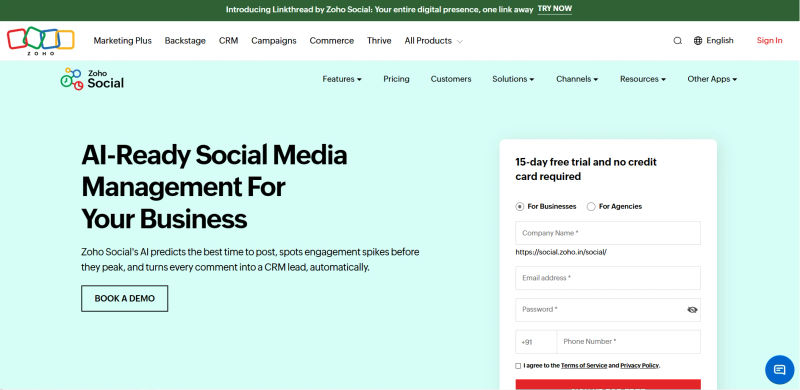
Zoho Social stands out as the best enterprise CRM with social media integration 2026 has to offer. Its seamless connection to the broader Zoho CRM ecosystem makes Zoho Social lead generation incredibly powerful for large-scale operations. Social interactions, direct messages, and brand engagements are instantly logged into customer relationship records. This automated data flow allows enterprise sales teams to capitalize on social intent data immediately, effectively bridging the gap between top-of-funnel marketing engagement and bottom-of-funnel sales execution.
The Role of Automation in Scaling Your Strategy
The social media management software ROI is heavily augmented by AI and automation. AI adoption has surged among social marketers, with 89.7% using it frequently to optimize their workflows. This shift is moving the ROI landscape from volume-based publishing to quality-based, data-backed engagement.
Join 8000+ businesses and find the right software with AuthenCIO.
1. Content Recycling with SocialBee
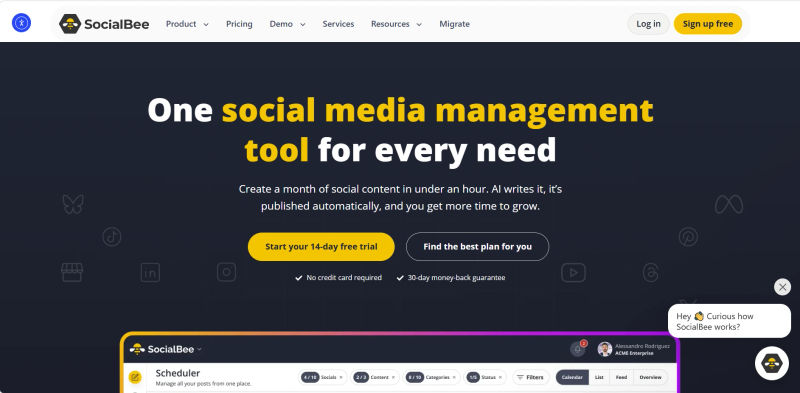
SocialBee provides a prime example of SocialBee content automation ROI. By utilizing advanced category-based scheduling and AI-driven content recycling, SocialBee allows lean teams to maintain a persistent, evergreen presence across all channels without manually rewriting posts. This capability is essential for scaling content production without a corresponding increase in headcount. Marketers can build vast libraries of evergreen content that the platform automatically cycles through, ensuring that high-performing assets continue to generate value long after their initial publication date.
2. Visual Commerce with Later
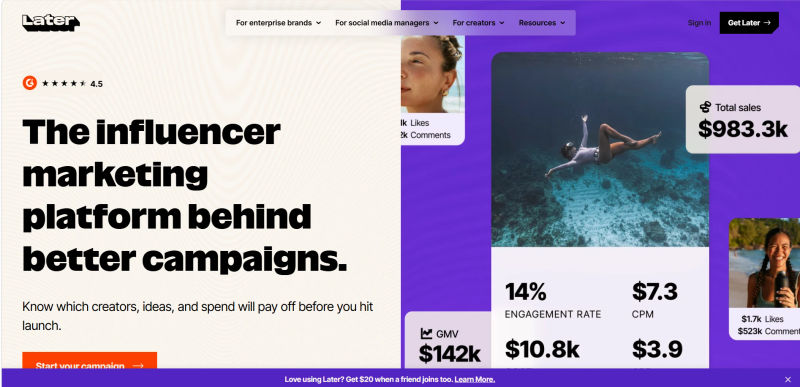
Any comprehensive later social media management saas company review roi analysis highlights its measurable impact on visual commerce. Later delivers significant Later visual planning benefits, particularly for e-commerce brands seeking roi driven social media management for ecommerce. Originally built for Instagram, Later has evolved into a comprehensive visual-first platform. It is widely considered the best owned media for creators prioritizing pricing that scales with audience growth software, allowing users to upgrade tiers seamlessly as their follower counts and revenue increase. For brands relying heavily on video, Later's ability to auto-publish Reels, TikToks, and Shorts while visually mapping the grid saves hours of manual alignment. A standard later social media management saas review roi assessment shows that businesses using AI-driven video strategies report 82% higher returns compared to traditional methods. Furthermore, Later's Linkin.bio feature bridges the gap between visual discovery and purchasing, making these visual automation tools indispensable for modern social commerce.
Deep Dive: Niche Capabilities That Boost Efficiency
While broad platforms handle general needs, certain tools offer niche capabilities that drive specialized returns. A growing priority is "unified local roi optimization". What is unified local roi optimization? It is the strategic process of maximizing returns from location-specific social campaigns through a single dashboard, eliminating the inefficiencies of managing disconnected local accounts.
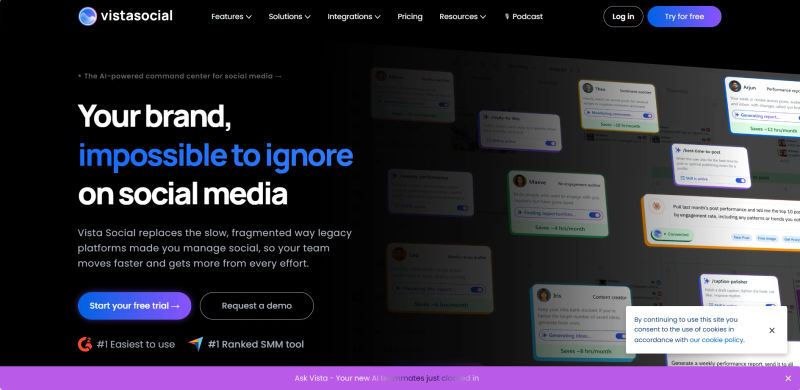
When asking what platforms support unified local roi optimization?, Vista Social stands out. As one of the premier platforms that support unified local roi optimization, it has gained rapid market share through modern network integrations. Vista Social efficiency gains are notable in its handling of localized multi-platform management. For franchises needing platforms to increase local roi without fragmentation, Vista Social allows for dynamic content insertion. A single post can be customized automatically for 50 locations—inserting local phone numbers, city names, and landing pages—saving unprecedented amounts of time.
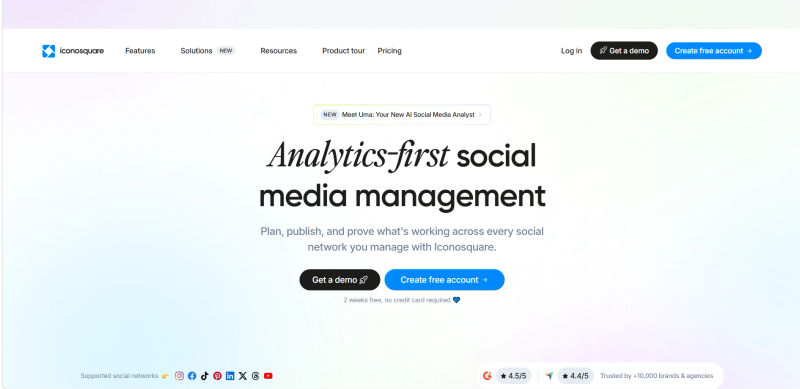
Specialized tools also deliver roi driven social media management for saas companies and roi driven social media management for coaches. Iconosquare delivers immense Iconosquare analytics value for brands requiring granular data to track subscription conversions or client bookings. While many tools offer broad overviews, Iconosquare dives deep into algorithm performance, optimal posting times, and competitor benchmarking. This insight allows marketers to publish exactly when their audience is most likely to convert. As platforms evolve into direct-sales channels, blending deep analytics with automation becomes paramount.
Navigating the Hidden Costs of Unified Platforms
To make a truly informed purchasing decision, buyers must look beyond the monthly subscription fee and understand the Total Cost of Ownership (TCO). Navigating the hidden costs of unified platforms is essential for accurate budget forecasting.
Simplify your software selection process. Compare social media tools on AuthenCIO for free.
First, consider implementation fees and mandatory training hours. Enterprise solutions often require dedicated onboarding packages to properly configure Single Sign-On (SSO), establish role-based permissions, and integrate with existing CRMs. These implementation phases can take weeks and require significant time investments from your IT and marketing teams. The cost of migrating historical data from legacy systems into a new unified dashboard should also be factored into the initial investment.
Second, buyers must be aware of API limitations. Social media networks constantly update their APIs, which can occasionally break third-party tool functionalities. For example, newer platforms like TikTok or Threads often have restricted API access compared to legacy networks like Facebook or LinkedIn. This means that certain features—like direct publishing of specific video formats or pulling granular competitor data—might still require native platform access. Understanding these limitations upfront prevents unrealistic expectations and ensures that your chosen SMM software aligns with your primary channel strategies.
Building Your Business Case for Leadership
Securing budget for a unified social media management platform requires translating social data into business language for the C-suite. Executives do not care about "reach" or "impressions"; they care about risk mitigation, operational efficiency, and revenue generation.
To build a compelling business case, start by auditing your current social media software stack to identify redundancies. Are you paying for a separate link-in-bio tool, a standalone analytics dashboard, and a native scheduling app? Consolidating these into one unified platform often results in immediate software cost savings.
Next, calculate the efficiency dividend. Track the hours your team spends manually compiling monthly executive reports, logging in and out of platforms, and hunting for approved brand assets. Multiply those hours by the average hourly rate of your team. This figure represents the hard financial loss of your current fragmented system.
1. Overcoming Internal Resistance
A critical component of building your business case is addressing internal adoption. Often, team members are emotionally attached to native platform interfaces or hesitant to learn a new system. To overcome this internal resistance, position the new software not as a tool for micromanagement, but as a mechanism to eliminate tedious administrative work. Highlight how the platform will automate their most frustrating tasks—like end-of-month reporting—freeing them up to focus on creative strategy and career-advancing initiatives.
2. Transitioning to a Unified Strategy: Implementation Roadmap
Present a structured 30-60-90 day transition roadmap to reassure leadership that implementing media monitoring software delivering measurable ROI and clear efficiency gains within the first 90 days is a realistic expectation:
First 30 Days (Consolidation & Monitoring Setup): Audit all existing accounts, revoke native access, establish role-based permissions via SSO within the new unified platform, and configure core media monitoring trackers for brand sentiment and competitor baselines.
Next 60 Days (Automation & Alignment): Implement automated scheduling workflows, integrate the platform with your CRM, and establish cross-departmental routing for customer service inquiries to drive immediate operational efficiency gains.
Final 90 Days (ROI Measurement): Launch custom attribution models, establish a baseline for customer acquisition costs via social, and deliver the first comprehensive executive report tying social listening and engagement directly to revenue.
Quick Reference: 2026 SMM Software Efficiency Table
The table below highlights critical infrastructure and integration capabilities that influence the total cost of ownership (TCO) and vendor selection process.
Platform | SSO & Security Support | Integration Depth | Target Audience |
Sprout Social | Advanced SAML/SSO, Custom Roles | Deep CRM, Helpdesk, BI Tools | Mid-Market to Enterprise |
Hootsuite | Enterprise SSO, Compliance Workflows | Extensive App Directory, Legacy ERP | Enterprise & Large Agencies |
Buffer | Two-Factor Authentication (2FA) | Basic Zapier, Canva, Link-in-bio | SMBs & Lean Marketing Teams |
Zoho Social | Zoho One SSO | Native Zoho CRM Ecosystem | Businesses using Zoho CRM |
SocialBee | Standard 2FA | Zapier, Canva, Bitly | Agencies & Content Creators |
Later | Standard 2FA | Shopify, Linkin.bio, Unsplash | E-commerce & Visual Brands |
Vista Social | Advanced SSO | Local SEO, Review Management | Modern Agencies & Enterprises |
Iconosquare | Standard 2FA | Looker Studio, Advanced BI | Data-Driven Marketers |
Try AuthenCIO
Move to faster, smarter software evaluation with AI
Conclusion: Future-Proofing Your Social Presence
The era of managing corporate social media through a patchwork of native apps and spreadsheets is over. As organizations strive to remain future-ready, the data is unequivocal: a unified social media strategy is no longer a luxury; it is a fundamental requirement for business growth, risk management, and competitive advantage.
By centralizing your efforts, you eliminate data silos, drastically reduce operational overhead, and empower your team to focus on strategic, revenue-generating campaigns. Whether you require the enterprise-grade analytics of Sprout Social, the seamless CRM integration of Zoho Social, or the visual automation of Later, the right platform will transform your social presence from a cost center into a measurable profit driver.