Introduction
In 2026, scaling a resilient B2B revenue engine requires deploying the best partner ecosystem management software. The traditional, linear sales funnel has been replaced by the ecosystem flywheel. As customer acquisition costs (CAC) through paid channels skyrocket and third-party cookies disappear, isolated affiliate programs are officially obsolete. Today, interconnected business ecosystems drive scalable revenue. For RevOps leaders, identifying the best partner ecosystem management software 2026 is a critical priority to maintain competitive advantage.
Streamline your software evaluation process
For VPs of Partnerships and Channel Chiefs, transitioning into an Ecosystem-Led Growth (ELG) powerhouse requires strict adherence to industry best practices. The modern buyer journey is non-linear, relying heavily on trusted advisors, integration partners, and industry peers. Navigating this complexity requires robust partner ecosystem management software capable of automating discovery, optimizing commission structures, and seamlessly integrating second-party data.
To execute this strategy effectively, organizations must evaluate and implement the best partner management software tailored to their specific network needs. This comprehensive guide explores the strategic evolution of partner ecosystems, the technological catalysts driving this change, and how selecting the best partner management software in 2026 will future-proof your growth strategy in an increasingly interconnected economy.
Key Takeaways
Ecosystems Drive 2026 Growth: Partner programs have transitioned from basic affiliate tracking to interconnected, multi-channel ecosystems essential for scaling B2B and enterprise revenue.
Platform Selection is Critical: Industry leaders like PartnerStack and Impact.com provide comprehensive ecosystem management, while specialized tools like Reditus, Dub, and FirstPromoter excel in niche affiliate and advocacy tracking.
Integration Solves Fragmentation: Successfully scaling enterprise partnerships requires advanced tracking solutions (like TUNE or Partnerize) to eliminate data silos and automate the ecosystem flywheel.
A Phased Strategic Rollout: Building a resilient partner ecosystem requires a structured 24-month action plan, beginning with internal cultural alignment and culminating in automated co-selling and continuous optimization.
Software Covered in this Article
To help you understand Partner and Affiliate Management Software in the right context, this article refers to a carefully curated set of key players:








The Evolution of Partnerships: Why Ecosystems Dominate
The transition from transactional affiliate relationships to multi-dimensional ecosystem partnerships has been accelerating for years. We have moved away from simplistic "partner-sourced" revenue models—where partners merely hand off leads—toward "partner-influenced" networks. In a modern SaaS partner ecosystem, multi-partner "swarms" become the default mechanism for closing enterprise deals.
To understand this shift, consider a typical 2026 enterprise deal: a cybersecurity Independent Software Vendor (ISV) develops the core technology, a regional Managed Service Provider (MSP) customizes the deployment, and a global System Integrator (SI) manages the overarching digital transformation for a healthcare enterprise.
This multi-partner swarm co-sells, co-markets, and co-delivers, sharing the revenue and the risk. No single entity owns the entire customer journey, making collaborative partner orchestration essential. Effective partner ecosystem management is now required to align these diverse stakeholders and track complex attribution.
Industry data underscores this massive operational shift. The partner ecosystem platform software market is experiencing rapid expansion in 2026 as companies replace fragmented legacy tools with unified infrastructure. According to recent Channelnomics research, 86% of partners anticipate revenue increases in 2026, while 88% expect profits to rise. Furthermore, 90% are actively reinvesting in their businesses to drive approximately 15% overall growth in revenue and profit. To support this collaborative co-building, organizations are deploying a central partner ecosystem platform to automate workflows and scale their networks.
Key Drivers of the Ecosystem Shift:
The Rise of Nearbound Sales: Go-to-market strategies now rely heavily on "Nearbound" motions, where partner data is integrated directly into the CRM for real-time account mapping. Sales reps no longer cold-call; they leverage the trust their partners have already established.
The Second-Party Data Revolution: With the decline of third-party cookies in affiliate tracking, privacy-safe data clean rooms have become the gold standard. Brands now securely share first-party data with partners to identify overlapping accounts and orchestrate highly targeted co-marketing campaigns.
Specialization Explosion: Partners are increasingly focusing on micro-verticals and use-case expertise. For instance, only 5% of AI projects reach production without specialized partners. Vendors are enabling micro-segmentation in their programs, prioritizing depth over breadth to drive market success.
Core Components of a Resilient Partner Ecosystem
Building B2B partnership resilience requires a structural foundation that supports continuous coordination influenced by partners and complementors. A resilient ecosystem is not a neutral architecture; it is a sophisticated governance system designed to facilitate mutual growth, shared visibility, and optimized customer outcomes.
To understand the magnitude of this shift, it is helpful to contrast legacy programs with the modern collaborative ecosystems of 2026.
Feature | Legacy Affiliate Program | Modern Collaborative Ecosystems |
Primary Goal | Transactional lead generation and volume. | Ecosystem-Led Growth (ELG) and customer retention. |
Data Sharing | Siloed, one-way data flow (cookie-based). | Bi-directional CRM syncing via secure data clean rooms. |
Attribution Model | Last-click wins; simplistic tracking. | Multi-touch, AI-driven fractional attribution. |
Partner Engagement | Static portals, manual payouts, spreadsheets. | Automated co-selling workflows and dynamic incentives. |
Network Effect | Minimal; partners operate independently. | High; partner-to-partner commerce and shared marketplaces. |
Internal Alignment | Marketing-led, highly siloed operations. | Cross-functional, RevOps-integrated alignment. |
By 2028, analysts predict that more than 90% of newly developed applications will be multicloud enabled, architected specifically to leverage platform-delivered capabilities from multi-partner ecosystems.
To prepare for this, your ecosystem strategy must include API-first architectures that allow for seamless data flow between disparate tools, eliminating the friction that causes partner engagement fatigue.
Leveraging Technology: How Top Platforms Power Collaboration
Managing thousands of partners and resolving multi-touch attribution requires the best partner ecosystem software. The "Attribution Nightmare" is solved by the best channel partner management software 2026 offers, utilizing advanced machine learning and automated workflows.
When evaluating the best partner program management software 2026, understand that platforms serve distinct models. The best b2b partner program management software handles complex co-selling, while other partner ecosystem software targets traditional affiliates.
To scale, you need the best partner ecosystem platforms software. Two solutions leading the market as the best partner ecosystem platforms in comprehensive orchestration are PartnerStack and Impact.com.
1. PartnerStack: The B2B SaaS Ecosystem Engine
For B2B SaaS companies transitioning traditional marketing teams into ELG powerhouses, PartnerStack remains a dominant force. PartnerStack excels at managing the entire lifecycle of SaaS partnerships, from referral and affiliate partners to complex reseller networks.

Automated Co-Selling Workflows: PartnerStack integrates deeply with CRMs like Salesforce and HubSpot, enabling automated co-selling workflows between partner managers and direct sales reps. This ensures that when a partner registers a lead, the internal sales team has immediate visibility, preventing channel conflict.
Dynamic Incentive Optimization: Using machine learning, the platform helps vendors optimize incentive structures, moving away from flat-rate commissions to dynamic payouts based on the partner's influence on Customer Lifetime Value (LTV).
2. Impact.com: The Enterprise Powerhouse
Impact.com has evolved into a comprehensive partnership management platform that handles everything from traditional affiliates to high-level strategic B2B alliances and influencer ecosystems.
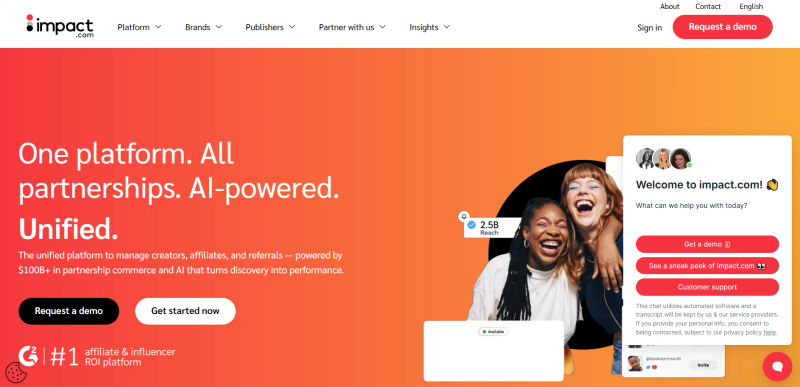
Cross-Platform Syncing: Impact.com’s robust API infrastructure bridges the gap between the affiliate platform, the CRM, and the marketing automation tool. This eliminates data silos and provides a unified view of the customer journey.
Solving the Attribution Nightmare: The platform’s advanced attribution modeling allows enterprises to quantify indirect value, proving the worth of partners who provide "influence" at the top of the funnel but don't close the final transaction.
Marketplace Orchestration: Impact.com facilitates partner discovery through its massive marketplace, using AI to match brands with highly relevant, specialized partners based on audience overlap and historical performance data.
Software Comparison Summary: A Decision Matrix
When deciding between comprehensive platforms like PartnerStack vs Impact.com, business model and scale are the primary determinants.
Choose PartnerStack when: Your primary business model is B2B SaaS, your revenue is heavily subscription-based, and you need native understanding of Monthly Recurring Revenue (MRR) upgrades and downgrades.
Choose Impact.com when: You are an enterprise organization managing a highly diverse mix of partners (B2B, B2C, influencers, media publishers) and require advanced, multi-touch fractional attribution across complex, global campaigns.
Find Perfect Software For Your Business
Niche Solutions for Specialized Ecosystems
While comprehensive suites are vital for overarching strategy, the specialization explosion means that many companies require highly targeted SaaS partner marketing tools to drive specific growth levers.
Platforms like Reditus, Dub, and FirstPromoter offer precision capabilities that integrate seamlessly into a broader ecosystem tech stack, serving as strategic recommendations rather than mere add-ons.
1. Reditus: Mastering B2B Affiliate Tracking
For SaaS companies looking to strategically scale their affiliate networks, Reditus provides a highly focused solution. Reditus B2B affiliate tracking is specifically engineered for the recurring revenue model, making it a strong strategic fit for software companies.
When evaluating the best Reditus alternatives, PartnerStack (for full ecosystem management) and FirstPromoter (for customer advocacy) are top contenders. However, Reditus excels in its core B2B niche through two key features:
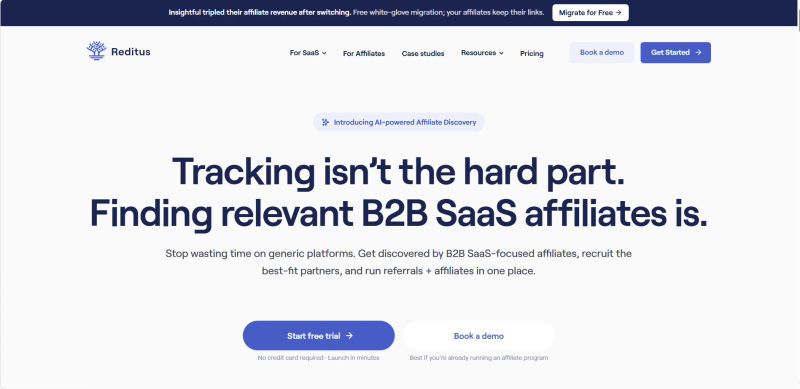
B2B-Centric Marketplace: Unlike generic affiliate networks, the Reditus marketplace is exclusively populated by B2B SaaS affiliates, drastically reducing partner discovery time and ensuring high-intent matches.
MRR Tracking: The platform natively understands MRR, automatically calculating and distributing commissions as customers upgrade, downgrade, or churn over their lifecycle, ensuring alignment between partner payouts and actual business value.
2. Dub: Precision Link Management for Partners
In an era where data privacy is paramount and third-party cookies are dead, tracking the origin of partner traffic requires surgical precision. Dub link management for partners offers an open-source, highly customizable link-shortening and tracking infrastructure.
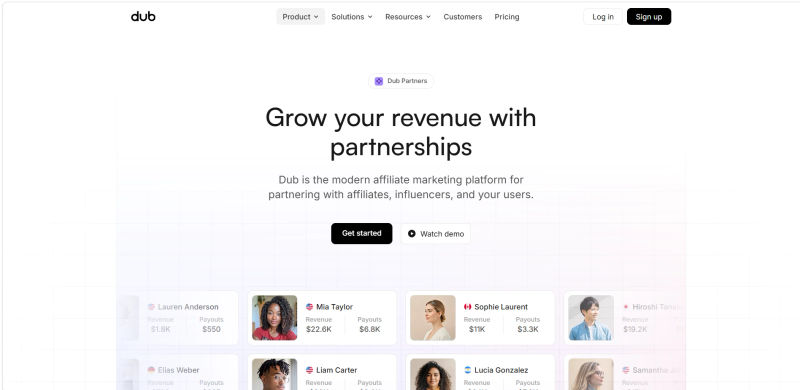
First-Party Tracking: Dub allows companies to use custom domains to create first-party tracking links, bypassing ad-blockers and privacy filters that typically disrupt legacy affiliate tracking.
Real-Time Analytics: It provides granular, real-time data on click-through rates, geographic distribution, and device types, feeding this data directly back into the central Partner Relationship Management (PRM) suite via webhooks.
3. FirstPromoter: Turning Customers into Advocates
A resilient ecosystem leverages every available asset, including the existing customer base. A 2026 FirstPromoter review highlights its strategic utility in launching and managing customer referral programs alongside traditional affiliates.
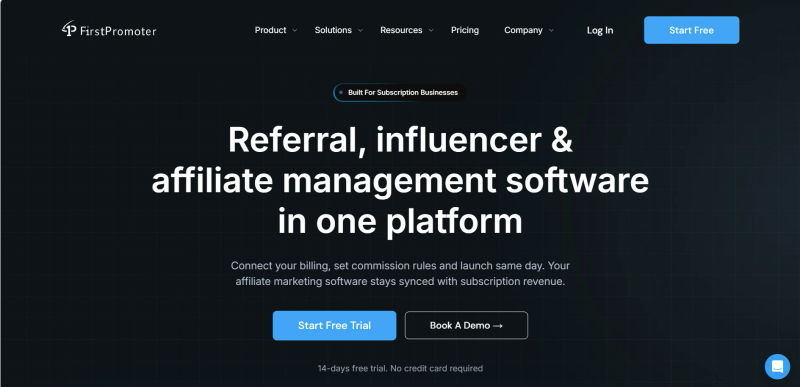
Rapid Deployment: FirstPromoter allows companies to launch a branded partner portal quickly, establishing a baseline ecosystem presence without requiring extensive developer resources.
Automated Payouts: It solves the pain point of scaling manual processes by automating payouts via PayPal, Wise, and mass-payout providers, freeing up partner managers to focus on strategic relationship-building rather than administrative tasks.
Scaling Enterprise Partnerships with Advanced Tracking
When evaluating affiliate management platforms for scaling enterprise partnerships, buyers must recognize that basic tracking is no longer sufficient.
As partner counts grow, organizations require a robust partner ecosystem management platform. Whether seeking the best partner management software in telecom for complex reseller networks or a flexible solution for global SaaS, heavy-duty infrastructure is mandatory. Advanced partner ecosystem management platforms provide this necessary scale.
The debate of TUNE vs Partnerize often comes down to specific architectural needs, while Post Affiliate Pro remains a staple for highly customized, self-hosted requirements.
1. TUNE: Specialized Performance and Flexibility
TUNE is the platform of choice for performance marketing networks and enterprises that require absolute control over their tracking infrastructure.

API-First Architecture: TUNE’s fully customizable API allows for the creation of bespoke partner experiences and seamless data flow into proprietary enterprise data lakes.
Fraud Prevention: In a complex ecosystem, partner fraud can drain resources. TUNE incorporates proactive fraud prevention mechanisms, ensuring that marketing budgets are spent only on verified, incremental growth.
2. Partnerize: Automating the Ecosystem Flywheel
Partnerize focuses on turning partnerships into a primary profit center through extreme automation and AI-driven insights.
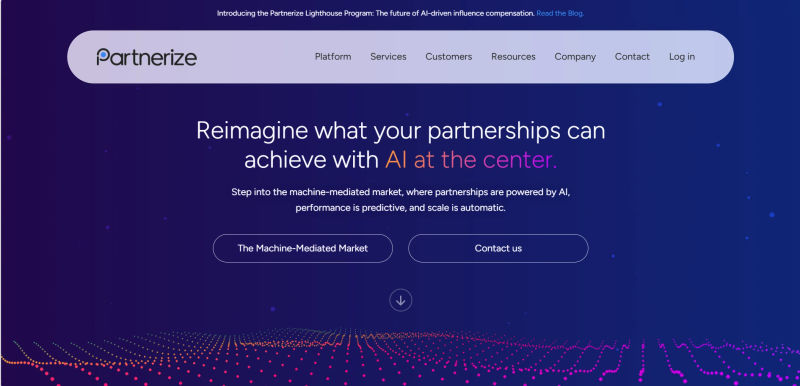
Intelligent Partner Discovery: The platform uses machine learning algorithms to analyze a brand’s existing customer base and automatically suggest partners who have access to similar, high-converting audiences.
Dynamic Commissioning: Partnerize allows enterprises to set complex, multi-layered commission structures based on product margins, customer types (new vs. returning), and promotional methods, ensuring that partner incentives are always aligned with the company's profitability goals.
3. Post Affiliate Pro: The Customization Veteran
For organizations that require deep, granular control over their affiliate management platforms, Post Affiliate Pro features a highly customizable environment.
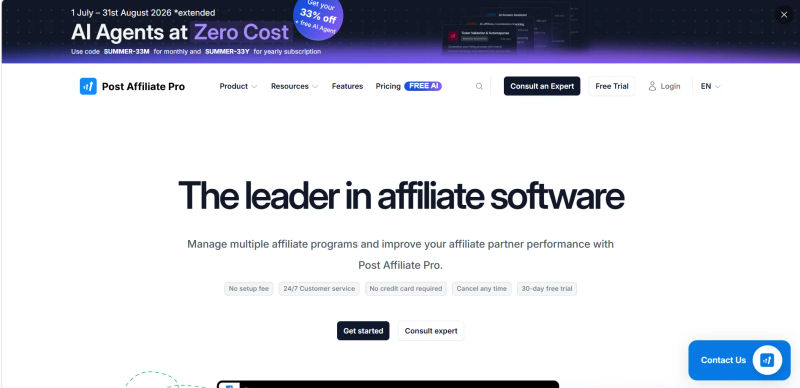
Self-Hosted Options: For industries with strict data compliance regulations (such as finance or healthcare), Post Affiliate Pro offers self-hosted deployments, ensuring that sensitive partner and customer data never leaves the corporate firewall.
Extensive Integration Library: With hundreds of native integrations, it acts as a versatile bridge, connecting legacy e-commerce platforms with modern marketing automation tools.
TUNE vs FirstPromoter: A Head-to-Head Comparison
When comparing TUNE vs FirstPromoter, the decision hinges on your business model and technical needs. FirstPromoter is purpose-built for B2B SaaS companies looking to turn customers into advocates, while TUNE is an enterprise-grade platform designed for complex, high-volume performance marketing networks.
Target Audience and Use Case: FirstPromoter excels at SaaS customer referral and affiliate programs, offering out-of-the-box integrations with billing platforms like Stripe, Recurly, and Chargebee. TUNE, conversely, is built for large-scale advertisers, agencies, and networks that require granular control over multi-channel campaigns and mobile tracking.
Feature Complexity: TUNE provides deep API access, advanced fraud prevention, and highly customizable postback tracking for both web and mobile environments. FirstPromoter prioritizes ease of use, featuring automated PayPal payouts, branded affiliate dashboards, and quick setup without requiring heavy developer resources.
Pricing and Scalability: FirstPromoter offers accessible, tiered pricing that scales naturally with growing SaaS startups. TUNE requires a larger financial commitment, reflecting its robust infrastructure designed to handle massive enterprise tracking volume and complex partner payouts.
Ultimately, if you need a lightweight, billing-integrated solution to launch a SaaS partner program quickly, FirstPromoter is the better choice. If you are managing a highly customized, global performance network requiring deep technical flexibility, TUNE delivers the necessary power.
Overcoming the Tech Stack Fragmentation Challenge
While the capabilities of these platforms are immense, the primary challenge facing RevOps and Partnership leaders is tech stack fragmentation.
The "Attribution Nightmare" is often a symptom of disconnected tools rather than a lack of data. When the affiliate platform, the CRM, and the marketing automation tool operate in silos, partner engagement fatigue sets in.
High-value partners, who are being recruited by dozens of competitors, will quickly abandon programs that offer disjointed experiences or delayed payouts.
Bridging these data silos is critical for achieving true B2B partnership resilience. Organizations that successfully integrate their affiliate and channel programs into a single, unified ecosystem achieve remarkable results.
In fact, research indicates that organizations achieve up to 70% lower Total Cost of Ownership (TCO) through vendor-neutral ecosystems that connect data sources, compute, and partners across clouds. This architecture avoids vendor lock-in and ensures compliance, particularly for complex AI deployments.
The solution to fragmentation is adopting a vendor-neutral approach to software selection. Rather than purchasing software based on isolated feature lists, buyers must evaluate how a platform fits into their broader, interconnected ecosystem.
Does the PRM integrate natively with your specific CRM instance? Does the tracking software support the data clean room technology your marketing team relies on? Answering these questions requires rigorous, unbiased comparison.
Action Plan: Building Your Ecosystem Strategy
Transitioning to a proactive ecosystem requires a structured approach. A core best practice is deploying the best partner management software to automate workflows. Whether evaluating the best partner program management software for B2B or the best partner marketing software for affiliates, use this roadmap to achieve Ecosystem-Led Growth.
Phase 1: Cultural Alignment and Internal Buy-in
The biggest hurdle to Ecosystem-Led Growth is often internal sales resistance, not technology. Before evaluating software, you must align your internal teams.
Address Channel Conflict: Establish clear rules of engagement so direct sales reps view partners as allies, not competitors.
Unify RevOps and Partnerships: Ensure that Marketing, Sales, and Partnerships are operating from the same data playbook and shared KPIs.
Educate the C-Suite: Shift the executive mindset from viewing partnerships as a secondary marketing channel to recognizing them as a primary revenue engine.
Phase 2: Audit and Alignment (Months 1-3)
Conduct a Tech Stack Audit: Evaluate your current tools against modern requirements. Identify gaps in automated attribution, cross-platform syncing, and second-party data integration.
Define Ecosystem Impact Metrics: Move beyond simple volume metrics. Establish baselines for "Ecosystem Impact" on CAC and LTV compared to traditional paid channels.
Build the Business Case: Present a 'Business Case for Ecosystem Investment' to the Board or CFO. Focus on the 70% lower TCO of integrated systems and the higher LTV of partner-influenced customers.
Phase 3: Software Selection and Integration (Months 4-9)
Evaluate Vendor-Neutral Platforms: Use specific criteria to evaluate software that supports non-linear customer journeys and multi-touch attribution.
Select the Core Engine: Choose a foundational platform (e.g., PartnerStack or Impact.com) that aligns with your primary business model (B2B SaaS vs. Enterprise Marketplace).
Integrate Niche Tools: Layer in specialized tools like Reditus for B2B tracking or Dub for precision link management as needed.
Bridge Data Silos: Ensure seamless API connectivity between the new partner platform, your CRM, and your marketing automation systems.
Phase 4: Workflow Automation and Co-Selling (Months 10-15)
Automate Co-Selling: Set up automated workflows between partner managers and direct sales reps. Implement real-time account mapping.
Deploy Dynamic Incentives: Move away from spreadsheets and manual payouts. Implement AI-driven incentive optimization to reward partners for influence, not just final clicks.
Establish Data Clean Rooms: Begin secure, privacy-compliant data sharing with top-tier partners to identify overlapping accounts.
Phase 5: Scaling and Optimization (Months 16-24)
Combat Engagement Fatigue: Launch targeted, personalized partner experiences. Stand out to high-value partners by offering frictionless co-marketing opportunities.
Expand the Network Effect: Position your brand within larger platform orbits and marketplaces. Encourage partner-to-partner commerce within your ecosystem.
Continuous Review: Regularly benchmark your ecosystem maturity against industry standards (Reactive vs. Proactive vs. Optimized) and adjust your strategy accordingly.
Try AuthenCIO
Move to faster, smarter software evaluation with AI
Conclusion: Future-Proofing Your Growth Strategy
The strategic power of partner ecosystems cannot be overstated.
As traditional marketing channels face diminishing returns and increasing privacy restrictions, collaborative ecosystems offer a resilient, scalable path to revenue growth.
By shifting from transactional relationships to networked value models, businesses can unlock reduced attribution friction, lower their customer acquisition costs, and dramatically increase customer lifetime value through automated partner-to-partner commerce.
However, this transformation is entirely dependent on the underlying technology and internal alignment.
Scaling manual processes and relying on fragmented data silos will only lead to attribution nightmares and partner fatigue.
To thrive in this new era, organizations must audit their current capabilities, embrace API-first architectures, and invest in the right combination of comprehensive platforms and specialized tools.
By carefully selecting partner management software that aligns with your specific ecosystem strategy, you can future-proof your revenue engine and empower your partners.
Is your current tech stack an engine for growth, or the primary bottleneck to your 2026 ecosystem potential?