
Introduction
The landscape of virtual events has fundamentally shifted. The global webinar and webcast market is experiencing rapid growth as organizations move away from legacy broadcasting tools toward high-performance, AI-driven engines. In today's competitive webinar software market, modern marketing operations managers must find agile alternatives to outdated systems. Utilizing webinars as a marketing tool is now essential to drive pipeline, increase audience engagement, and prove definitive return on investment. However, with the broader webinar webcast market expanding so quickly, the sheer volume of available options can be paralyzing.
Streamline your software evaluation process
To maximize your marketing operations webinar stack, you need a comprehensive platform that eliminates the dreaded "Data Silo" problem. This requires true bi-directional data synchronization—where engagement metrics flow seamlessly back and forth between the webinar tool and CRMs like Salesforce or Marketo, automatically updating lead scores and campaign statuses in real time without manual CSV uploads. Choosing the wrong platform can lead to attribution gaps, high cost-per-lead, and technical friction that drives potential buyers away before your presentation even begins.
Executive Summary: Key Takeaways
Finding the best webinar software for marketing requires tools that drive ROI and integrate seamlessly with your CRM. This quick best webinar platforms 2026 comparison highlights the top choices:
Top webinar platform for marketing ROI: WebinarJam and Demio lead with built-in conversion tools and CRM integrations that directly tie events to pipeline revenue.
Best for Frictionless Access: Browser-based webinar software for marketing like Livestorm and WebinarGeek eliminate downloads, significantly increasing live attendance.
Best for Enterprise & Ops: On24 and Zoom Webinars provide the bi-directional CRM sync and strict security (SOC2 Type II, GDPR) required for multi-touch attribution.
Top Evergreen Solution: EverWebinar simulates live experiences, enabling marketers to scale lead generation while minimizing operational overhead.
🔝 Top Software Picks (Alternatives)
WebinarJam — best for live and automated webinars with interactive tools boosting conversions.
EverWebinar — best for evergreen automated events and continuous lead generation.
Livestorm — best for browser‑based webinars with CRM and marketing integrations.
WebinarGeek — best for GDPR‑compliant marketing and ROI tracking.
Zoom Webinars — best for enterprise‑scale virtual events and corporate communications.
GoToWebinar — best for secure training sessions and large‑scale corporate events.
Demio — best for lead generation and automated marketing funnels.
On24 — best for personalized enterprise webinars and data‑driven analytics.
BigMarker — best for hybrid events and white‑label branding options.
Airmeet — best for networking‑focused virtual events and community engagement.
Hopin — best for multi‑track conferences and interactive virtual summits.
ClickMeeting — best for product demos and interactive team presentations.
Software covered in this article
To help you understand Webinar & Virtual Event Platforms in the right context, this article refers to a carefully curated set of key players:


Why Webinar Platform Selection is Critical for Your Marketing Operations Webinar Stack
Marketing operations managers are increasingly abandoning legacy tools in favor of modern webinar marketing software. The primary drivers for this shift are the need to eliminate attendee friction and the demand for seamless data flow into your webinar CRM to eliminate data silos.
For attendees, technical friction must be eliminated. Browser-based webinar software that requires no downloads or complex plugins is now the baseline expectation. If a prospect has to jump through hoops to join your session, your conversion rates will plummet.
For the marketing operations team, backend UX and technical architecture dictate whether a webinar marketing platform is viable. Traditional platforms often rely on brittle native integrations or require manual data exports, creating isolated data silos and inflating overall event costs. Modern alternatives solve this by offering intuitive admin interfaces and robust API documentation. When your team needs to build custom webhooks to track "Dark Social" attribution—engagement happening outside the platform via shared links—a well-documented API is your only lifeline.
Furthermore, engagement features are the primary differentiators among the top webinar software 2026 has to offer. We are seeing a surge in AI-driven features like automated highlight reel generation, real-time sentiment analysis, and predictive attendee scoring.
However, Ops managers must consider the "Ops overhead" of traditional tools versus modern alternatives. Interactive features such as live polls, Q&A upvoting, and spatial audio are essential for keeping audiences captivated, but they must automatically map back to your CRM through webinar marketing automation to be valuable. When attendees actively participate and that data flows accurately into your marketing automation stack, retention rates soar, data silos disappear, and the pathway to multi-touch attribution becomes significantly clearer.
Tools like HeyStream focus on audience intelligence for marketing teams, capturing engagement signals in real time and pushing them to CRMs to trigger timely follow-ups and tie broadcasts to pipeline.
Comparison Table: Top 12 Webinar Platforms at a Glance
Plan | Price ($) | Best for | Features |
WebinarJam | Starts from $49/month | Up to 500 attendees, Automated recordings, Custom landing pages, Native CRM sync, Live chat pop-ups | |
EverWebinar | free trial at $1, Starts from $199/month | Automated webinars, Just-in-time sessions, Advanced simulation tools, CRM integration, Analytics dashboard | |
Livestorm | Free, Starts from $1200/year | Modern Browser-Based Engagement | Up to 500 active contacts, Browser-based access, Automated emails, Q&A and polling, Native HubSpot sync |
WebinarGeek | Free, Starts from $69/month | Up to 500 viewers, Strict GDPR compliance, Automated webinars, Custom branding, Real-time analytics | |
Zoom Webinars | Free, Starts from $17/month | Large-Scale Reach | Up to 1000 attendees, HD video/audio, Q&A and polling, Advanced reporting, Cloud recording |
GoToWebinar | Free, Starts from $69/month | Enterprise-Grade Stability | Up to 500 participants, Custom registration, Engagement dashboard, Video sharing, SOC2 compliance |
Demio | Free, Starts from $63/month | Seamless Attendee Experience | Up to 1000 attendees, Automated events, Custom form fields, Room engagement tools, Marketo integration |
On24 | Custom | Data-Driven Personalization | Up to 500 attendees, Multi-touch attribution, Advanced engagement widgets, Deep Salesforce sync, AI content generation |
BigMarker | Custom | Versatile Video Marketing | Up to 500 attendees, Pop-up offers, HD audio/video, Advanced API access, Spatial audio networking |
Airmeet | Starts from $199/month | Interactive Community Events | Up to 500 attendees, Virtual networking tables, Speed networking, Custom branding, Sponsor booths |
RingCentral Events | Free, Starts from $30 /month | Hybrid Marketing Conferences | Up to 500 attendees, Multi-stage events, Expo booths, Networking roulette, Comprehensive event analytics |
ClickMeeting | Free, Starts from $48/month | All-in-One Collaboration | Up to 500 attendees, Automated webinars, Custom branding, Interactive whiteboards, Screen sharing |
Note: All prices shown reflect typical monthly billing. Vendors often offer lower pricing for annual commitments, but those discounts are excluded here for easier comparison. Actual costs may vary depending on your requirements, usage volumes, and negotiated terms.
Find Perfect Software for Your Business
Deep Dive: The 12 Best Webinar Platforms for 2026
1. WebinarJam
WebinarJam remains a powerhouse for marketing teams focused on high-conversion sales events. In 2026, the platform has refined its user experience to ensure that marketing operations managers can deploy campaigns rapidly without heavy IT involvement.
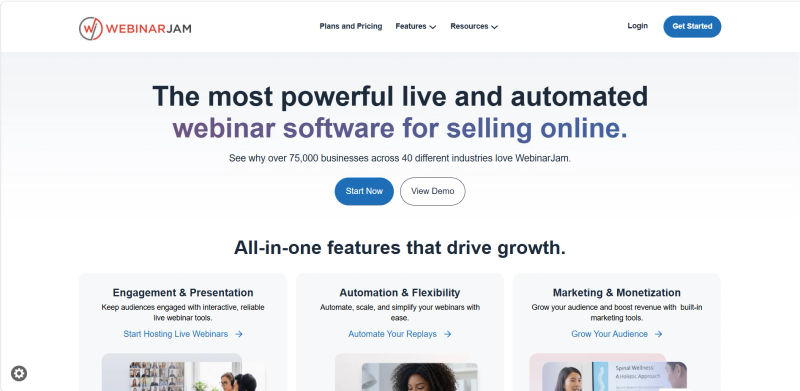
User Experience: Browser-based entry removes technical friction, ensuring higher attendance rates. The backend dashboard is highly intuitive, allowing hosts to set up registration pages and email sequences in minutes.
Engagement Features: Hosts can deploy real-time pop-up offers with countdown timers, injecting urgency directly into the presentation. The live chat features automated Q&A highlighting, making it easy to manage large audiences.
ROI & Integrations: Offers robust session-level tracking. Evaluating WebinarJam pricing 2026 shows a low cost-per-lead, making it ideal for direct sales. It features native integrations with major CRMs.
Technical Debt & Setup Complexity: 4/10. Setup is extremely fast, though API documentation is somewhat basic compared to enterprise-only tools. It relies heavily on native integrations rather than custom webhooks.
2. EverWebinar
As the sister platform to WebinarJam, EverWebinar is the gold standard for automated marketing funnels. For marketing operations teams looking to leverage evergreen content strategies, this platform is indispensable.
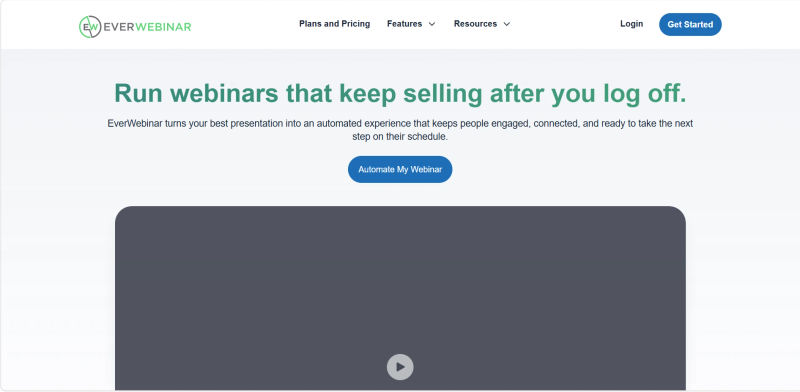
User Experience: Designed for a "set it and forget it" workflow. The admin UX makes it incredibly simple to convert past live events into automated, recurring sessions that look and feel entirely live.
Engagement Features: The platform's "Simulive" capabilities are unmatched. You can pre-configure chat lines to appear at specific timestamps, creating a bustling, interactive environment during pre-recorded sessions.
ROI & Integrations: By automating lead generation, EverWebinar drastically reduces the manual labor hours required for event management. Native CRM integrations ensure leads are instantly routed to sales.
Technical Debt & Setup Complexity: 5/10. The initial setup of the automated funnel requires strategic planning, but the ongoing ops overhead is virtually zero once the campaign is live.
3. Livestorm
Livestorm has solidified its reputation as the premier browser-based webinar software for modern marketing teams. It is built entirely around reducing barriers to entry and maximizing audience participation.

User Experience: Offers a frictionless, no-download experience. The user interface is clean, modern, and highly customizable, allowing brands to maintain a cohesive visual identity from registration to the live room.
Engagement Features: Excels in real-time interaction. Attendees can use emoji reactions, participate in dynamic polls, and utilize a dedicated Q&A tab that prevents important questions from getting lost.
ROI & Integrations: When comparing Livestorm vs On24, Livestorm wins on ease of use. It features bi-directional data sync with HubSpot and Salesforce, ensuring engagement metrics are accurately mapped.
Technical Debt & Setup Complexity: 3/10. Very low technical debt. The platform is highly intuitive, and the native integrations work flawlessly out of the box without requiring developer resources.
4. WebinarGeek
WebinarGeek is highly regarded for offering the easiest UX for marketing teams, particularly those operating within strict data privacy regulations in Europe and beyond.
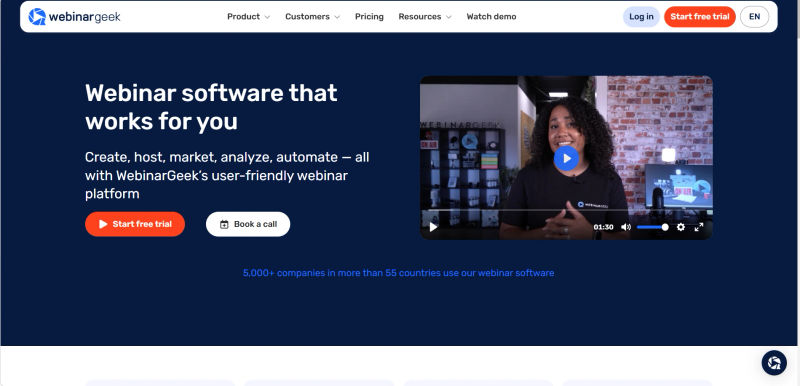
User Experience: The platform is incredibly straightforward with a minimal learning curve. Marketing ops managers can hand off technical setup to junior team members. It heavily emphasizes GDPR compliance.
Engagement Features: Provides all essential interactive tools, including live chat, polls, and customizable calls-to-action. It also offers excellent tools for hybrid webinars, blending live and pre-recorded segments.
ROI & Integrations: Provides clear, actionable analytics directly within its dashboard. Its integration ecosystem offers reliable webhooks and direct connections to major marketing automation platforms.
Technical Debt & Setup Complexity: 2/10. The easiest platform on this list to deploy. However, advanced Ops teams might find the API capabilities slightly limiting for highly complex, multi-platform routing.
5. Zoom Webinars
Zoom Webinars remains a dominant force due to its unparalleled brand recognition and reliability for large-scale reach. Its enterprise-grade evolution in 2026 makes it a serious contender for marketing operations.
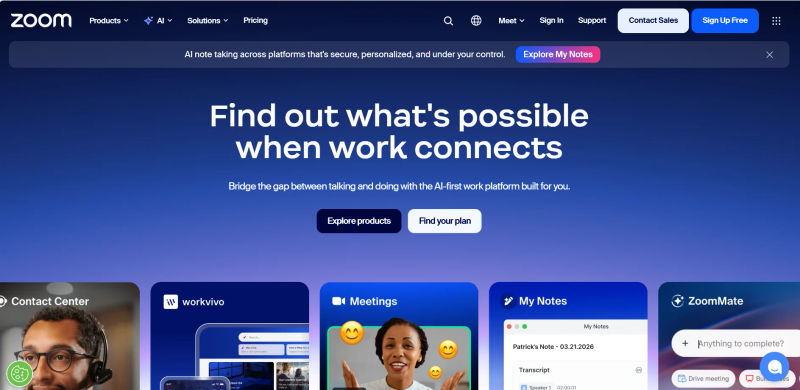
User Experience: The familiarity of Zoom is its biggest asset; attendees know exactly how to use it. However, the admin dashboard can feel slightly legacy, and it often requires a client download.
Engagement Features: Offers reliable HD video, breakout rooms, and standard polling. In 2026, they have heavily integrated AI-driven features, such as automated transcription and highlight reel generation.
ROI & Integrations: Integrates with virtually every CRM on the market. However, ensuring Zoom's data is properly mapped to avoid attribution gaps requires careful webhook configuration.
Technical Debt & Setup Complexity: 7/10. While launching a basic webinar is easy, configuring Zoom to act as a seamless part of a sophisticated marketing automation stack requires significant ops overhead and technical mapping.
6. GoToWebinar
GoToWebinar is the veteran of the industry, trusted by enterprises for its rock-solid stability and comprehensive security compliance.

User Experience: While the interface may not be as flashy as newer platforms, it is highly functional and dependable. It is designed for marketing teams that prioritize uptime reliability over modern aesthetics.
Engagement Features: Includes robust engagement dashboards that allow hosts to monitor attendee attention rates in real-time. Features standard interactive tools like hand-raising, polls, and comprehensive Q&A management.
ROI & Integrations: Adherence to SOC2 Type II and ISO 27001 standards is a major selling point. It offers deep, native integrations with legacy CRM systems, ensuring enterprise webinar solutions meet strict IT checklists.
Technical Debt & Setup Complexity: 6/10. The platform is stable, but the legacy architecture means that integrating it with modern, agile ABM platforms can require middleware or custom API development.
7. Demio
Demio has rapidly become a favorite among marketing operations managers who prioritize a seamless, aesthetically pleasing attendee experience combined with powerful marketing automation.
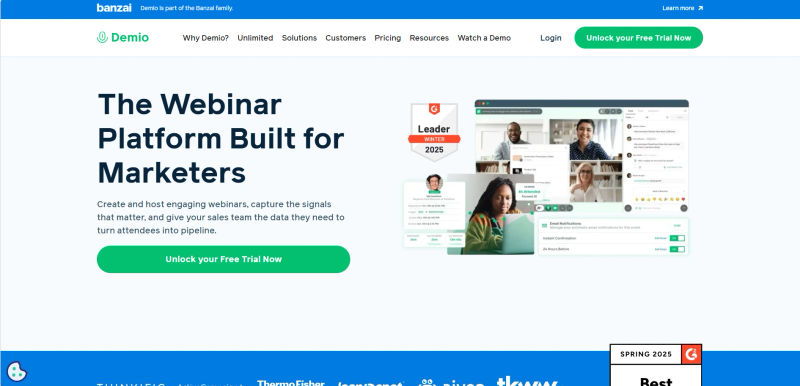
User Experience: The browser-based platform is stunningly designed. The registration process is frictionless, and the live room interface is uncluttered, keeping the audience's focus entirely on the content.
Engagement Features: Excels with "Featured Actions"—customizable, highly visible calls-to-action pushed to the audience at critical moments. Supports interactive polls, handouts, and an engaging chat interface.
ROI & Integrations: Built specifically for marketers. Offers native, deep integrations with tools like Drip, ActiveCampaign, and Marketo. Analytics clearly display how a webinar influenced a closed-won deal.
Technical Debt & Setup Complexity: 3/10. Demio is incredibly ops-friendly. The native CRM sync is robust, and the intuitive UI means that campaign deployment requires minimal technical oversight.
8. On24
On24 is the undisputed heavyweight champion for enterprise webinar solutions, focusing heavily on data-driven personalization and deep analytical insights.
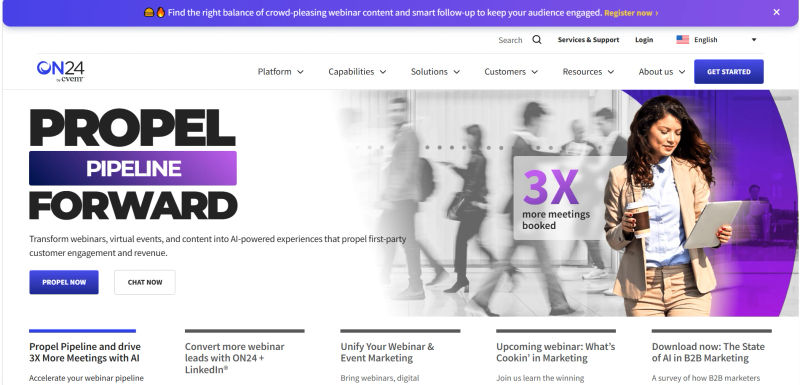
User Experience: The attendee experience is highly customizable, allowing brands to build immersive, Netflix-style content hubs. The admin backend is complex and requires dedicated training.
Engagement Features: Moves beyond standard chat and polls. Utilizes a widget-based interface where attendees can download whitepapers, book meetings, and interact with dynamic content simultaneously.
ROI & Integrations: Provides predictive attendee scoring and multi-touch attribution tracking. Bi-directional data sync with Salesforce and Marketo ensures granular engagement metrics are utilized for lead scoring.
Technical Debt & Setup Complexity: 9/10. On24 is an enterprise beast. The ops overhead is high, and you will likely need a dedicated specialist to manage the platform, but the data output is unparalleled.
Competitors & Alternatives: If you are asking, "can you suggest the best alternatives to on24 for hosting webinars?", the top On24 competitors include BigMarker for highly customizable, browser-based events, and Zoom Webinars or GoToWebinar for organizations seeking simpler, more familiar interfaces with lower technical debt.
9. BigMarker
BigMarker is arguably the most versatile video marketing suite available in 2026, offering a massive array of features without requiring any software downloads. When evaluating BigMarker competitors in the browser-based space (such as Livestorm or Demio), BigMarker stands out for its sheer scale, supporting complex virtual summits and highly customized multi-session events that simpler platforms often cannot handle.

User Experience: As a fully browser-based platform, BigMarker eliminates attendee technical friction while supporting high-definition audio and video. The administrative dashboard is feature-rich, catering to large-scale virtual events.
Engagement Features: Offers an extensive suite of interactive tools, including pop-up offers, sticky messages, advanced Q&A routing, and spatial audio for more immersive networking sessions.
ROI & Integrations: Provides excellent API documentation and webhook support, making custom integrations a reality for technical marketing ops teams. Detailed analytics help identify which features drove conversions.
Technical Debt & Setup Complexity: 6/10. The sheer volume of features can be overwhelming compared to lighter BigMarker competitors. While the API is excellent, configuring the platform to perfectly match your specific workflow requires a moderate technical lift.
10. Airmeet
Airmeet was built with community engagement in mind, making it the top choice for marketing teams looking to host highly interactive, networking-focused virtual events.
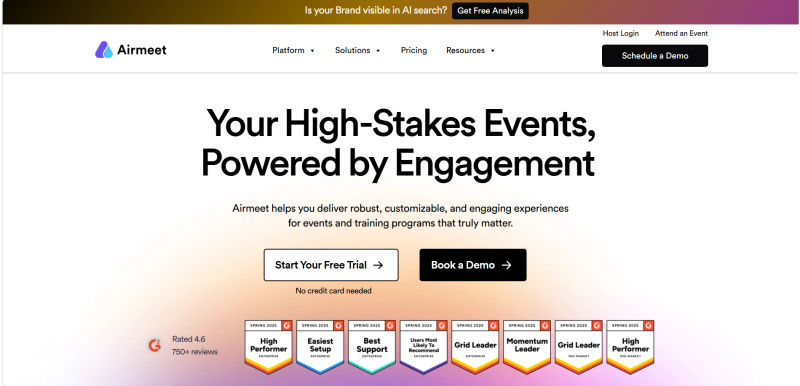
User Experience: Features a unique "Social Lounge" UX, where attendees can freely move between virtual tables before and after the main presentation. This mimics the organic networking of in-person events.
Engagement Features: Offers speed networking, interactive sponsor booths, and dynamic stage controls. The audience can react with rich emojis, and hosts can seamlessly bring participants on screen.
ROI & Integrations: Helps solve the high cost-per-lead problem by fostering deep community ties that accelerate the sales cycle. Integrations with HubSpot and Salesforce ensure networking interactions are logged.
Technical Debt & Setup Complexity: 5/10. Setting up the virtual tables and sponsor booths takes time, but the platform's backend is logically structured. CRM integrations are relatively straightforward to configure.
11. RingCentral Events
RingCentral Events is the go-to platform for marketing teams executing large-scale, hybrid marketing conferences that require multiple stages and complex ticketing.
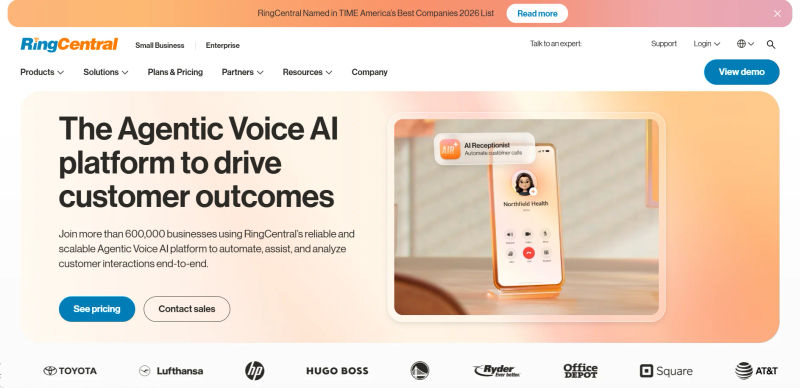
User Experience: RingCentral Events acts as a virtual venue. Attendees navigate between a reception area, main stages, breakout sessions, and an expo hall. The UX is intuitive for the massive scale of events it supports.
Engagement Features: Shines in its variety of engagement zones. The Expo area allows sponsors to capture leads directly, while the Networking roulette feature connects attendees for timed video chats.
ROI & Integrations: Provides comprehensive event analytics, tracking exactly where attendees spent their time. Integrates well with major CRMs, allowing teams to calculate ROI based on ticket sales and pipeline.
Technical Debt & Setup Complexity: 8/10. Managing a multi-stage virtual conference is inherently complex. RingCentral Events requires significant ops overhead, dedicated event managers, and careful API mapping for sponsor lead retrieval.
12. ClickMeeting
ClickMeeting rounds out the top 12 as the best all-in-one collaboration tool, blending webinar capabilities with robust internal meeting features.
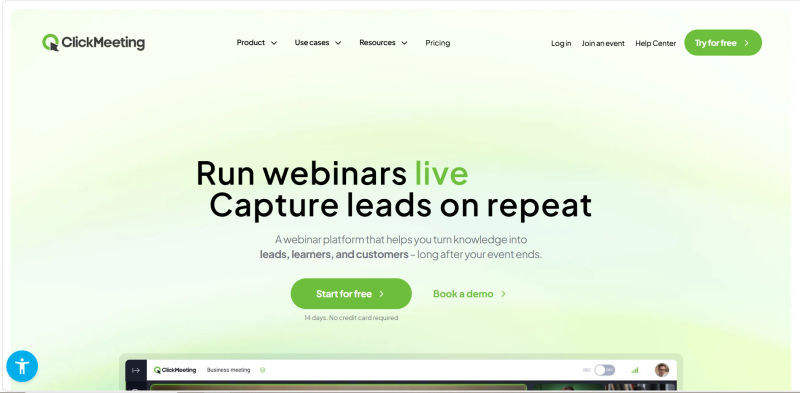
User Experience: Highly customizable, allowing marketing teams to fully brand waiting rooms, webinar rooms, and follow-up emails. The interface is user-friendly, making it easy to switch between presentation modes.
Engagement Features: Offers unique tools like interactive whiteboards, screen control sharing, and synchronized YouTube video playback. Also features automated webinars with pre-configured chat interactions.
ROI & Integrations: Highly cost-effective, offering a strong ROI for mid-market companies. Integrates with a variety of analytics and marketing tools, ensuring session-level tracking is captured accurately.
Technical Debt & Setup Complexity: 4/10. Very accessible for mid-sized teams. The setup is straightforward, though enterprise ops teams may find the native integrations lacking compared to heavier platforms like On24.
How to Choose the Right Platform for Your Tech Stack
Selecting the best marketing platforms with webinar integration 2025 2026 requires evaluating integration depth, security, and total cost of ownership (TCO). To identify the best event marketing tools and platforms for ROI, build a weighted decision matrix tailored to your existing infrastructure.
Evaluate platforms against these core technical criteria:
CRM and MAP Integration: Assess API latency and webhook robustness. Bi-directional data sync with Salesforce, HubSpot, or Marketo is non-negotiable for passing real-time lead context to sales.
Data Activation: To execute advanced database software webinar marketing ideas, ensure your platform can segment attendees based on poll responses and pass that intent data directly to your CRM for hyper-personalized follow-up campaigns.
Hybrid Event ROI Tracking: As you compare features of ROI measurement tools for hybrid events, look for unified dashboards that merge in-person badge scans with virtual engagement scores.
Speed to Value: Prioritize virtual event platforms software delivering measurable ROI and clear efficiency gains within first 90 days through pre-built templates and automated workflows.
Security and Compliance: Prepare vetting checklists for IT and Procurement. Require third-party security audit summaries, 99.99% uptime reliability stats from the past 12 months, and current compliance certifications (SOC2 Type II, GDPR).
SLAs and Vendor Support: Review guaranteed response times. If an API breaks during a 5,000-person event, you need immediate, tier-1 technical support, not a standard ticketing queue.
Finally, develop a step-by-step migration framework to maximize your webinar ROI. To accurately measure success, use this formula:
ROI = [Pipeline Generated - (Platform Cost + Ops Labor Cost)] / (Platform Cost + Ops Labor Cost)
Understanding pricing models—whether usage-based or license-based—and factoring in the ops overhead is critical. A platform might offer a low monthly fee, but if poor API connectivity forces 20 hours of manual data entry per event, your true ROI will be negative.
Try AuthenCIO
Move to faster, smarter software evaluation with AI
Conclusion: Driving Marketing ROI with the Right Tech
As we navigate the highly competitive landscape of 2026, the importance of selecting the right webinar software for marketing cannot be overstated. The platforms that will drive the highest ROI are those that prioritize a frictionless user experience, offer deep, interactive engagement features, and seamlessly integrate into your broader tech stack.
Whether you are looking for the automated efficiency of EverWebinar, the browser-based elegance of Livestorm, or the enterprise-grade data analytics of On24, your choice must align perfectly with your technical resources and business goals.
Remember, paying for unused features drains marketing budgets, while settling for inadequate integrations creates data silos that cripple your sales team. To maximize your return, consider partnering with the best webinar marketing services to handle promotion, funnel optimization, and post-event follow-ups. These experts can help you implement innovative conversion strategies, such as bounce exchange webinars, which use exit-intent technology to capture abandoning visitors on registration pages or redirect departing attendees to targeted offers.
By leveraging the right technology, calculating your true ops overhead, and applying advanced retention tactics, you can transform your webinars from simple video broadcasts into highly profitable, data-driven marketing engines.